450 Baht on Arrival
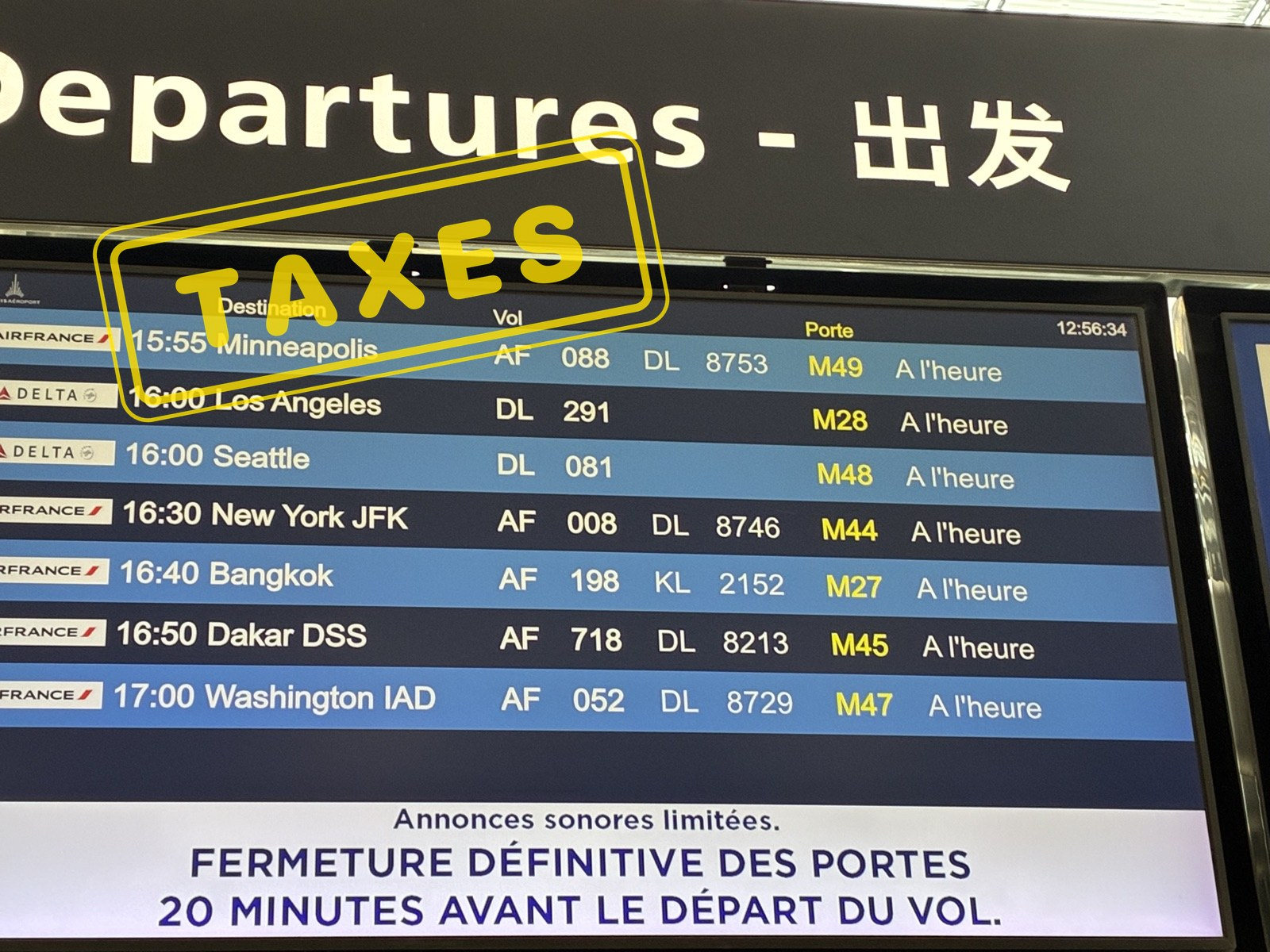
Paris CDG, 12:56. Bangkok leaves at 16:40, gate M27.
On 26 August The Nation published the details of a scheme people here have been discussing for ten years: charging foreigners an entry fee. The amount has moved — 300 baht for years, 450 today. What is new is what sits behind it: three tiers of insurance. A second article, on Sunday the 30th, gave the text of the draft.
The public consultation ran from 24 August to 28 September, and it was open to foreigners. That is unusual enough to be worth saying. Suphajee Suthumpun, deputy prime minister and commerce minister, has asked officials to gather views from people working in the industry rather than relying on online responses alone.
I read what is being proposed, then went looking for the figures that go with it. The two do not resemble each other.
I. What is on the table
The first tier: part of the 450 baht buys every visitor accident and emergency medical cover. The reason is stated plainly — to stop Thai taxpayers picking up the unpaid bills of tourists treated in state hospitals.
The second: additional insurance for high-risk activities. Diving, rock climbing, bungee jumping. It is bought on site, by QR code, from the operator. Responsibility for buying it shifts from the operator to the tourist.
The third: third-party liability for anyone renting and driving a car, a motorcycle or a jet ski, or flying a drone.
The timetable: cabinet after the consultation, collection from 2027, 180 days after publication in the Royal Gazette. Air arrivals first, land and sea arrivals roughly 360 days later. Natthriya Thaweevong, permanent secretary for tourism and sports, says the land borders need more preparation: she cites the Sadao crossing in Songkhla province, which handles the Malaysian traffic, and where the queues cannot be allowed to grow.
Payment could be made in several ways: included in the ticket price, on a website, through an app, at a kiosk, or by any other method the fund’s management committee prescribes.
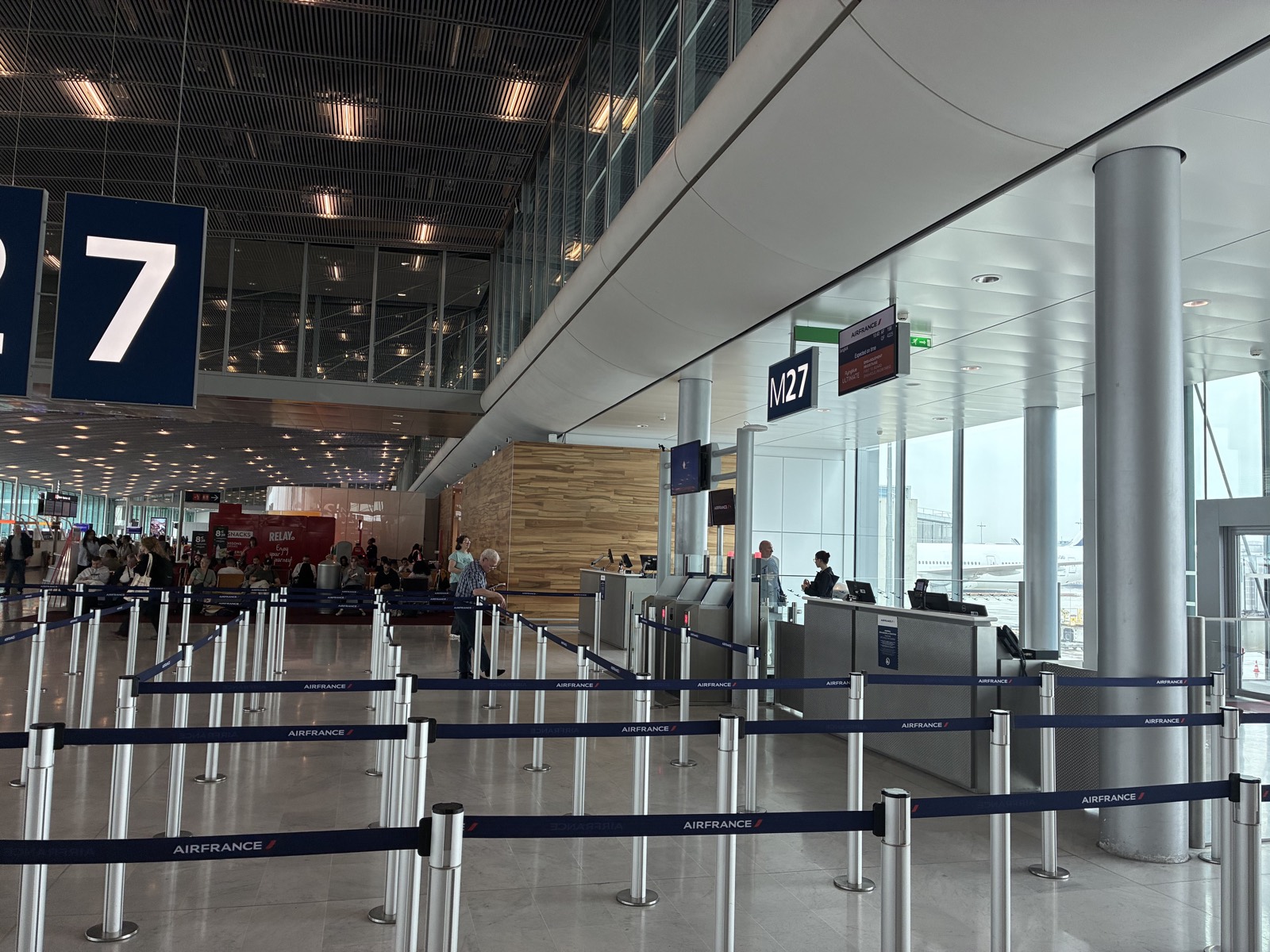
Gate M27, almost four hours before departure. That is the ticket the 450 baht would be added to.
The money would go to the Tourism Promotion Fund. The tourism minister, Surasak Phancharoenworakul, justifies the whole thing with a sentence that says what the worry is: without such a fund, Thailand’s tourism industry is approaching saturation, or beginning to decline.
The figure being quoted — close to 10 billion baht a year — is not the ministry’s estimate. It comes from ATTA, the Association of Thai Travel Agents, which in the same breath asks that the industry have a say in how the money is spent. Weerasak Kowsurat, a former tourism minister, proposes the fund be run more openly than an ordinary public fund: industry people admitted to observe every discussion, even without a vote, and meetings broadcast.
Ten billion divided by 450 is 22 million payers. Thailand received about 35 million visitors in 2024, close to 33 million in 2025, and the ministry expects 2026 at the same level. The order of magnitude fits if only air arrivals are counted, exemptions deducted.
II. The stated reason comes to four hundred million baht
Two figures are in circulation, and nobody puts them side by side.
The Ministry of Public Health puts unpaid bills from foreign patients at at least 100 million baht a year. The Ministry of Tourism, in the 30 August document, says the state covers 300 to 400 million baht a year in foreigners’ medical costs that hospitals cannot recover. A factor of three or four between them, with no way of knowing what each one counts. Vachira Phuket Hospital, one of the most exposed, absorbs around ten million baht a year on its own.
Take the higher figure. Four hundred million baht is 10.5 million euros, for a country receiving thirty-three million visitors. The levy would raise twenty-five times that.
There is a real problem of unpaid hospital bills in Thailand, and it is elsewhere. In 2024 the border provinces recorded 2,315 million baht of uncollected treatment costs from foreign nationals, up 12.6% on the year. The Myanmar border accounts for 1.8 billion of that on its own, 76%; the Cambodian border, 277 million. Six times the Ministry of Tourism’s national figure. These are migrant workers, stateless people and patients crossing the border for treatment.
Add the two together, generously: under three billion baht. The levy would raise ten. Enough to cover the tourists’ unpaid bills, the border ones, and keep seven tenths.
That is not what is planned. The money goes to the Tourism Promotion Fund, run by the Ministry of Tourism, and the text sets out what it is for: visitor insurance, attractions, infrastructure, environment, research, training, promotion, local communities. A Burmese patient treated in Mae Sot is not a foreign tourist who paid 450 baht, and the first tier’s insurance does not cover them. The money would be enough to close both holes. The text aims at one.
III. Thirty days, and a list we are not on
The fee is not per entry. It covers thirty days, with multiple entries and exits, and the insurance runs for the same period. On the thirty-first day you pay again.
The draft publishes a list of exemptions: guests of the Crown and of the government, diplomatic and official passports, work permit holders, border pass holders, transit passengers who change neither airline nor aircraft, crew members, and children under two.
Long-stay visas without employment are not on it. A work permit exempts you; a retirement visa does not. Reading the text as published, a retiree who has lived here for ten years and spends a week in Penang pays 450 baht on the way back, like a tourist arriving for the first time. I am not certain that is the intention. It is what is written, and it is exactly the kind of point a consultation exists to settle.
Worth noting too, for anyone travelling with children: free travel stops at two years old. A two-year-old pays full price.
IV. What the word “insurance” covers here
The split of the 450 baht has not been published. In the 300-baht version, the one cabinet approved in February 2023, 70 baht went to insurance, for accident cover capped at 500,000 baht.
Seventy baht is under two euros. For comparison, an ordinary travel policy costs around 1,100 baht for two weeks and covers between 3.6 and 9 million baht of medical costs.
A serious admission to a Thai private hospital runs well past 500,000 baht. I looked at those prices closely this summer, for other reasons: major surgery is billed at around 20,000 euros, or 760,000 baht.
What the first tier puts in place is a floor, not cover. It will pay for first treatment and stop a state hospital being left with the bill. It does not replace a travel policy, and the text does not claim it does — the trouble will come from how it is read. The conditions will need reading too, the day they appear: what is announced covers accident and emergency. Dengue fever is neither. Nor is a heart attack.
V. The third tier has existed since 1992
This is the point that surprised me most.
Every vehicle registered in Thailand must carry compulsory insurance — Por Ror Bor, created by the 1992 act protecting road accident victims. It compensates injured people, driver, passenger and third parties, never the vehicle. The ceilings are low: 30,000 baht of medical costs paid immediately with no question of fault, up to 80,000 if the other party is at fault, 500,000 for death. It costs between 161 and 646 baht a year for a motorcycle.
So a tourist’s third-party liability on a rented scooter is already covered. Badly, at 1992 ceilings, but covered. The third tier does not create protection that is missing; it raises the ceiling and moves the cost from the rental firm to the renter.
What the tourist on a scooter lacks is not a policy. It is a licence. To ride a two-wheeler in Thailand you need a motorcycle category on your national licence, together with an international permit that carries it. Most foreigners renting a scooter in Phuket or Samui have neither. Without them the travel policy no longer covers them — the clause is in almost every contract, and it is the leading ground for refusal after a two-wheeler accident. At the Patong checkpoints the fine runs to a few hundred baht. The director of the Phuket hospital describes the same profile every time: a visitor riding a motorcycle for the first time in their life, often after drinking.
Selling one more policy by QR code at the rental counter changes nothing about that profile.
VI. “That may tell us something”
The line is Weerasak’s, spoken on 25 August to the travel agents gathered at ATTA’s offices: “If someone cannot afford a fee at this level, that may tell us something.” Then: “The Thai tourism industry may have to accept losing part of the price-sensitive market, but the fee would also help screen tourists at the same time.”
Screen. The word is his, not mine.
450 baht is twelve euros. A family of four, forty-seven euros. Nobody cancels a trip to Thailand over twelve euros, and Weerasak is right to say so — Japan has charged 3,000 yen on departure since July, New Zealand 100 New Zealand dollars, Bali 150,000 rupiah. The ministry counts more than forty countries that tax their visitors. Twelve euros is at the low end.
The ministry also ties the measure to the polluter pays principle: those who use a resource share in conserving it. Applied to the visitor, the argument holds — they use the beaches, the roads, the parks. It says nothing about insurance, which is the argument for the first tier. Two different justifications for a single line on the ticket.
So it is not the amount that raises a question, it is what the amount is being asked to do.
A flat twelve euros screens nobody.
It is painless for someone coming for three weeks, and just as painless for someone coming to drink for four days in Patong. It does not sort tourists. It counts them.
VII. The consultation was open, and it was open to us
The draft was put out for online consultation from 24 August to 28 September 2026, on the government’s legal consultation platform and on the tourism permanent secretariat’s website, and foreigners could respond. For a measure that only foreigners will pay, that was not a given. It closed on 28 September.
Four questions remain unanswered: what exact share of the 450 baht goes to insurance, what the conditions and exclusions of that cover are, why a third tier of liability insurance rather than raising the ceilings of Por Ror Bor which already exists, and whether a long-stay resident is meant to pay on every return from abroad.
The question is not whether twelve euros is expensive. It is what happens to the rest.
Notes on method
The two figures for unpaid hospital bills do not line up. The 100 million baht comes from the Ministry of Public Health, the 300 to 400 million from the Ministry of Tourism, and neither says what it counts: all foreigners, or tourists only. I have used the higher one, which is the least favourable to my argument.
The 2,315 million baht from the border provinces is a third count, “foreign nationals”, mixing migrant workers, stateless people, cross-border patients and probably some tourists. I add it to the national figure without being able to check that the two do not overlap: the addition therefore inflates the total, which works in the levy’s favour, not against it.
The split of the 450 baht has not been published: the 70 baht and the 500,000 baht of cover cited here come from the 300-baht version approved in 2023, and nothing says they will carry over.
The 10 billion baht is an ATTA estimate, not a ministry costing.
That long-stay visas are not exempt is my reading of the published list, not an official confirmation.
Finally, all of this is a draft under consultation. Thailand’s entry fee has been announced, approved, frozen by Covid in 2020, revived, postponed and dropped roughly once a year. It has never been collected.
Baht amounts are converted at 38 baht to the euro.
Sources
The Nation, the three-tier proposal (26.08.2026) · The Nation, the draft text and exemptions (30.08.2026) · The Nation, 2027 collection timetable · Bangkok Post, consultation open to foreigners · Insurance Business Asia, unpaid hospital bills · The Nation, border province arrears (16.06.2025) · The Nation, 2026 arrivals · Roojai, compulsory motor insurance (Por Ror Bor) · MBIE, International Visitor Levy · LoyaltyLobby, timeline of postponements
Checked 31 August 2026.