Conspiracy theories, populism and despotism
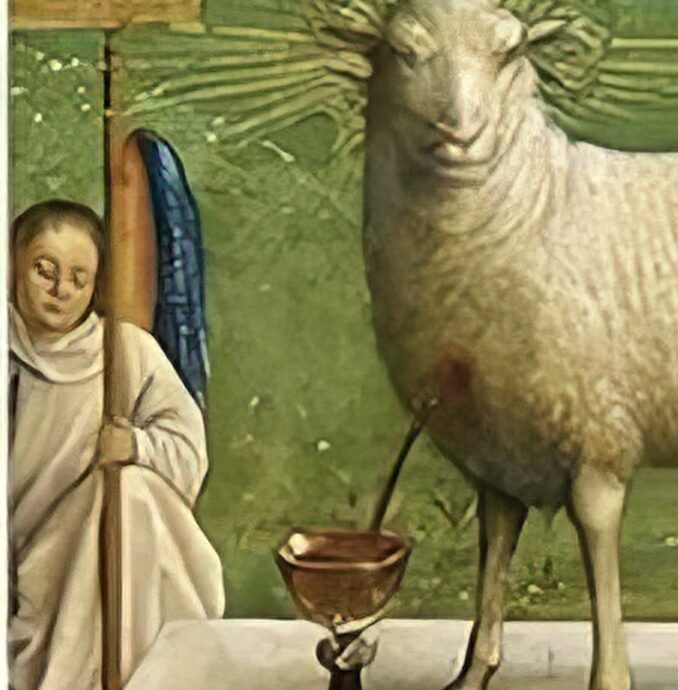 The scapegoat.
An excellent piece by Jean-Philippe Delsol on the endless subject of “conspiracy thinking.” His thesis is crystal clear: conspiracy thinking simplifies reality by pointing to a scapegoat; that simplification feeds populism, which in turn readily degenerates into despotism. As he writes, “by shrinking the analysis and the salvation of the country to an excessive and partial struggle… conspiracy thinking breeds populisms liable to turn easily into despotisms.”
The mechanism is nothing new. The despot uses conspiracy thinking to shore up his power: he invents or inflates an enemy, unites the people against it, and thereby diverts attention from the real problems he cannot or will not solve. Delsol offers examples spanning the century: Hitler and the Protocols of the Elders of Zion, Stalin denouncing kulaks and bourgeois plotters, Putin stoking the fable of a Nazi resurgence in Ukraine, certain African military regimes blaming all their ills on a fantasised postcolonial France.
The reflex is far from having died out with the twentieth century — it simply changes costume. Great replacement, “Great Reset” and “new world order,” widespread election fraud, the “deep state,” shadowy global governance (Bilderberg, Davos): the packaging varies, but they all offer the same thing — an identifiable enemy where, most of the time, there is only complexity and uncertainty.
Covid provides a good example of this tipping point, because two things need to be kept separate. On one side, a genuine, unresolved scientific debate: a natural spillover through animal transmission (never formally proven, for lack of an identified intermediate host), or an accidental leak tied to research at the Wuhan Institute of Virology (the famous P4 lab) — equally plausible, equally unproven, and one on which Western intelligence agencies themselves remain divided. On the other side, the moment this legitimate uncertainty hardens into certainty of an orchestrated plot — a virus deliberately spread to reduce the world’s population, vaccination made mandatory as an instrument of control rather than public health, a pandemic hyped up to enrich a handful of labs — you leave debate behind for conspiracy thinking. The difference isn’t doubt; it’s this: two hypotheses that can still be argued with facts on one side, a single narrative that no longer needs any proof on the other.
The scapegoat keeps recurring at the roots of conspiracy thinking. It’s an outlet for simplistic minds, and you find plenty of them in every era, including our own. Also worth reading: The Scapegoat by René Girard.
Article from IREF, here: FROM CONSPIRACY THEORY TO POPULISM AND DESPOTISM.