Thailand 2021, a country without tourists — 6. Krabi and Thale Noi Lake
Continuing our three-month journey through the Thailand of 2021, barely reopened after Covid. In the previous episode: the Similan Islands, Phang Nga Bay and the stilt village of Koh Panyee. This time we head east — the tiger cave of Krabi, a deserted ferry port, then Thale Noi Lake and its birds.
The road to Krabi
Music wakes us early in Phang Nga. Time to leave. A brief stop by the golden Buddha, then the fine road to Krabi.
Wat Tham Suea, the tiger cave
The chedi sits right at the top of the mountain. It takes 1,200 steps to reach it — a little much for us, we prefer the cool of the cave.
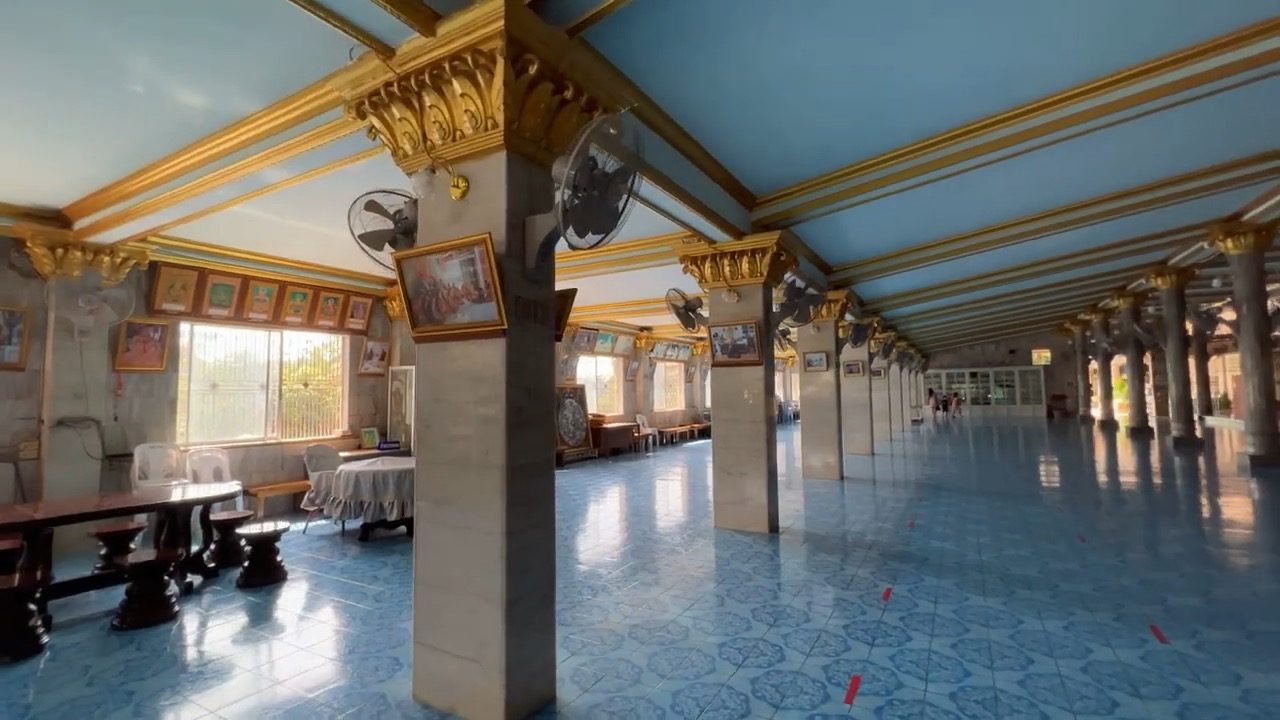
The temple is built against the mountainside. You come in from the side through a great hall with a blue floor and a blue ceiling, where a few monks wait for whatever visitors may come.
Past a row of Buddhas of every size, a marble staircase leads to a first alcove, a large tiger statue, then more steps up to the heart of the small cave where the tiger is said to have lived.
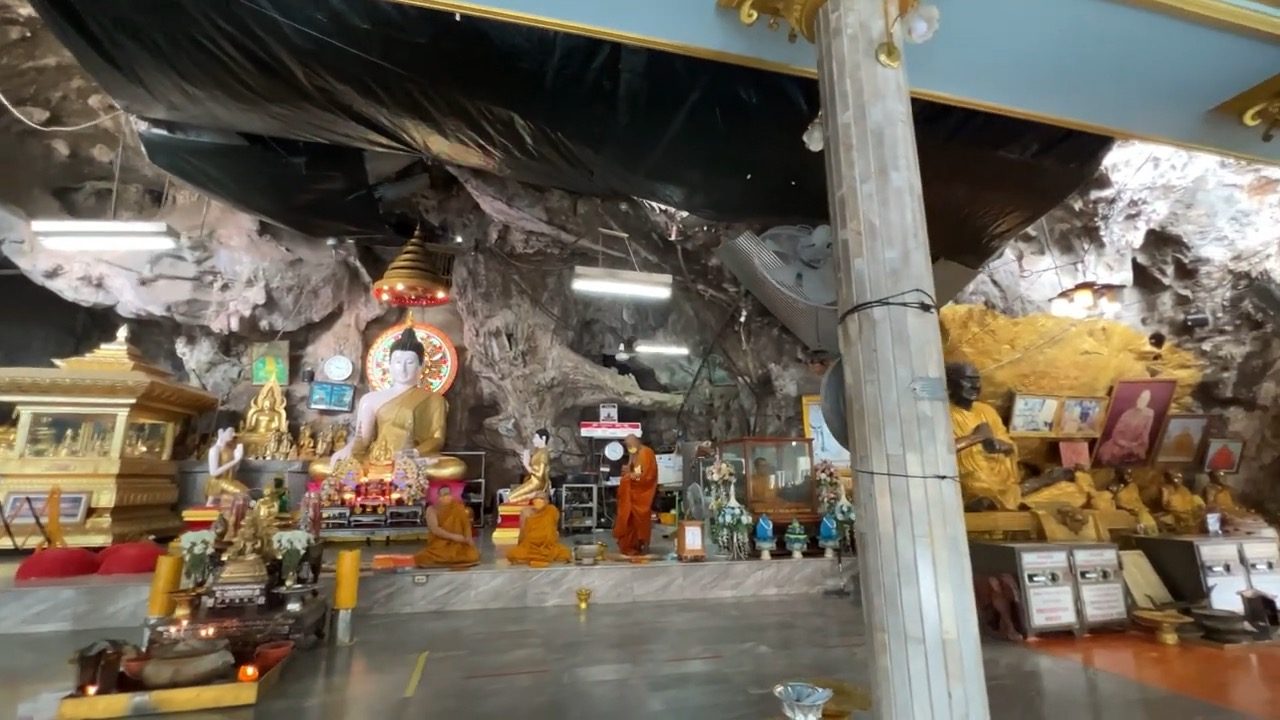
The tiger is gone and the monks have stayed, building up the legends that get written as time goes by.
We come back down. The fine blue hall is empty. Inside the walls, more temples still under construction, decorated with imposing dragons and tigers.
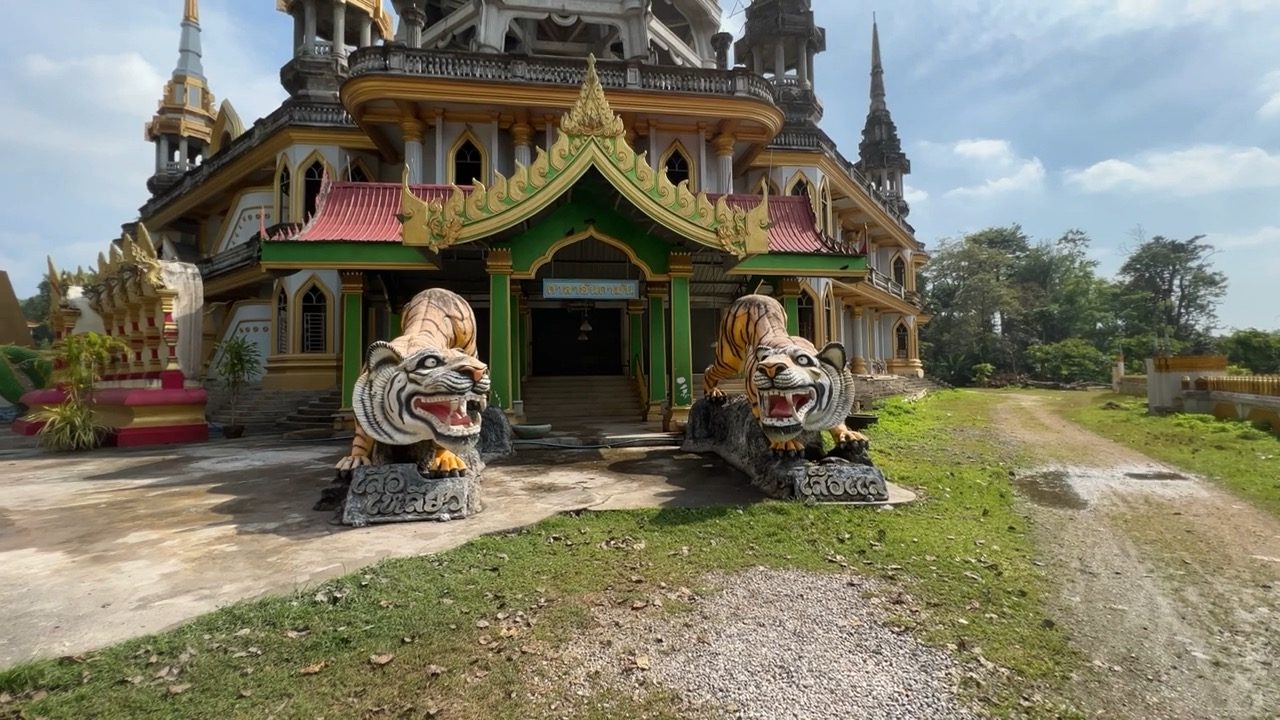
Two tigers guard the entrance
Ao Nang
It is hot under the Krabi sun. We drive on to Ao Nang Beach. A few long tail boats moored along the shore, a long beach, and everything is peaceful. A little further along the promenade, the monument to the fishermen and the swordfish marks something that happened here. The legends are still alive.
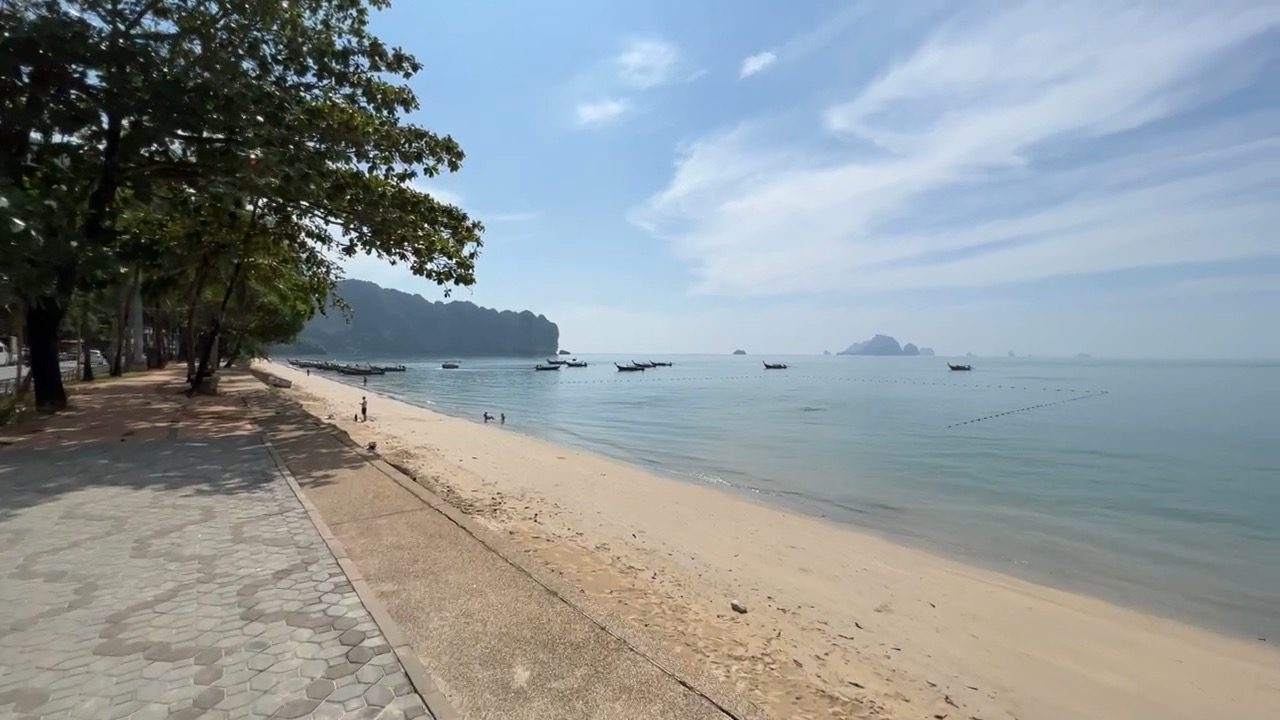
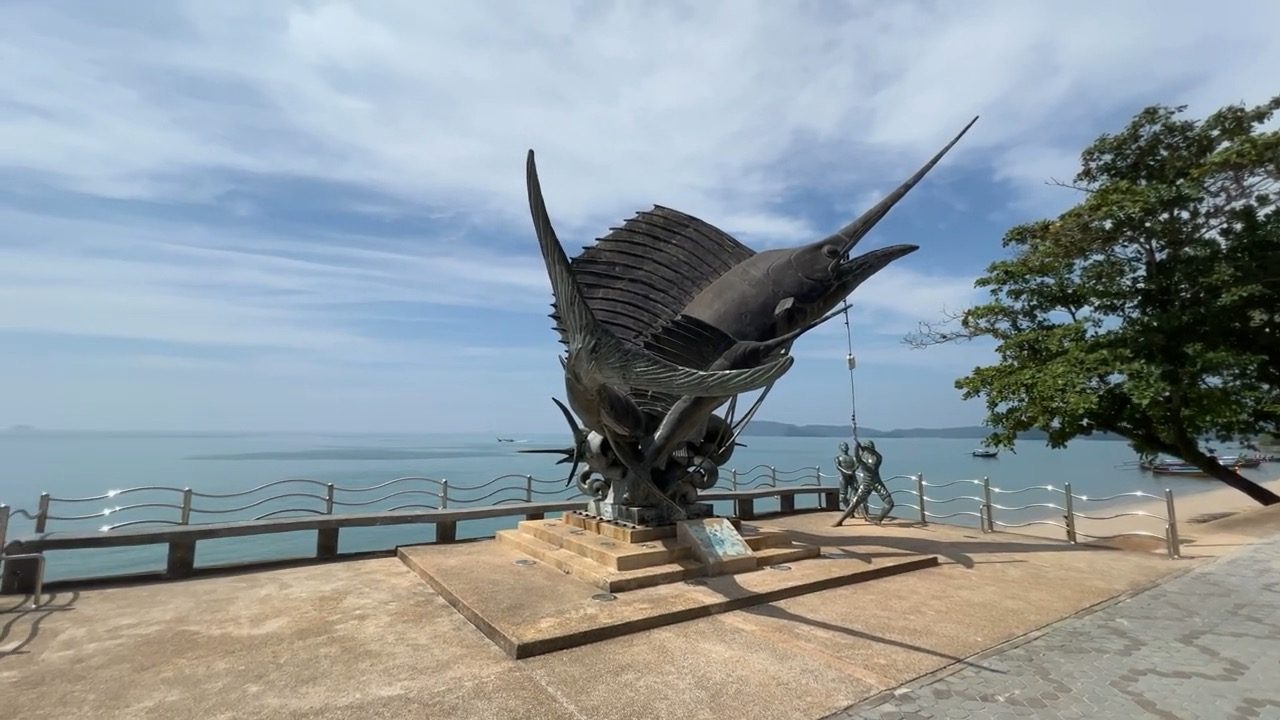
A couple lying down, feet in the water. Boats waiting to leave. Covid has emptied the place.
The empty port of Klong Jilad
Four kilometres out of town, the ferry terminal is empty too. This is the departure point for Koh Phi Phi, Koh Lanta, Phuket, Laemtong or Railay, and the town’s main terminal.
You can also see a Royal Thai Navy fighter jet here, and an American landing ship, the HTMS Lanta, turned into a museum. A group of bikers is visiting — three Lithuanians, the only tourists besides us.
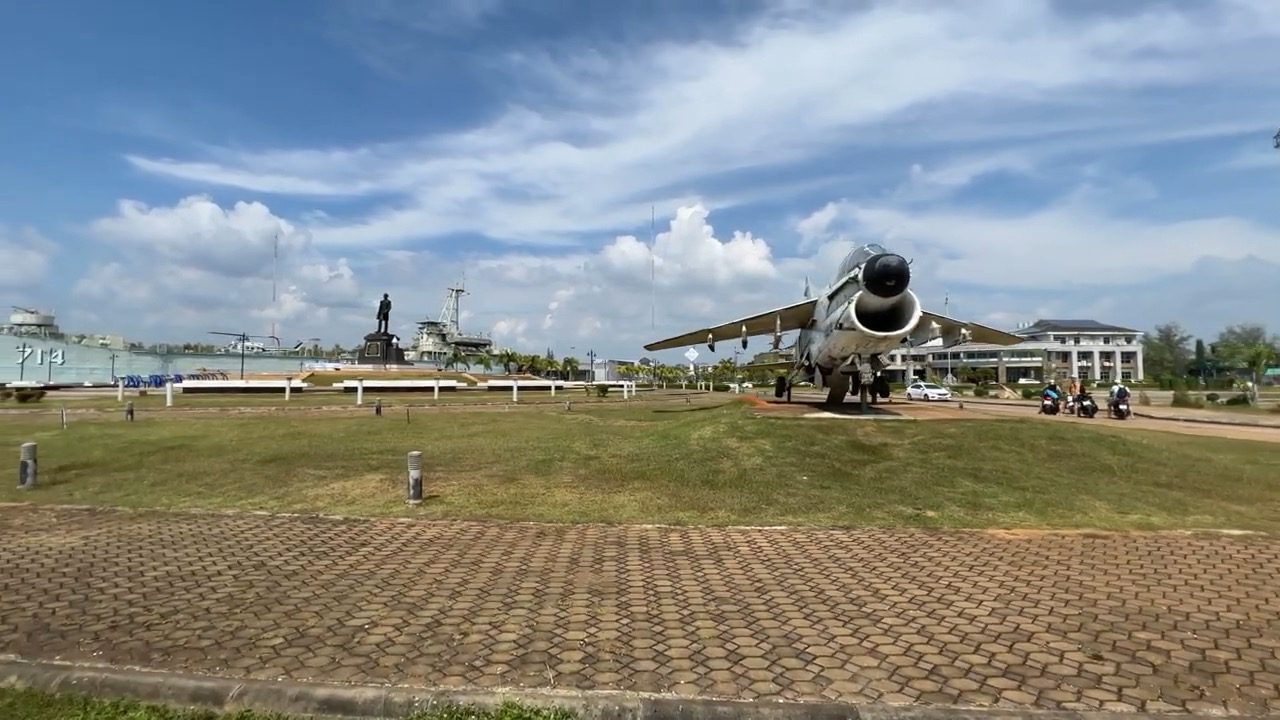
The Royal Thai Navy fighter jet, in front of a terminal with nobody in it
Thale Noi Lake
The next stage takes us towards Phatthalung, and above all towards Thale Noi Lake, to see the birds that live and thrive there.
One fine morning, Elisabeth and I set off. It is a vast nature reserve, a freshwater marsh at the northern end of the great Songkhla lake, home to water buffalo and to many bird species.
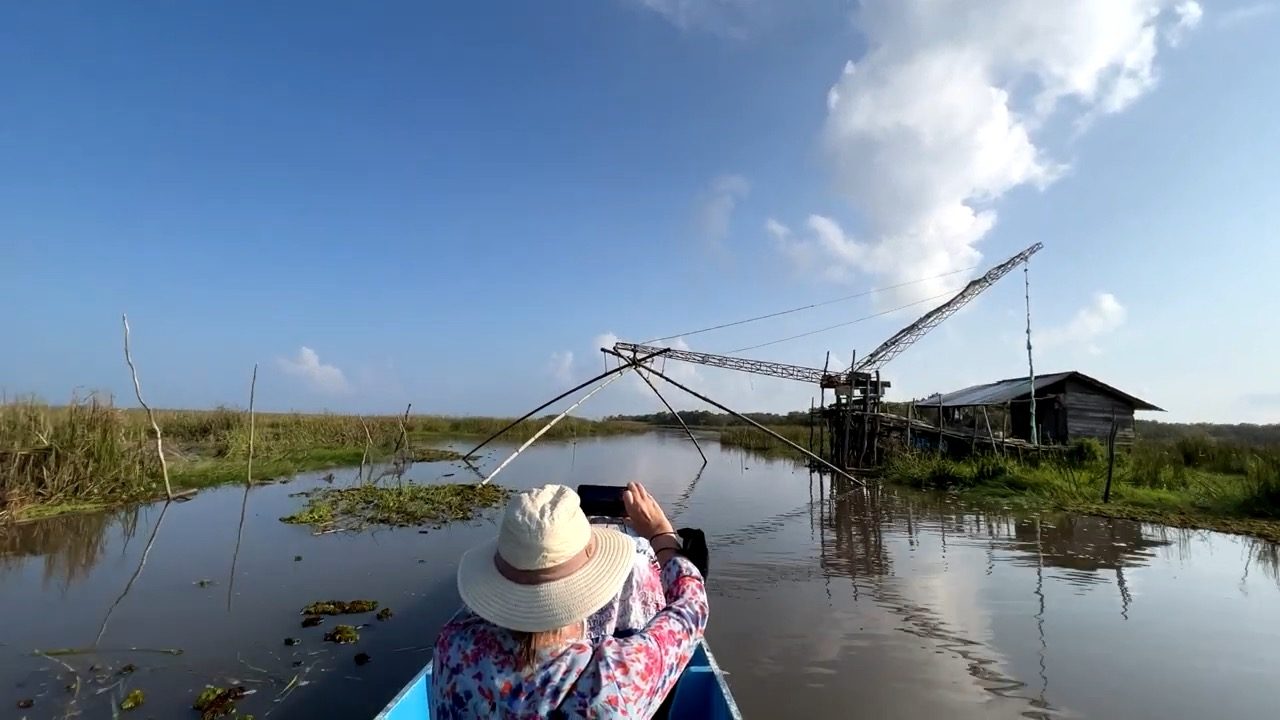
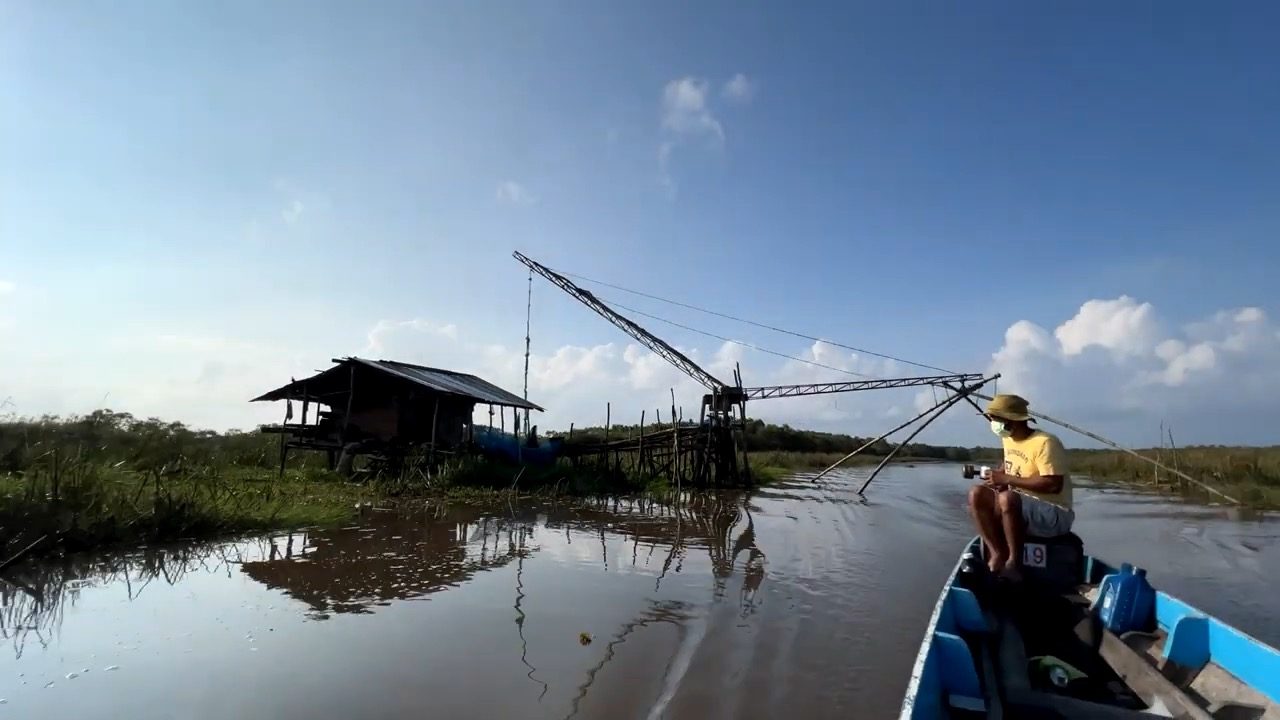
The long tail boat takes us into the channels, lined with water lilies and pink lotus. The boat is narrow and not quite steady, but what a pleasure to glide along the water surrounded by all that green.
Our boatman works the channels skilfully, greeting the lake’s fishermen as we pass. Everyone here probably knows everyone. A long tail overtakes us at full speed, the man waves and shouts: “Where are you from?”
The people of the lake
They live on the lake or along its edges, in traditional houses built on stilts, suited to the seasonal floods that are frequent in this part of the world.
We pass beneath tall wooden structures planted in the water. Right below us, huge square bamboo fishing nets — the Yors — which the fishermen raise using their own weight as a counterweight. Rather like the lift nets along the banks of the Gironde.
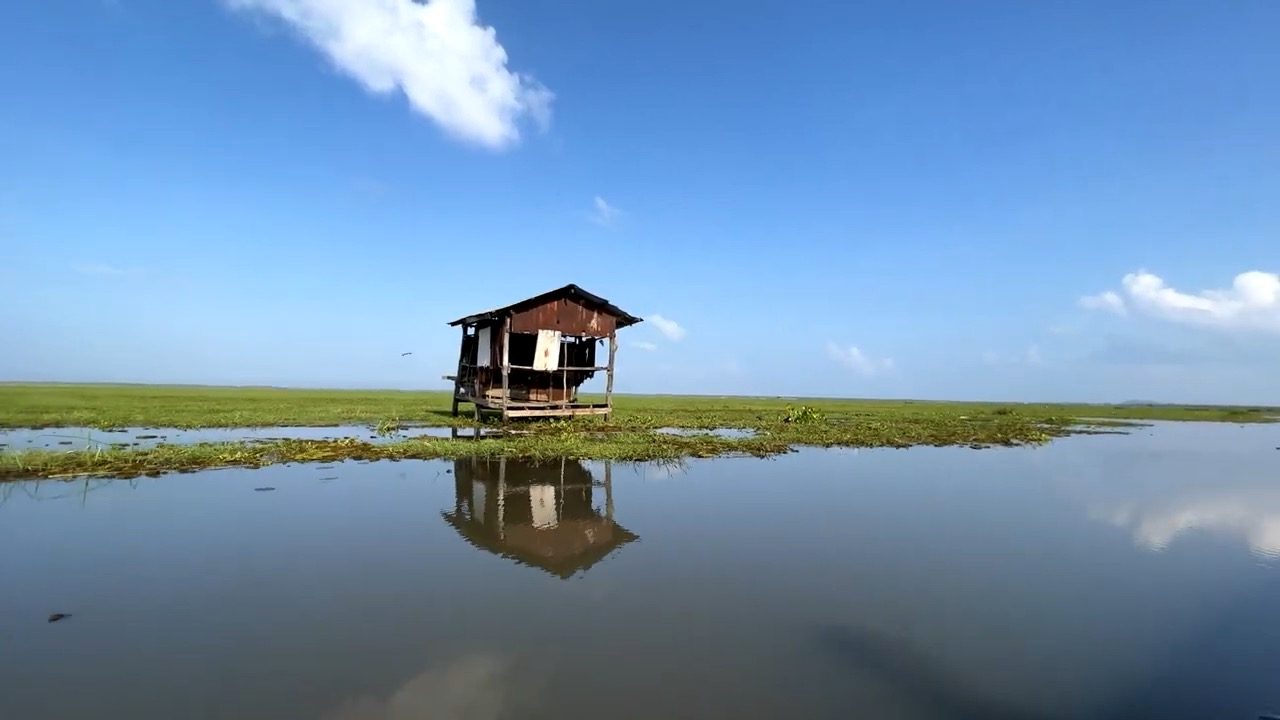
We follow mounds of earth where farms have been set up. The villagers come out by boat to keep an eye on the animals, which spend the day half-free on the lake. The buffaloes have learned to swim long distances: they put their heads under water and feed on the aquatic grasses. An adaptation to their surroundings.
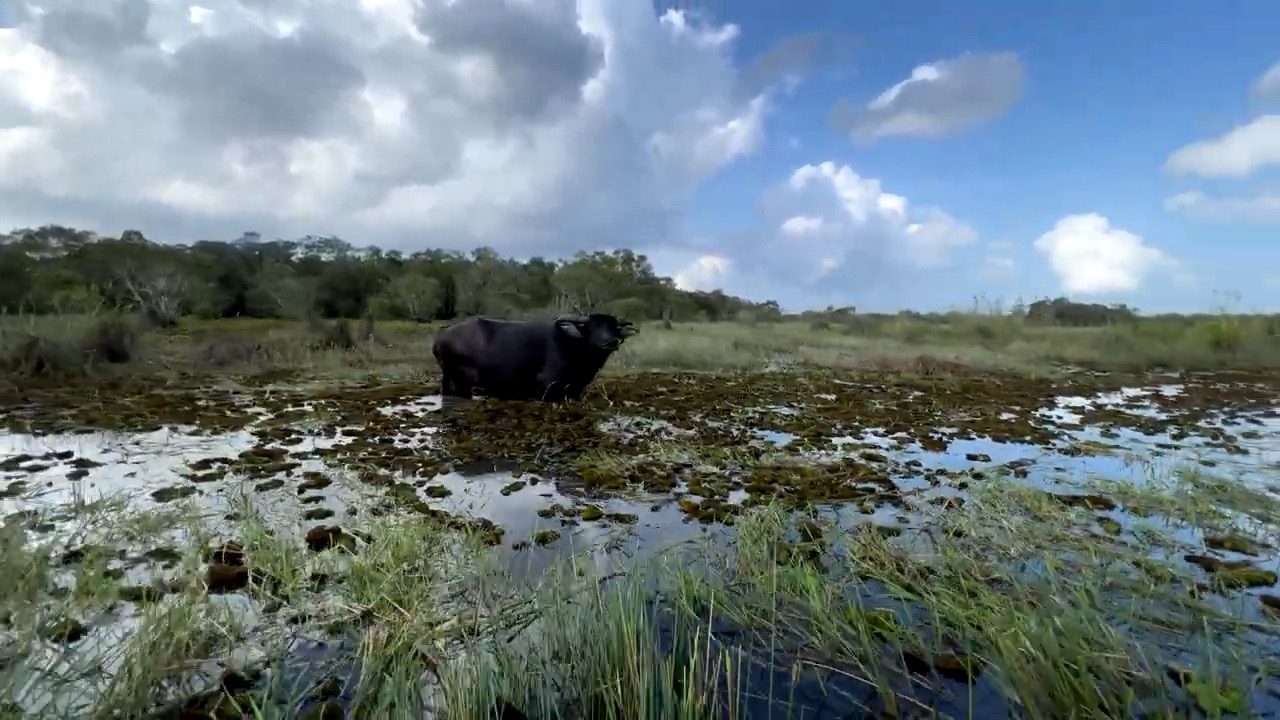
A buffalo in the water up to its chest
5,000 families are said to live off the lake — fishing, livestock, rice growing, and krajood basketry. The region is developing community ecotourism, the fishermen taking visitors like us out to see the water lilies in flower, the migrating birds and the life of the people.
The birds
This is Thailand’s first Ramsar site, and more than 150 bird species have been recorded here: pond herons, terns, great egrets, bee-eaters, Asian openbills, Brahminy kites, cormorants, purple herons and cattle egrets — along with rarer species that delight birdwatchers.
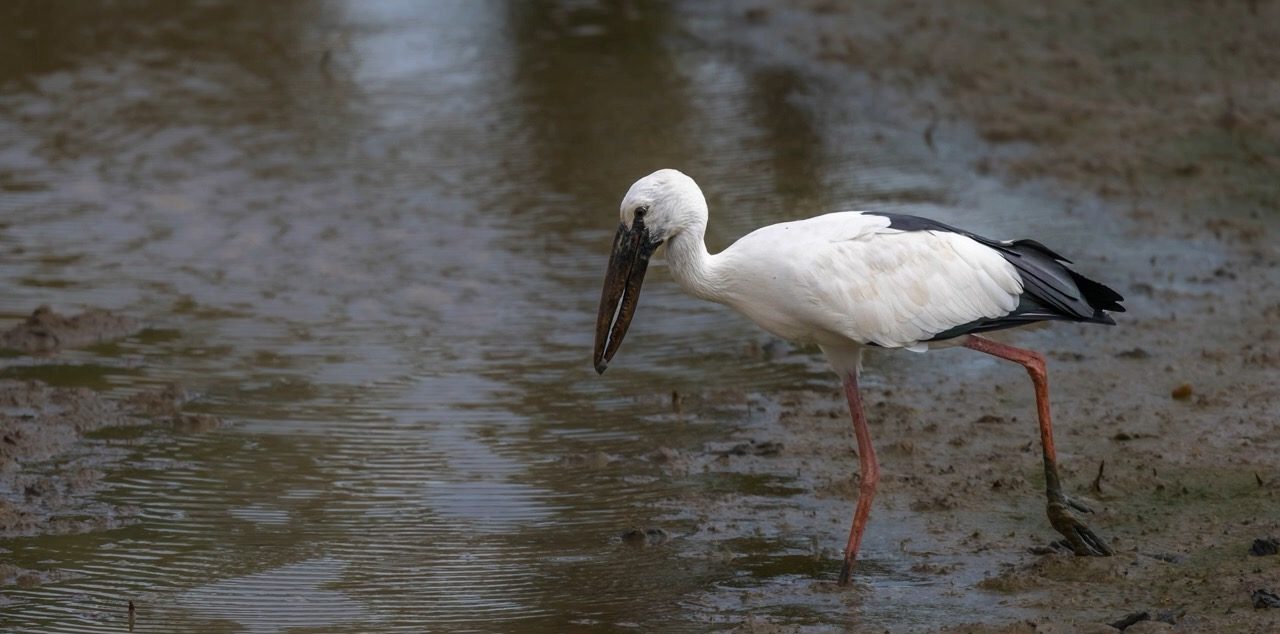 An Asian openbill in the mud
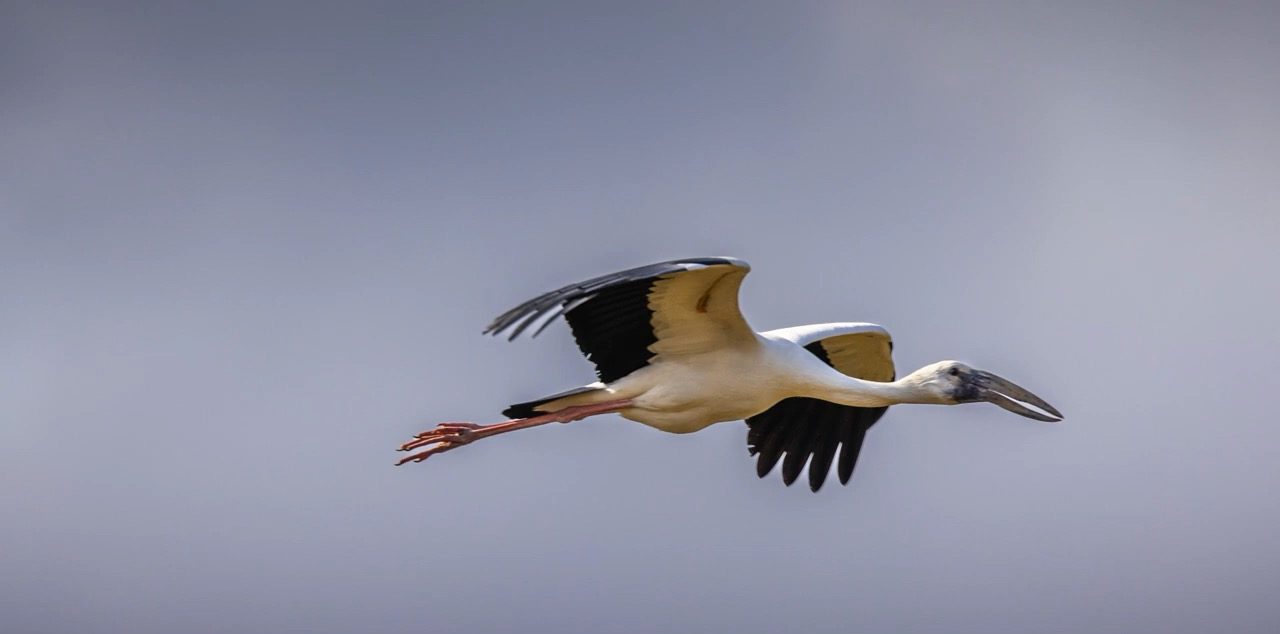 The same bird, passing overhead
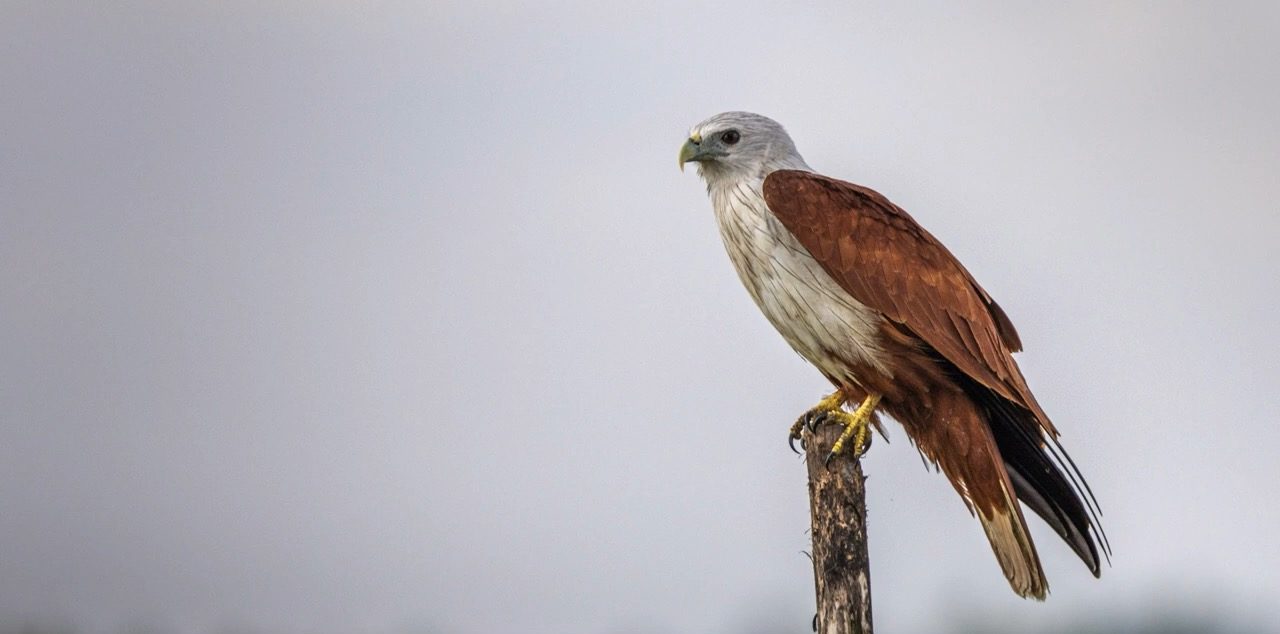 A Brahminy kite, perched on a post
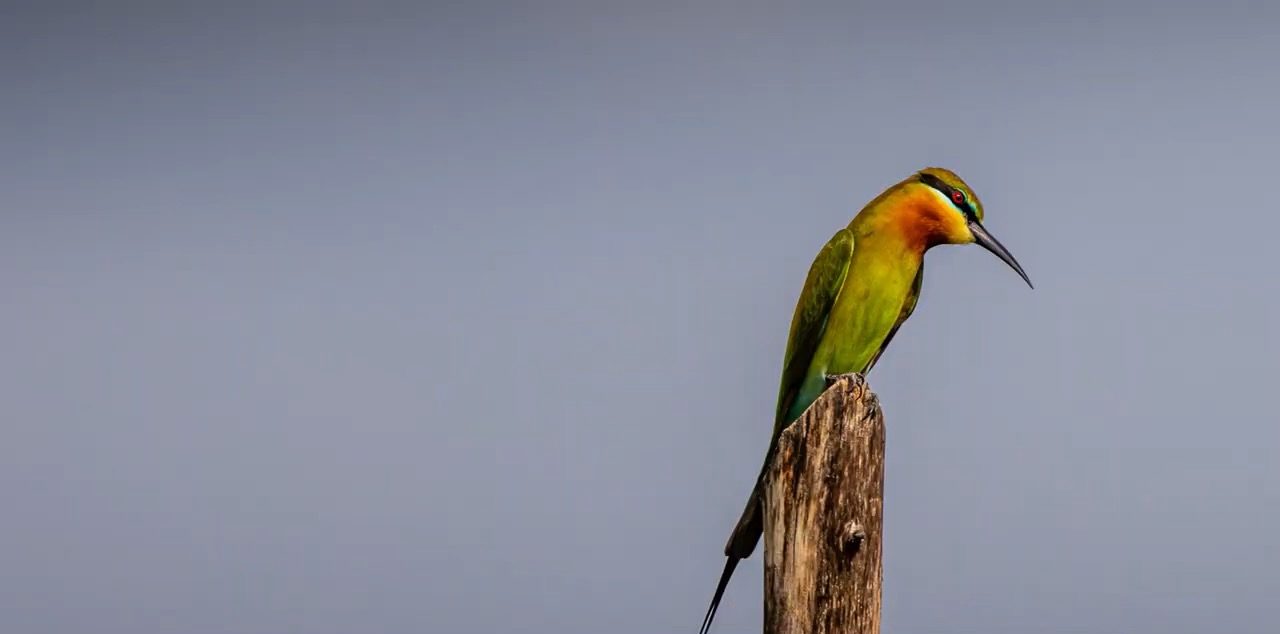 A bee-eater, perched on a post
We move out onto a sea of water lilies to watch the Asian openbills in flight, gathered there in numbers. Our boatman is remarkably skilful at not getting stuck in all that vegetation. Further on, the buffaloes watch us go by, indifferent, busy feeding.
On the way back we have lunch at the Le Noi Berry café, near the landing stage. We are made welcome, the only tourists that day.
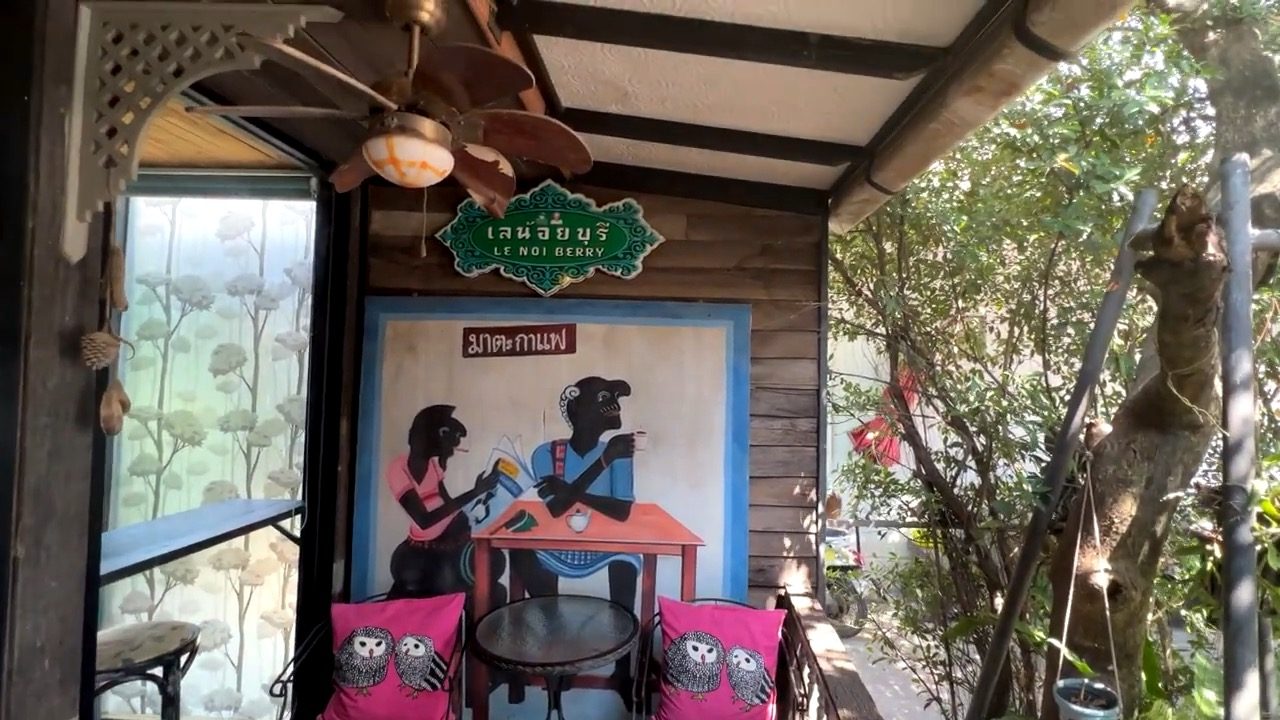
The Le Noi Berry café, near the landing stage