Thailand 2021, a country without tourists — 5. The Similan Islands and Phang Nga Bay
Continuing our three-month journey through the Thailand of 2021, barely reopened after Covid. In the previous episode: Wat Chalong, a wedding come upon by chance, and Koh Phi Phi at sunset. This time we head north: Khao Lak, the Similan Islands, then Phang Nga Bay and the stilt village of Koh Panyee.
The road to Khao Lak
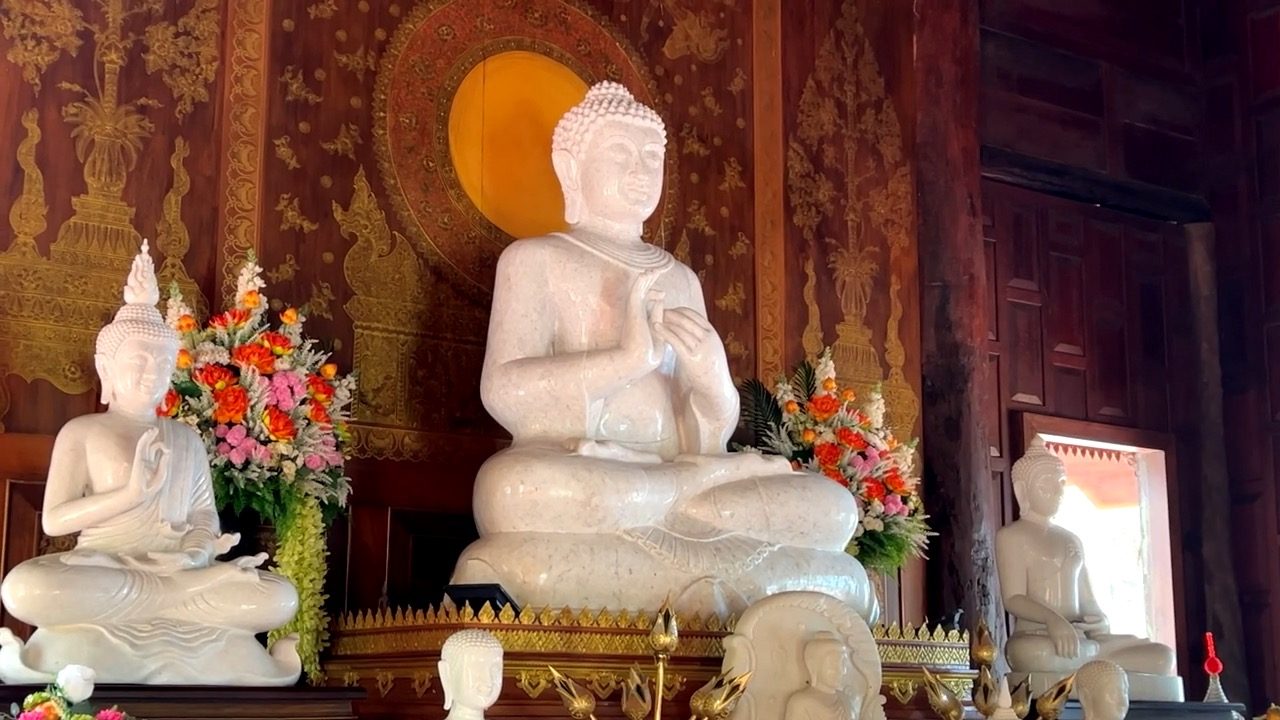
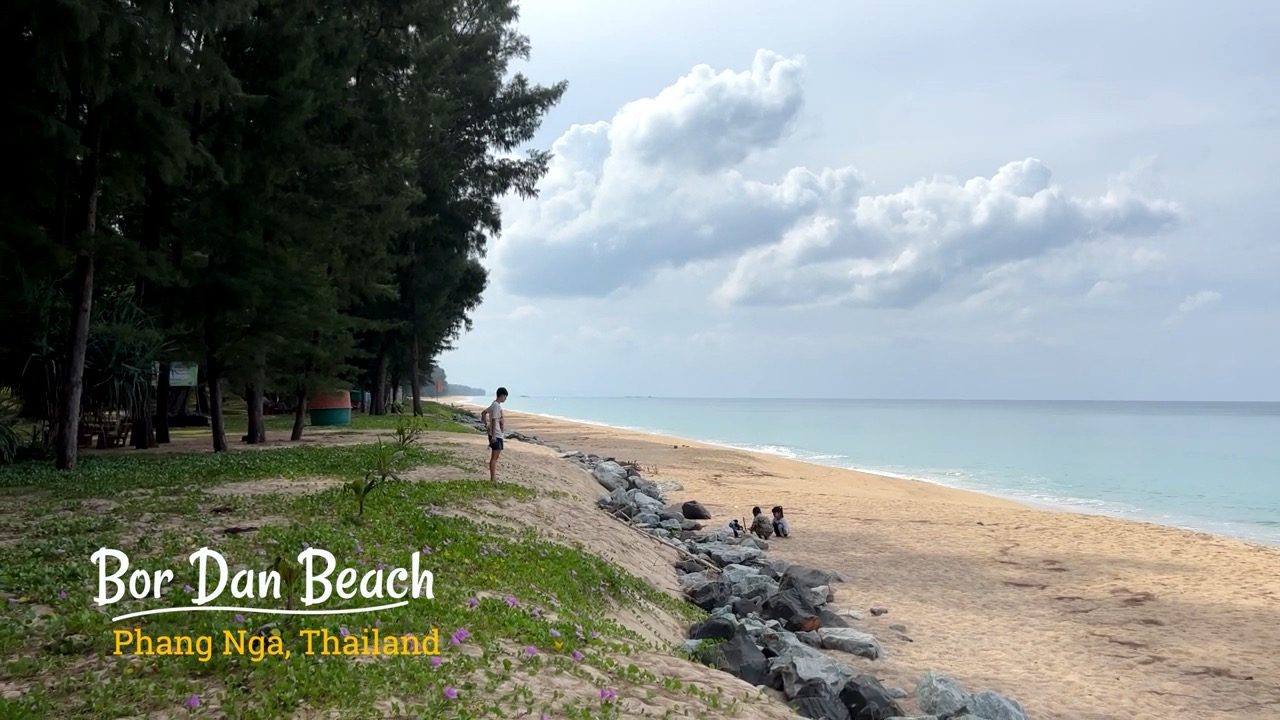
We leave Phuket on a sunny morning, heading for Khao Lak, where we are to board for the Similan Islands. Around 10 a.m. we stop to visit Wat Tha Sai (Wat Tes Tammanawa), in Phang Nga. We step inside. A little girl tries a few dance steps on the temple floor, a red carpet leads to the monk’s seat and, behind it, a seated Buddha of dazzling whiteness seems to hand down his wisdom. Outside it is pleasant under the tall trees that line Bor Dan Beach. We take a break near the prayer hall.
On the road I stop to look at the buffaloes grazing in a field reached by a small path. The herd moves away as I approach. Some raise their heads, as if sniffing the air, and watch me from a respectful distance, accompanied by a few cattle egrets.
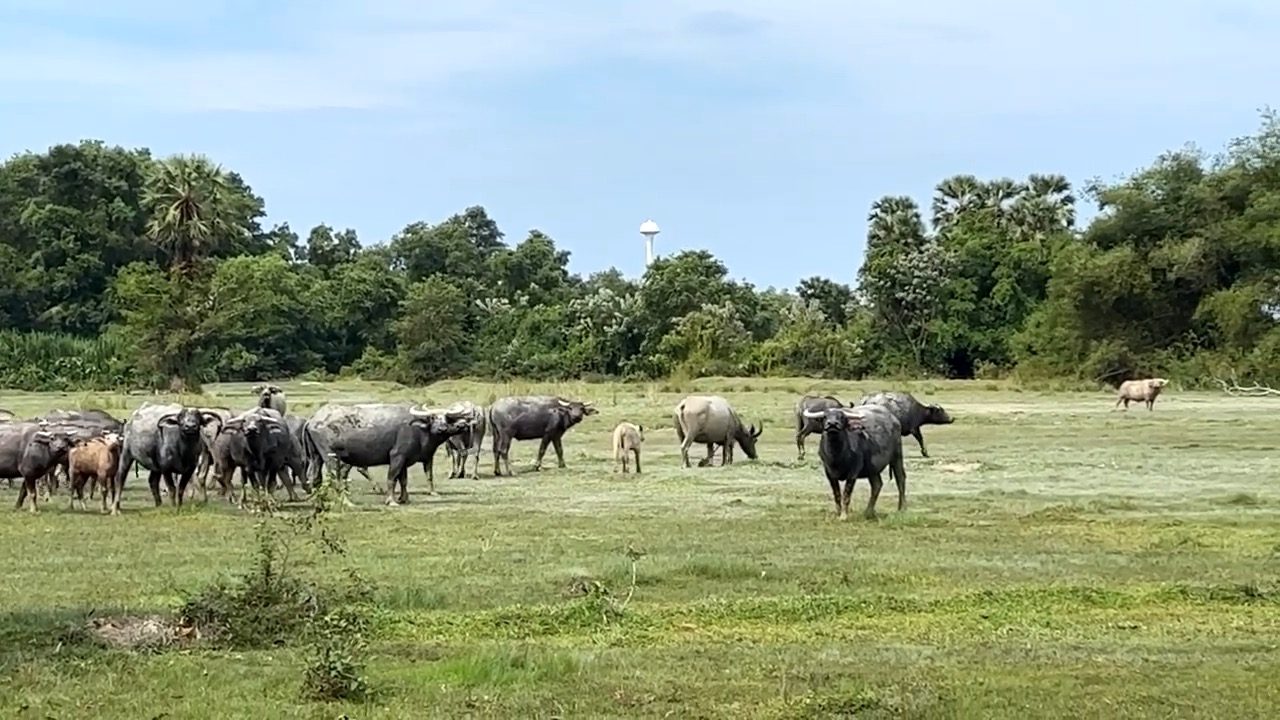
The buffaloes keep an eye on me from a respectful distance
We drive on to Wat Pattikaram. Within the grounds, several temples and a golden Buddha, seated on his platform, victorious, looking down at us from his full height. Further on, large halls and the monks’ dwellings. Under a tree, two women are setting the table, dogs resting on the ground beside them. They smile and invite me to eat with them. They don’t speak English: Thai kindness in all its simplicity.
Near the temple, ringed with elephants, stands a kiln for fireworks, with traces of gunpowder all around. Will luck be on our side? Inside, a seated Buddha covered in gold leaf, a few leaves trembling in the wind. Further on, I spot a monk going back into his little house.
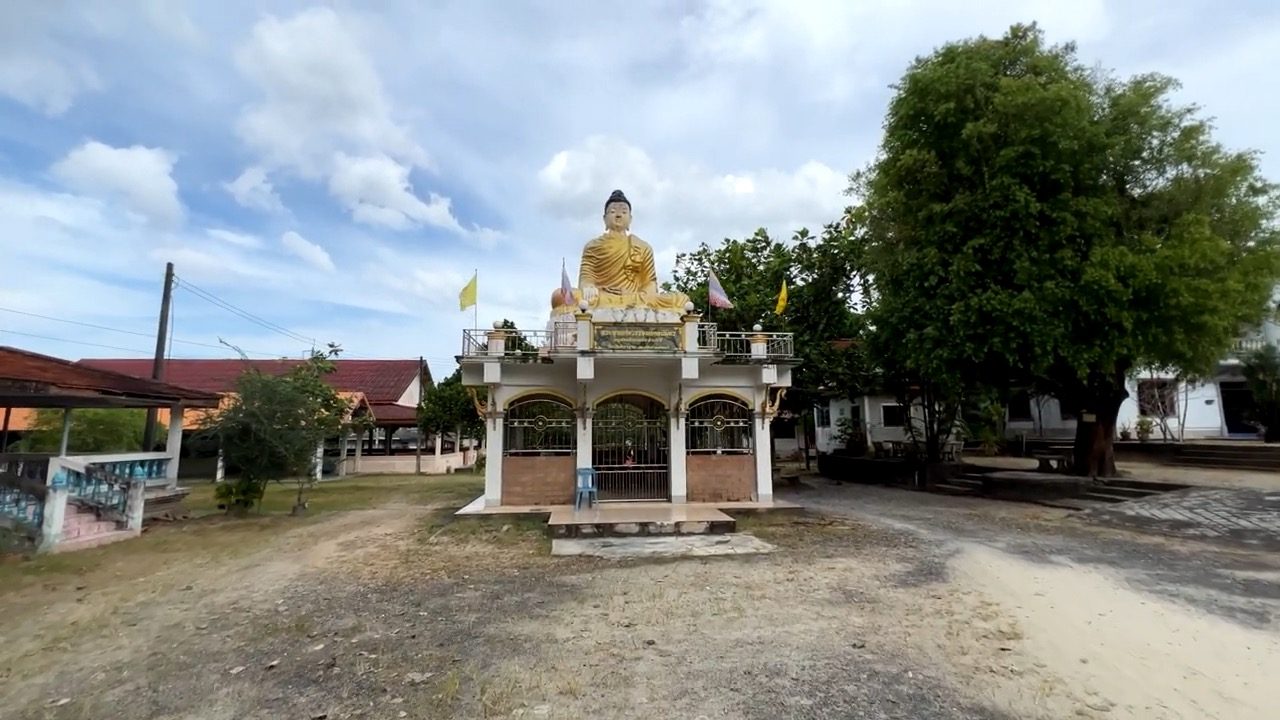 The golden Buddha of Wat Pattikaram, seated on his platform
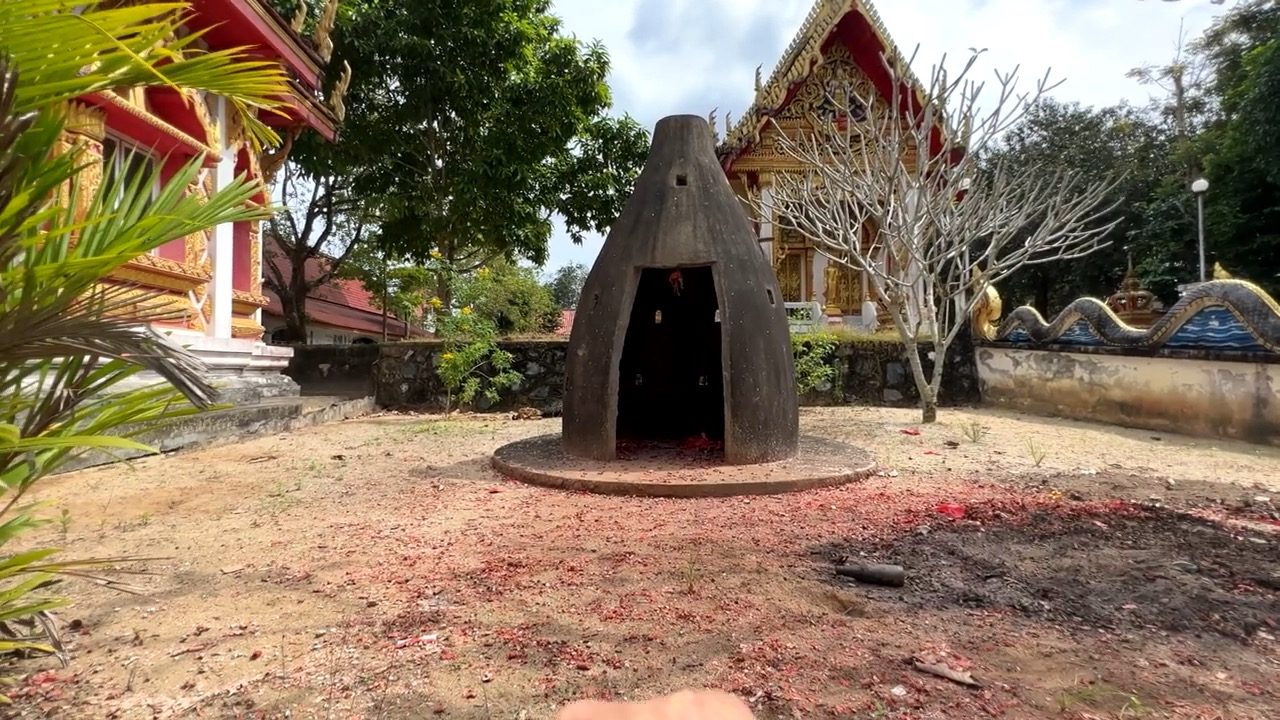 The fireworks kiln, surrounded by gunpowder residue
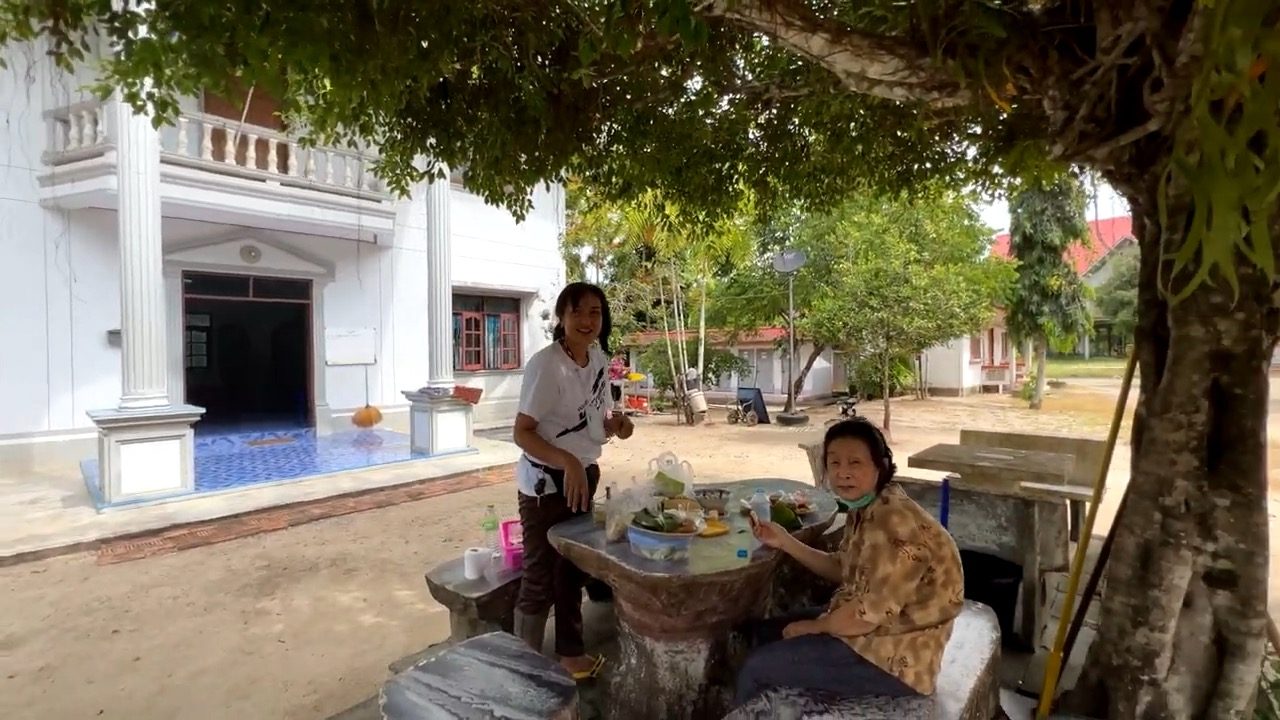 The two women setting the table, inviting us to eat
Towards the islands
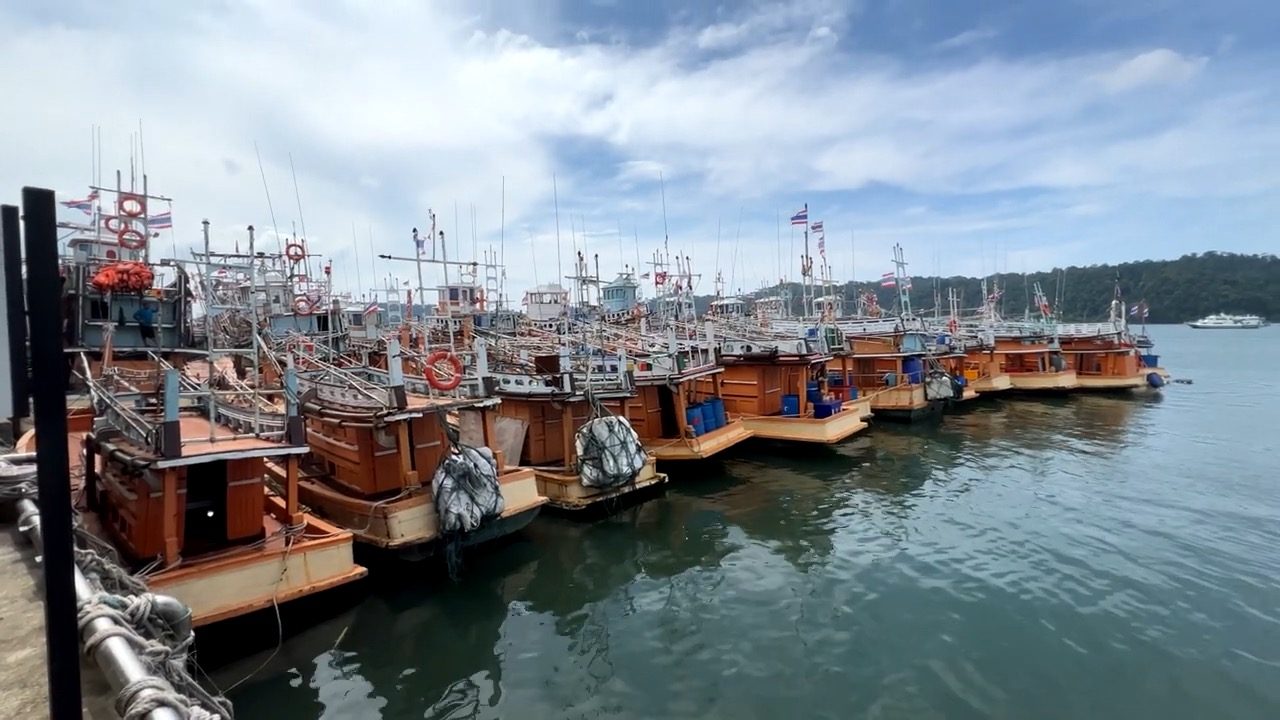
Arriving at Thap Lamu Pier, I go to introduce myself at the office of WOW Andaman, the agency running the tour. The fishing boats are moored tightly packed against one another. A little further along, the small speedboats that will take us to the islands in an hour and a half are waiting.
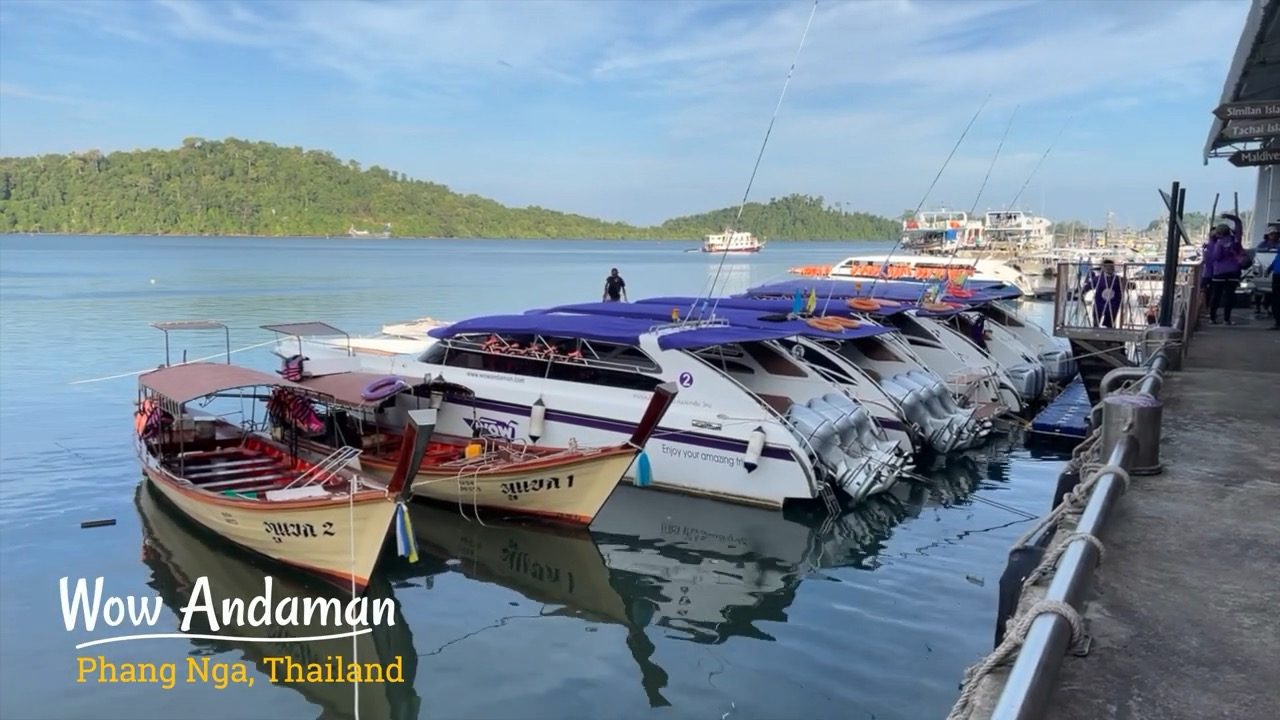
We board quickly and everyone puts on a life jacket. There are about twenty of us on board, and the crew hands out seasickness pills: is this going to be a rough ride? The speed and the swell shake us up a little, and I think we are all glad to set foot on the island of Ko Miang.
Ko Miang and Ko Similan
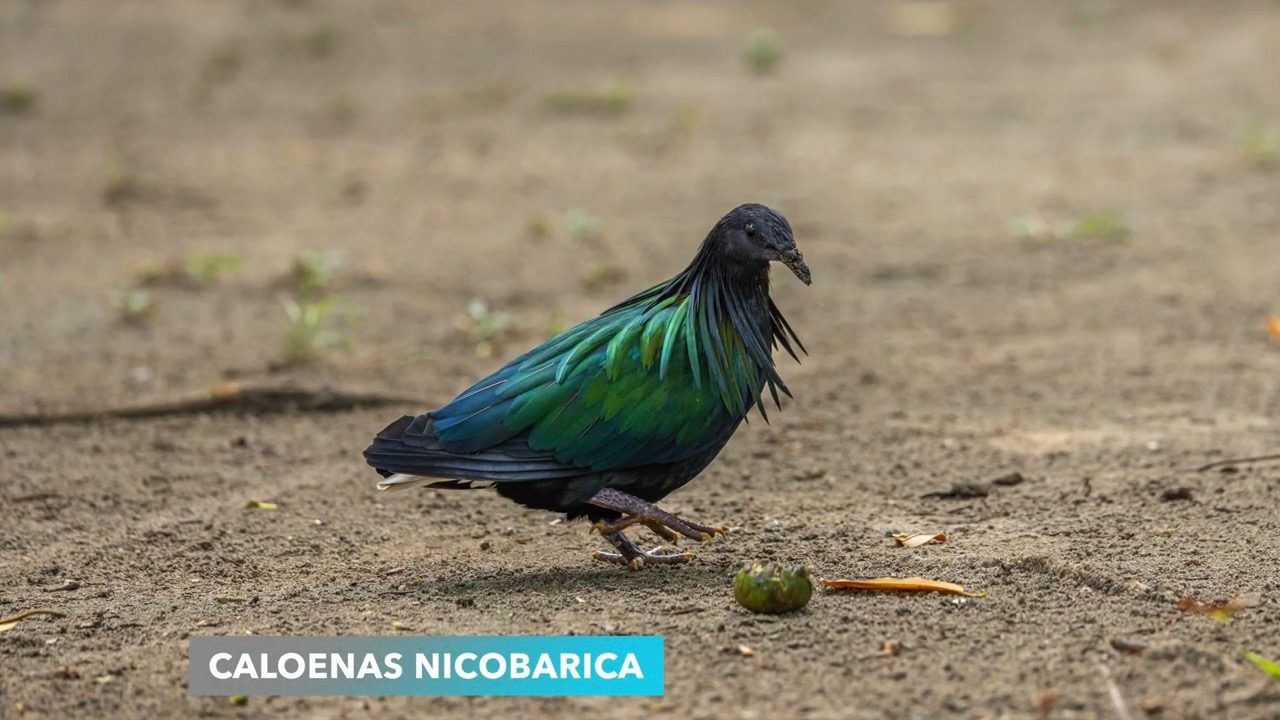
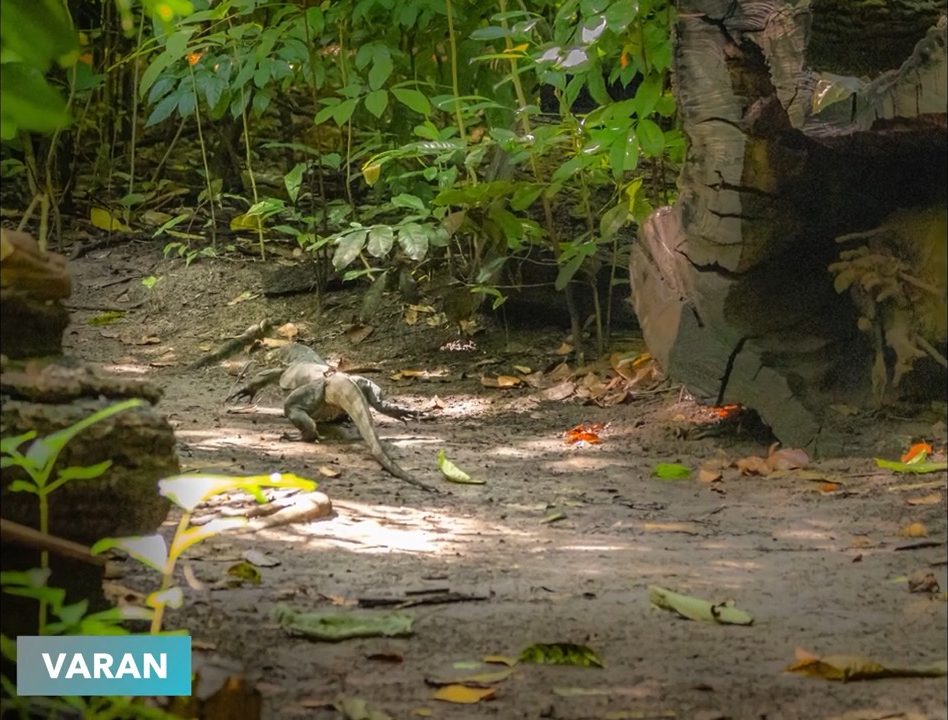
Nature is well preserved here, with little infrastructure, and I set off along the nature trail. Around a bend, a huge water monitor scurries away as I approach. Back under the trees, I finally spot the Nicobar pigeon running along the ground. I follow it at a distance and manage to photograph it at last. It looks rather dull from afar, but its iridescent plumage transforms it, as if by magic, into a magnificent bird. In the end, tired of being followed, it flies off.
Bats hang upside down from the branches above me. I prefer to head back to the white sand beach and the turquoise sea. A postcard at full scale: only the swell breaks the silence.
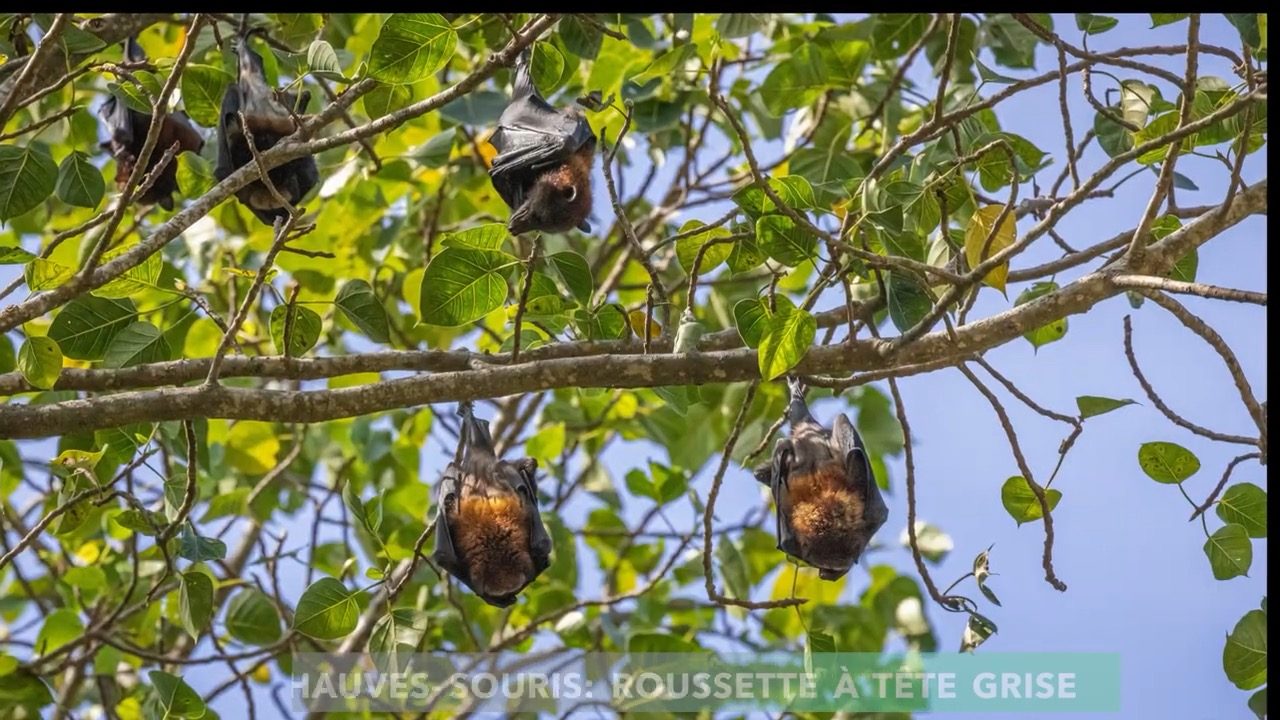
Flying foxes, hanging above the path
Back on the boat, bound for Ko Similan for lunch and snorkelling. We have a lot of fun watching the colourful fish, and Elisabeth does much better than I do, the swell doesn’t seem to bother her. My camera isn’t waterproof, so I didn’t film this lovely moment. During the break, we watch a hermit crab on the beach doing its best to get back to the sea. Another boat arrives, but in the end there are few of us on the island: Covid has emptied the islands too…
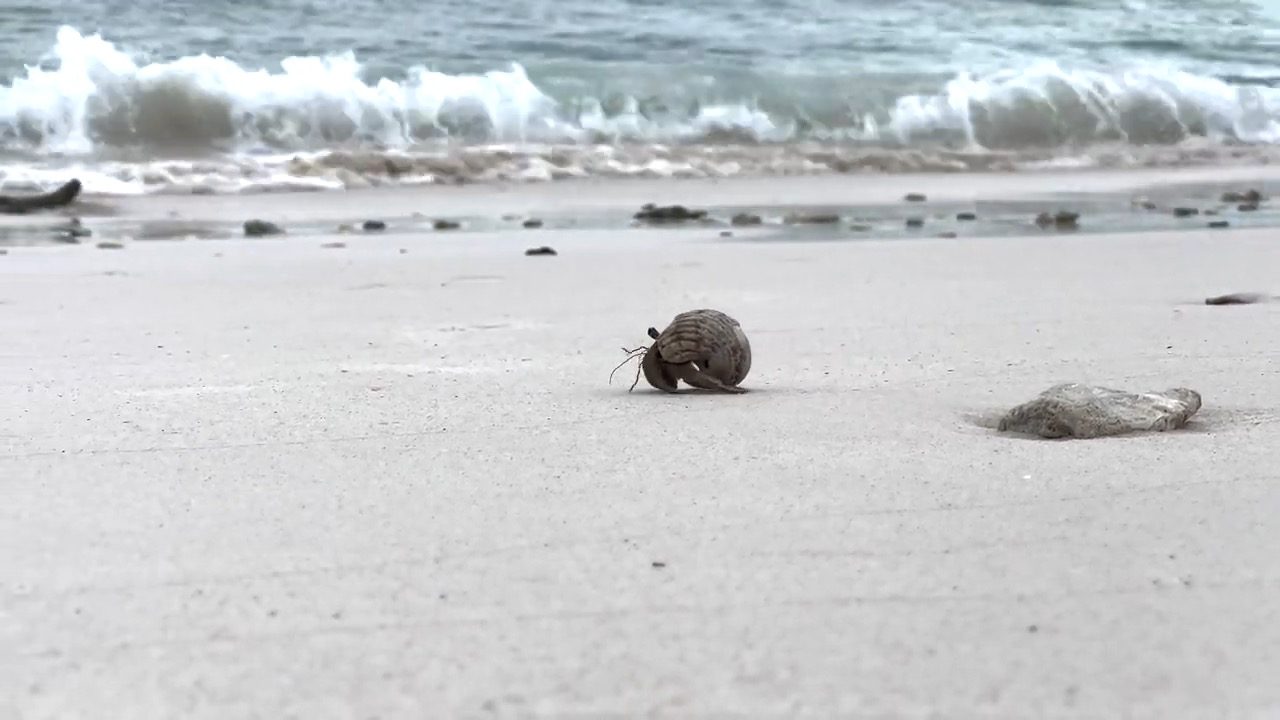
The hermit crab and the sea waiting for it
Phang Nga Bay
December 2021. It is 6 a.m. at Phang Nga Bay, and we are woken by roosters crowing all around. Then music and drumbeats for the daily morning exercises. We leave early for Tha Dan Pier, where we have hired a long tail boat to visit the bay and the floating village of Panyee. The boatman greets us with great bows and invites us aboard. We have booked four hours of cruising, with the boat all to ourselves. We glide over the water, the sound of the engine for company.
Phang Nga comes from two Thai words, “phang”, a hollow, and “nga”, a tusk: the limestone cliffs rising from the water do indeed look like elephant tusks. The boat slows near one of them so that we can admire the rock paintings. This is Khao Khian, “the Mountain of Writings”. In an overhanging cavity, drawings in red ochre appear, reflected in the clear water: marine and land animals, geometric figures, human silhouettes. Archaeologists remain cautious about the dating; the figure given is about 3,000 years. They are traditionally attributed to the ancestors of the Moken, a first glimpse of the talent of the region’s earliest inhabitants.
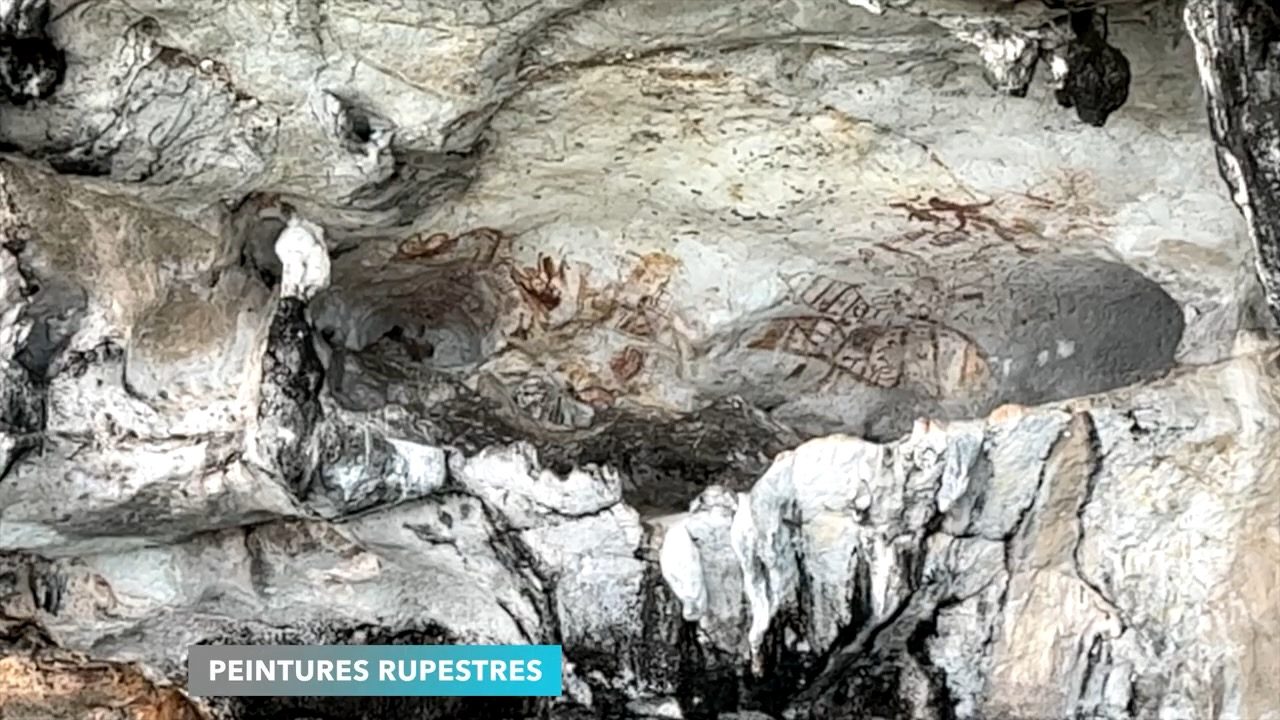
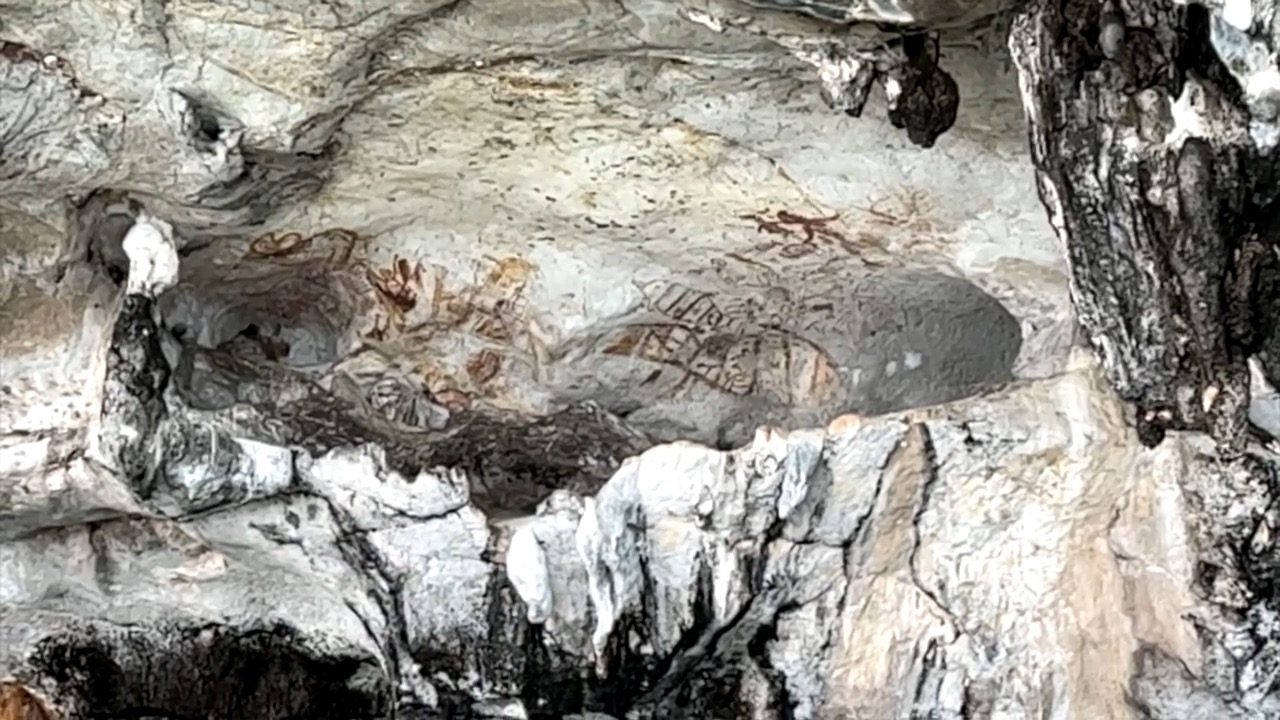
The Moken, nicknamed the sea gypsies, long lived almost the whole year aboard their houseboats, the kabang, between Thailand, Burma and Malaysia. Outstanding divers, they go down forty metres to gather shellfish and sea cucumbers, and their children learn to see clearly underwater. Today there are said to be only three to five thousand of them, increasingly settled on land: tourism and the national parks bring them a little income but weigh on their way of life.
Elsewhere in the bay, other communities also live on the water, Muslim Malays and Thai-Moken: wooden houses on stilts or tied to mangrove roots, tin roofs, narrow walkways, nets and fish pens all around. Children learn to handle a rowing boat before they walk, and the school floats. Fishing restrictions, pollution and tourist pressure make life harder, but many families stay.
Koh Panyee
We hug the cliffs, almost touching the rock, then the village of Koh Panyee appears by the cliffs, the golden domes of the mosque rising above the colourful roofs. We pass the village at a distance, more karst cliffs fringed with mangrove. Soon we skirt the big tourist boats: they lie empty at anchor, waiting for better days.
Here is Khao Phing Kan, the famous James Bond Island, with its patch of beach and its huge rock standing like a python. The island is now privatised and entry is paid: we pass on and carry on.
We reach the stilt village of Panyee for lunch. Around it, big floating cages are used to store and raise fish: aquaculture the old-fashioned way.
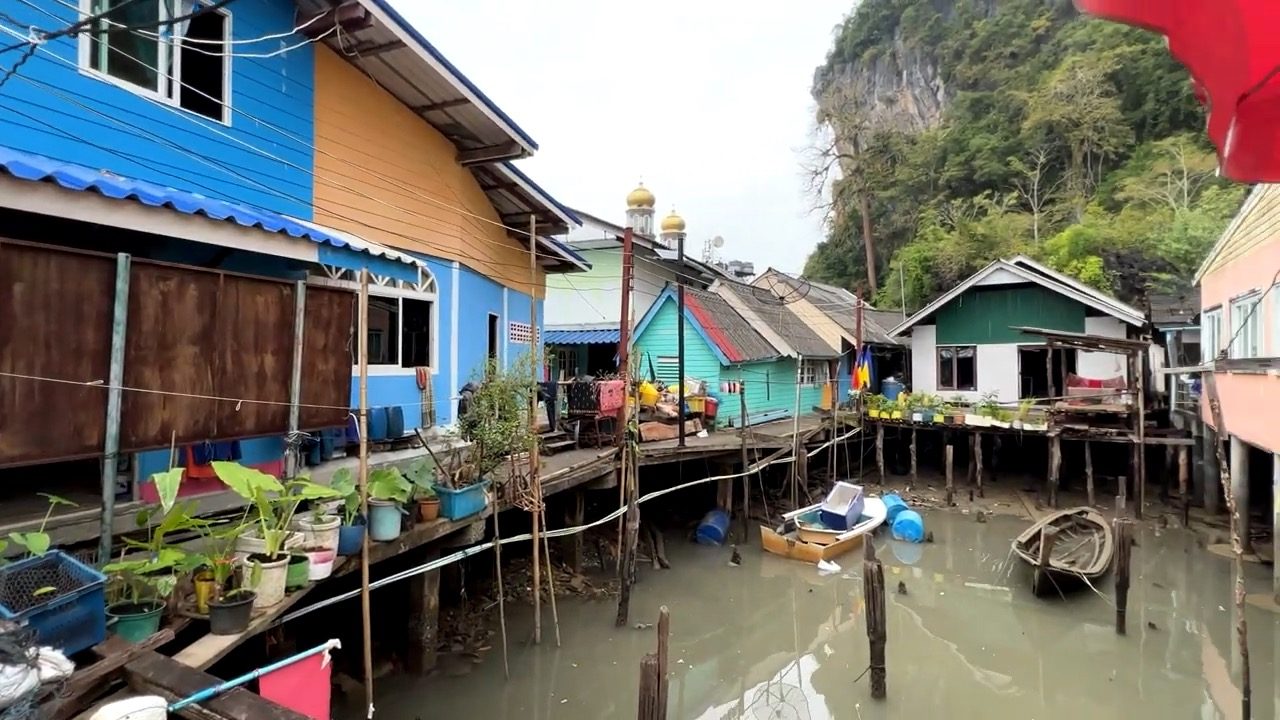 The colourful houses of Panyee, on their stilts
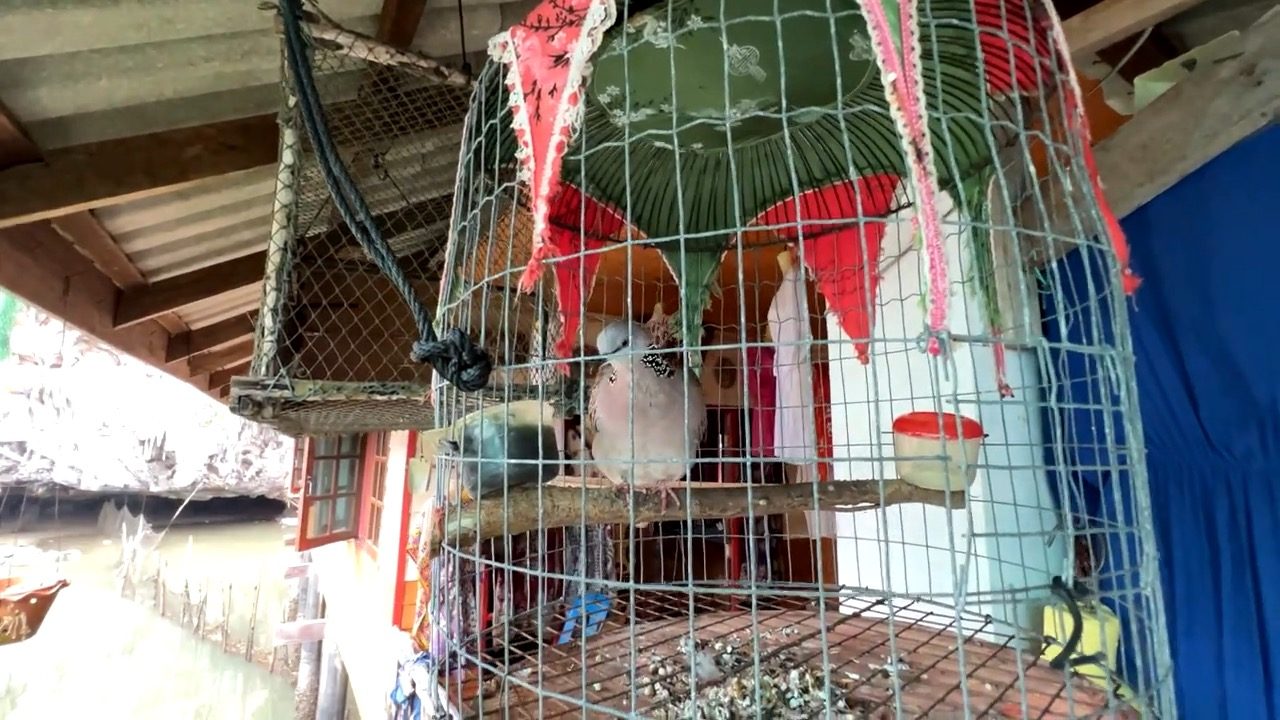 The spotted dove in its cage, near the clothes shops
The lanes are lined with shops for tourists, but as for tourists, there is only us. The village lives on its own. The rooster crows, a spotted dove sits in its cage near the clothes shops. A fisherman is mending his traps, people smile at us. Shells, plants, bags, bracelets, necklaces: everything is laid out, but not a soul in sight to sell it. We wander on, accompanied by the cries of caged birds. Like mussels on a rock, the electricity meters are stuck to the poles that hold the cables from lane to lane.
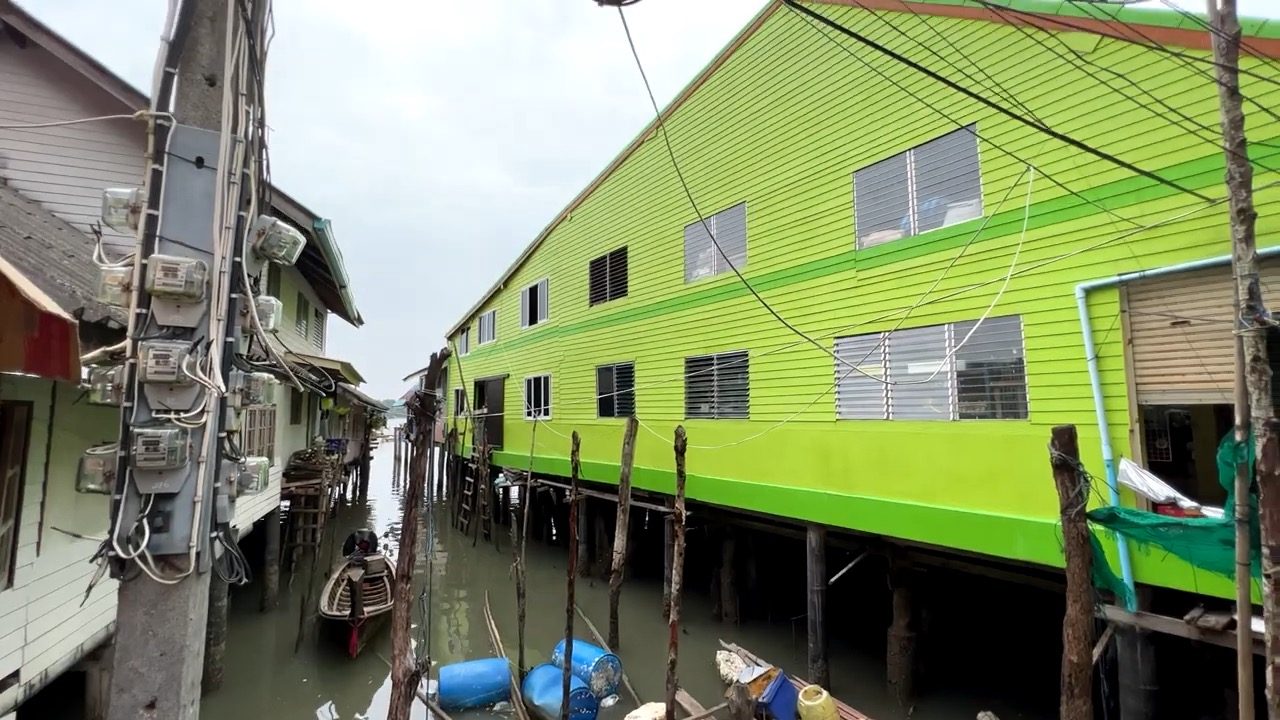
The electricity meters, stuck to the poles like mussels on a rock
The village is large enough that you can almost get lost without visual landmarks. I steer towards the mosque I spotted between the rooftops. About 360 families, between 1,600 and 2,000 people, live here. An old man lying on a bench sleeps at the edge of the lane.
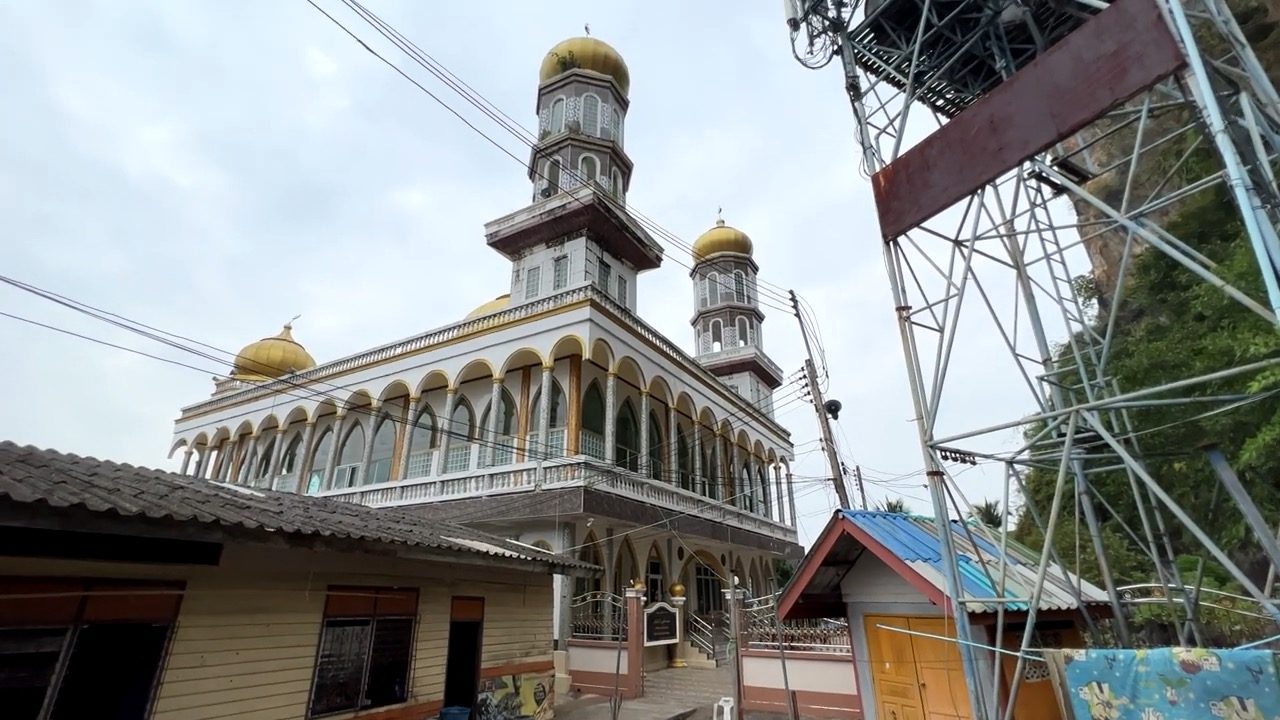
The mosque of Koh Panyee and its golden domes
At the far end of the village, the school, where I am kindly invited into the yard. Children play ball and run about on the playground. Further on, a big football pitch at the edge of the bay: what a wonderful place to play! The bay and its karst peaks take us somewhere else, into the world of simple people whose lives follow the rhythm of the sea. It must be hard to leave a place like this after growing up here. It seems that most young people come back after their studies in town.
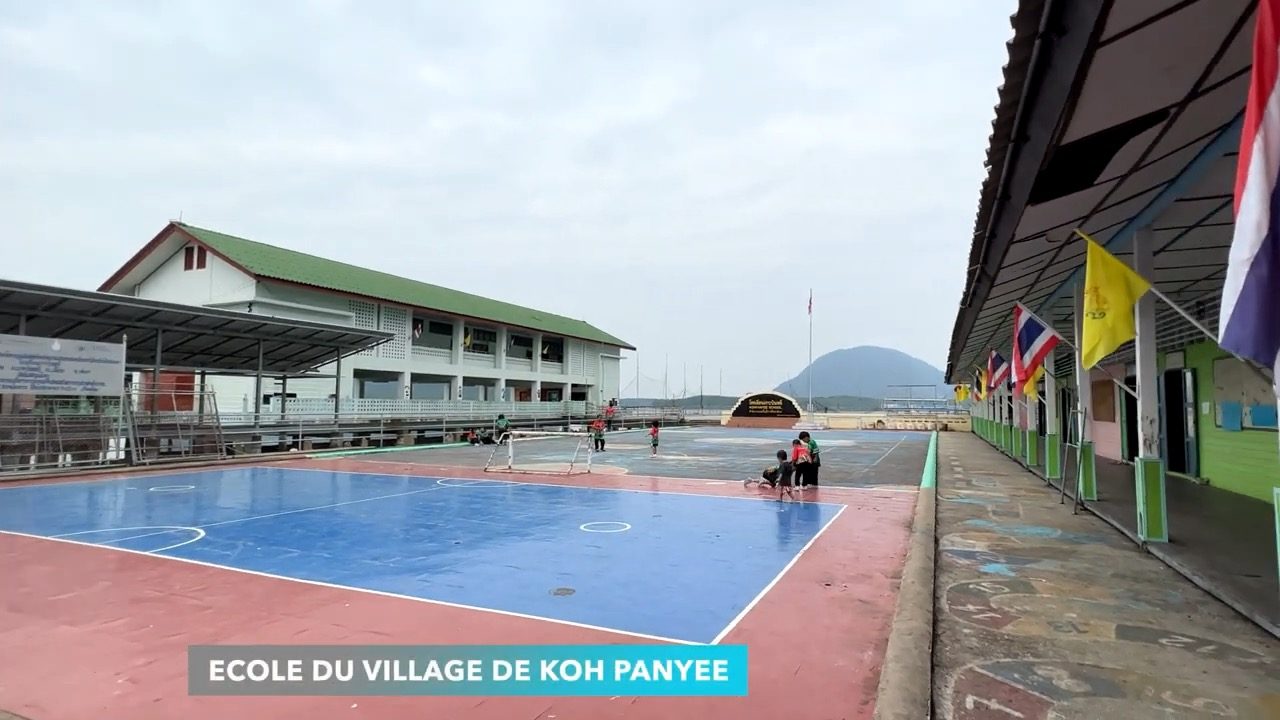 The schoolyard in Koh Panyee
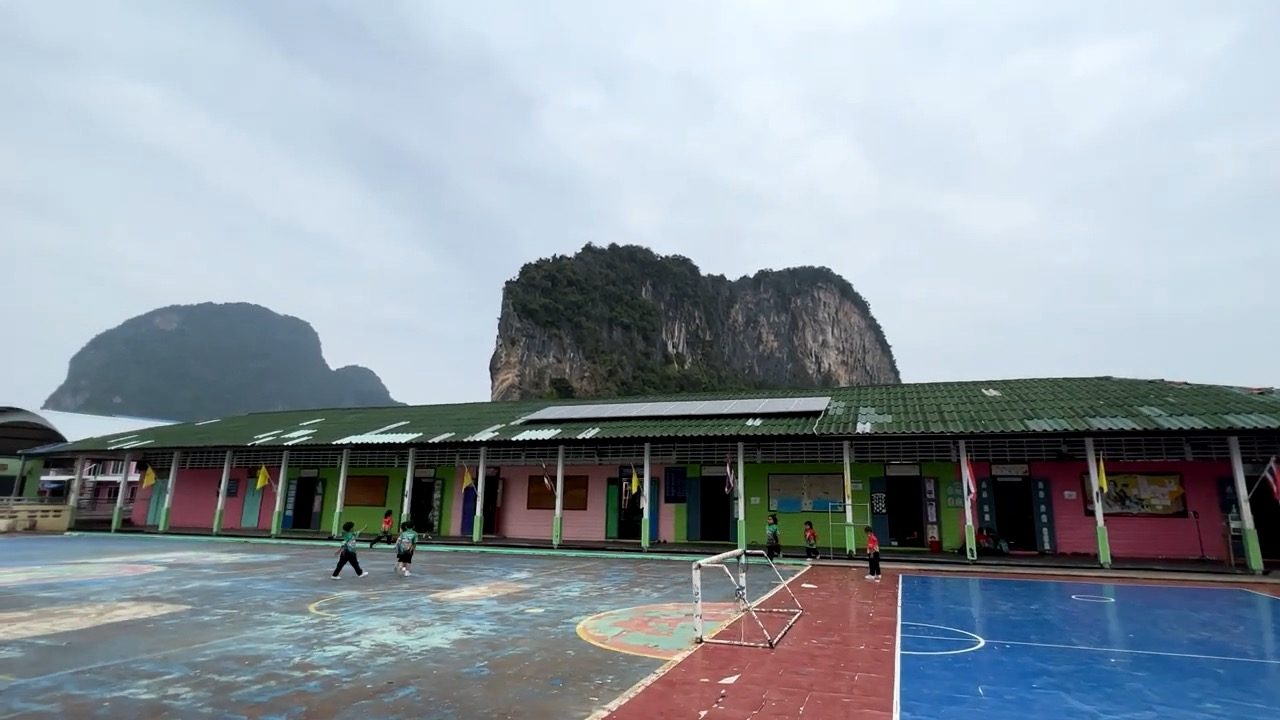 The school buildings, in front of the karst peaks
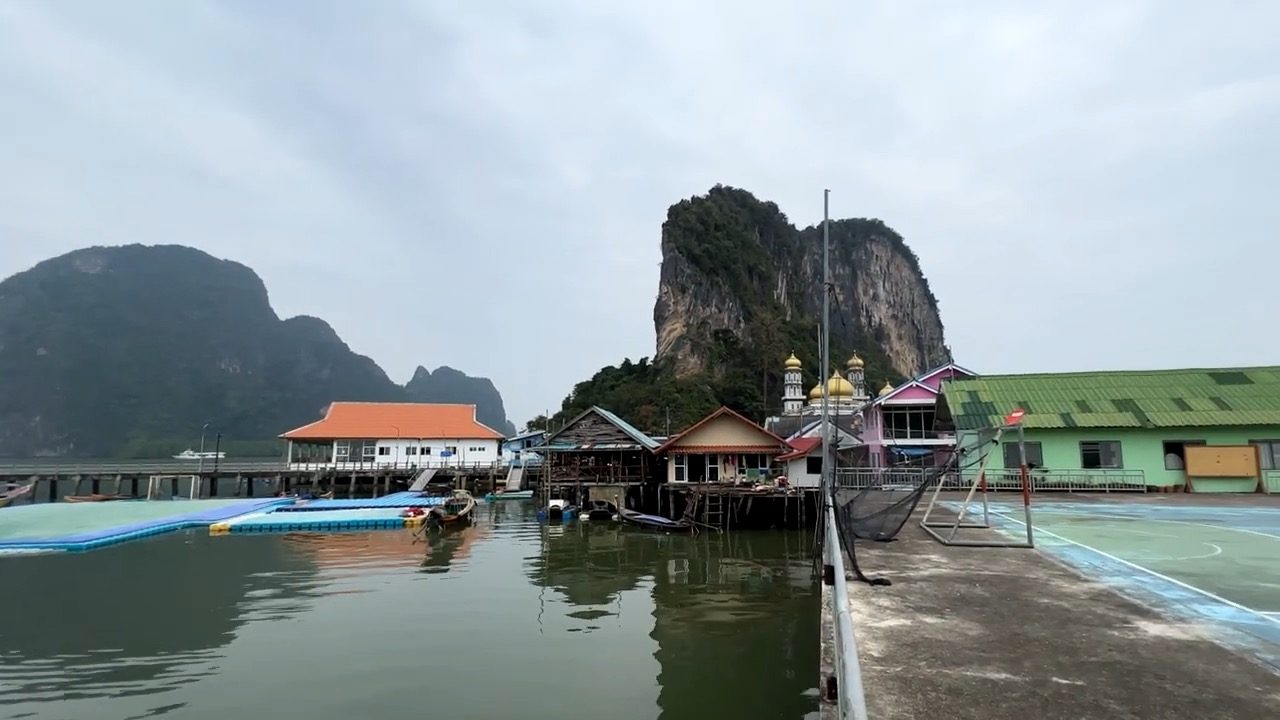 The sports ground at the edge of the bay
I head back to the boat quay, where we eat at a small restaurant before setting out to sea again. After a few perfectly executed manoeuvres, the boat slips into a cave, the sharp rocks brushing past our heads. It is time to go back, the Phang Nga cruise is over.
A little out of time, as if suspended between two eras.
To be continued: Krabi, then Thale Noi and its waterbird reserve.