Thailand 2021, a country without tourists — 2. Phuket, from north to the Big Buddha
Continuing our three-month journey through the Thailand of 2021, barely reopened after Covid. In the previous episode: arriving via the Phuket Sandbox, the express quarantine at the Dusit Thani, the deserted beach at Bang Tao, and a day at the elephant sanctuary.
Banana Beach, an island within an island
With the rental car, exploring can finally begin — starting with the northern part of the island, drawing on rawai.fr, a French site rich in quality tourist information.
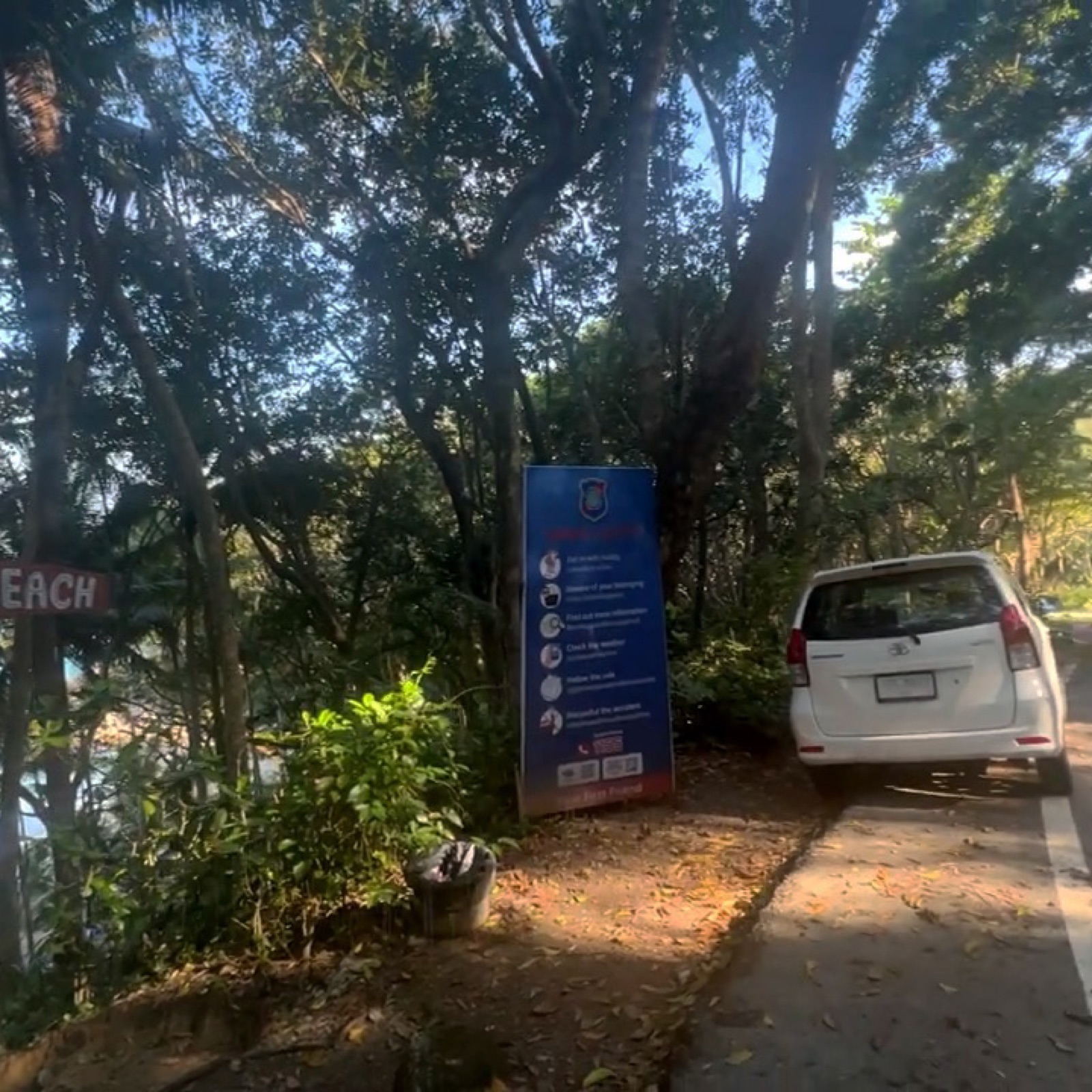
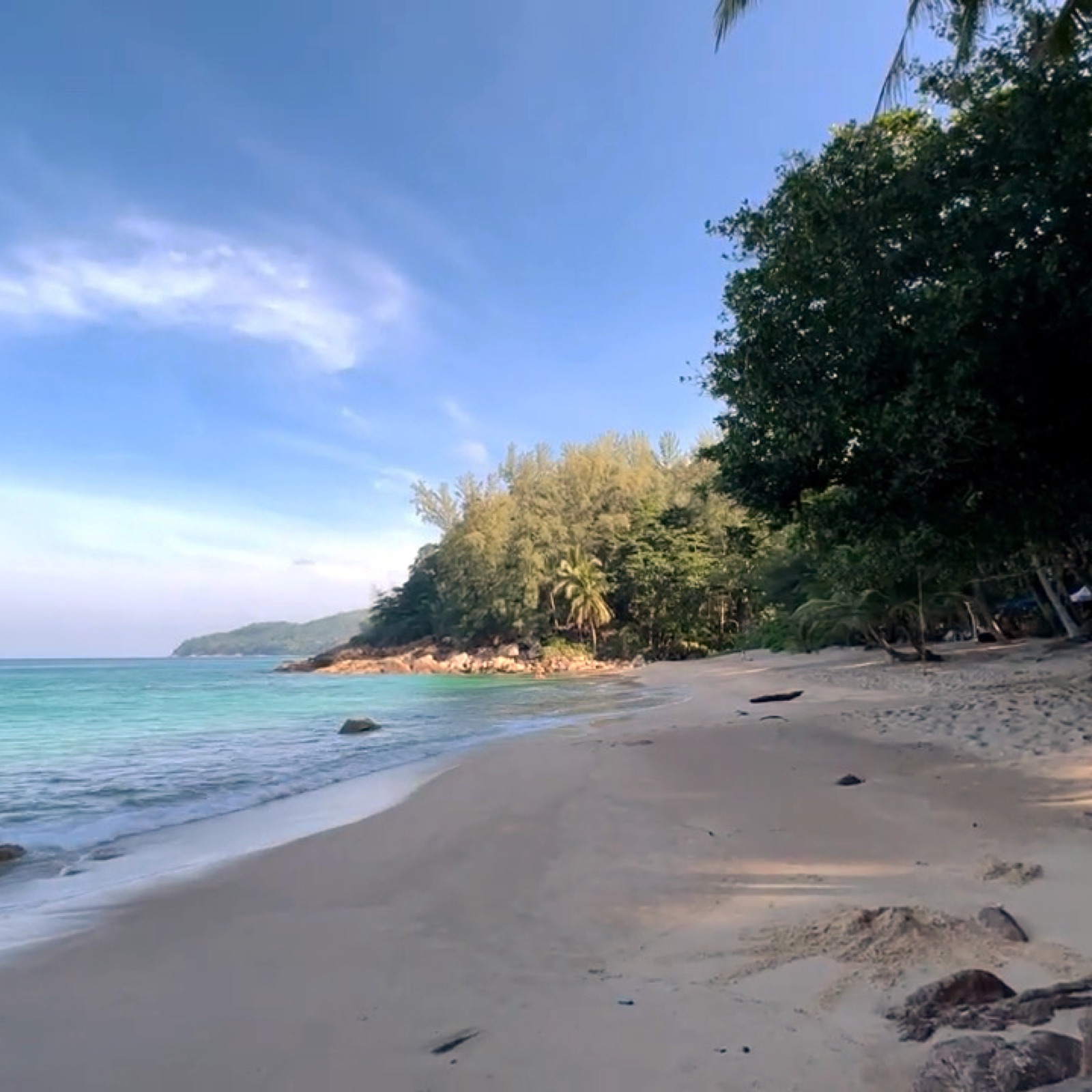
We set off in the morning for Banana Beach, a tiny beach tucked into a cove wedged between two rocky spurs, moderately accessible via a forest path that drops down from route 4018. Two plastic chairs, some tables and parasols; a skeletal swing hangs lazily from the trees lining the turquoise-tinted beach. Just the sound of the surf. An island within an island — and still not a soul on the horizon.
Wat Mongkol Wararam, a monk’s smile
We continue north towards Sirinat National Park. Near Naiyang Beach, Wat Mongkol Wararam offers up its temples and small coloured benches for a rest. Further on, the great golden stupa reflects the rising light, and the monks’ little houses where robes hung out to dry flutter in the wind.
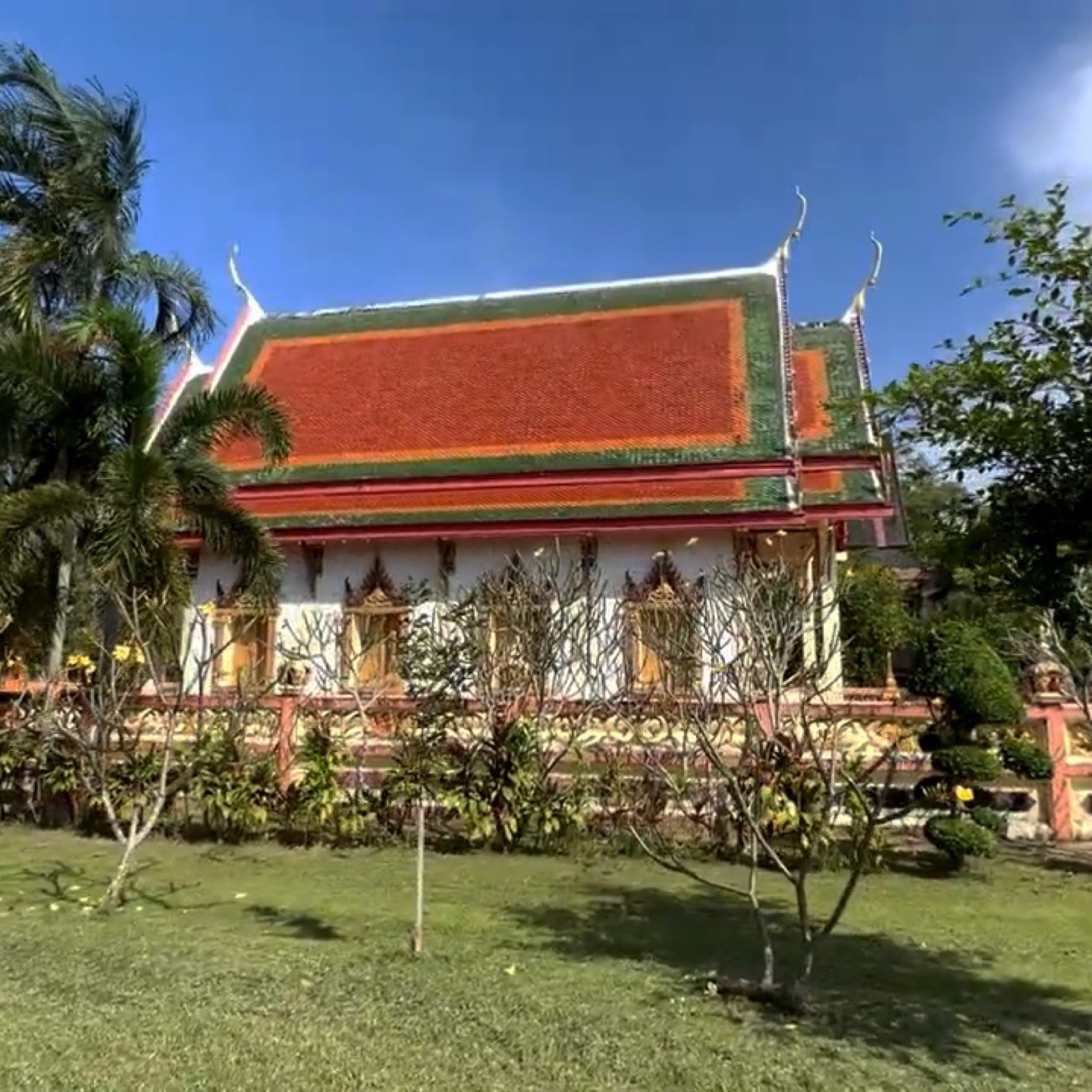
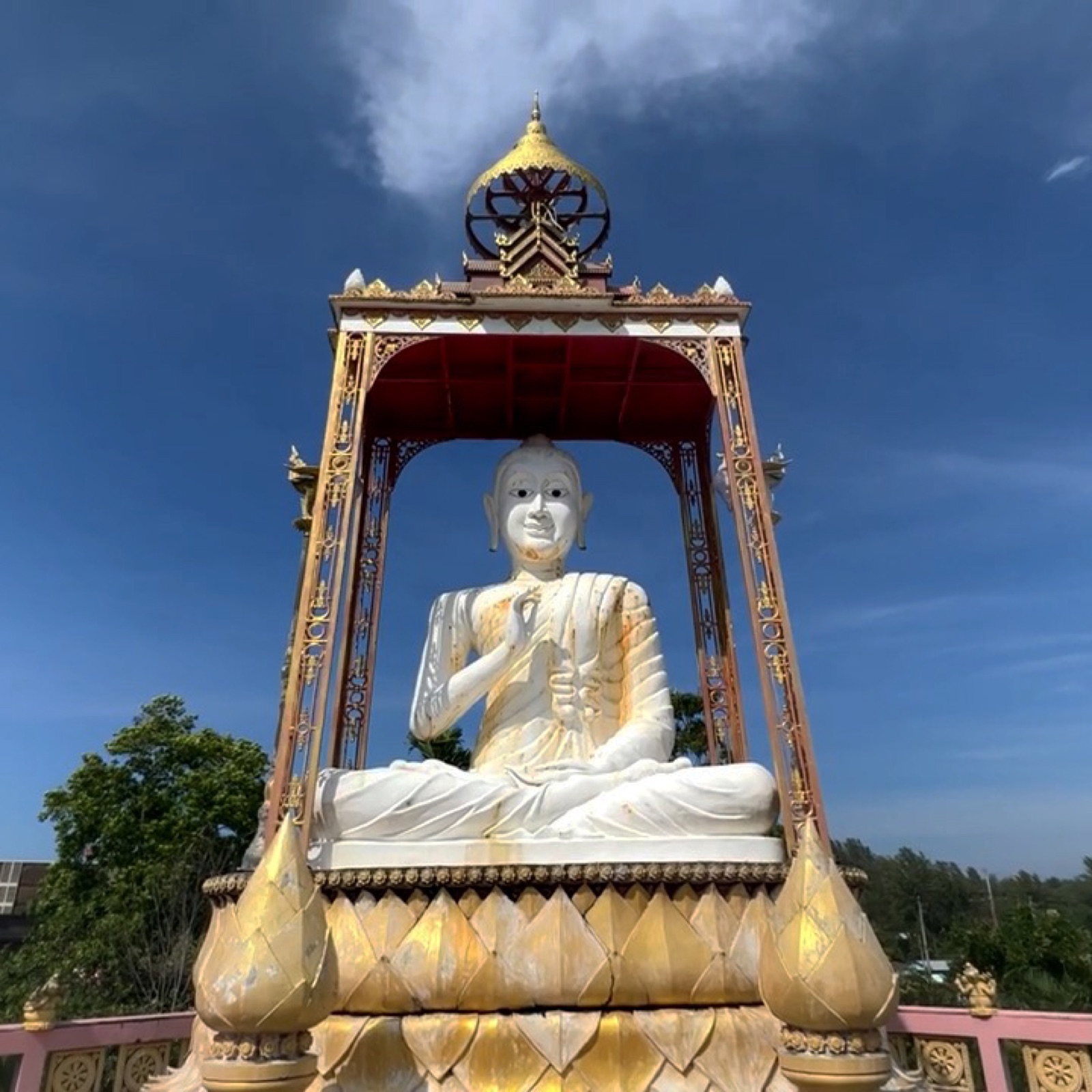
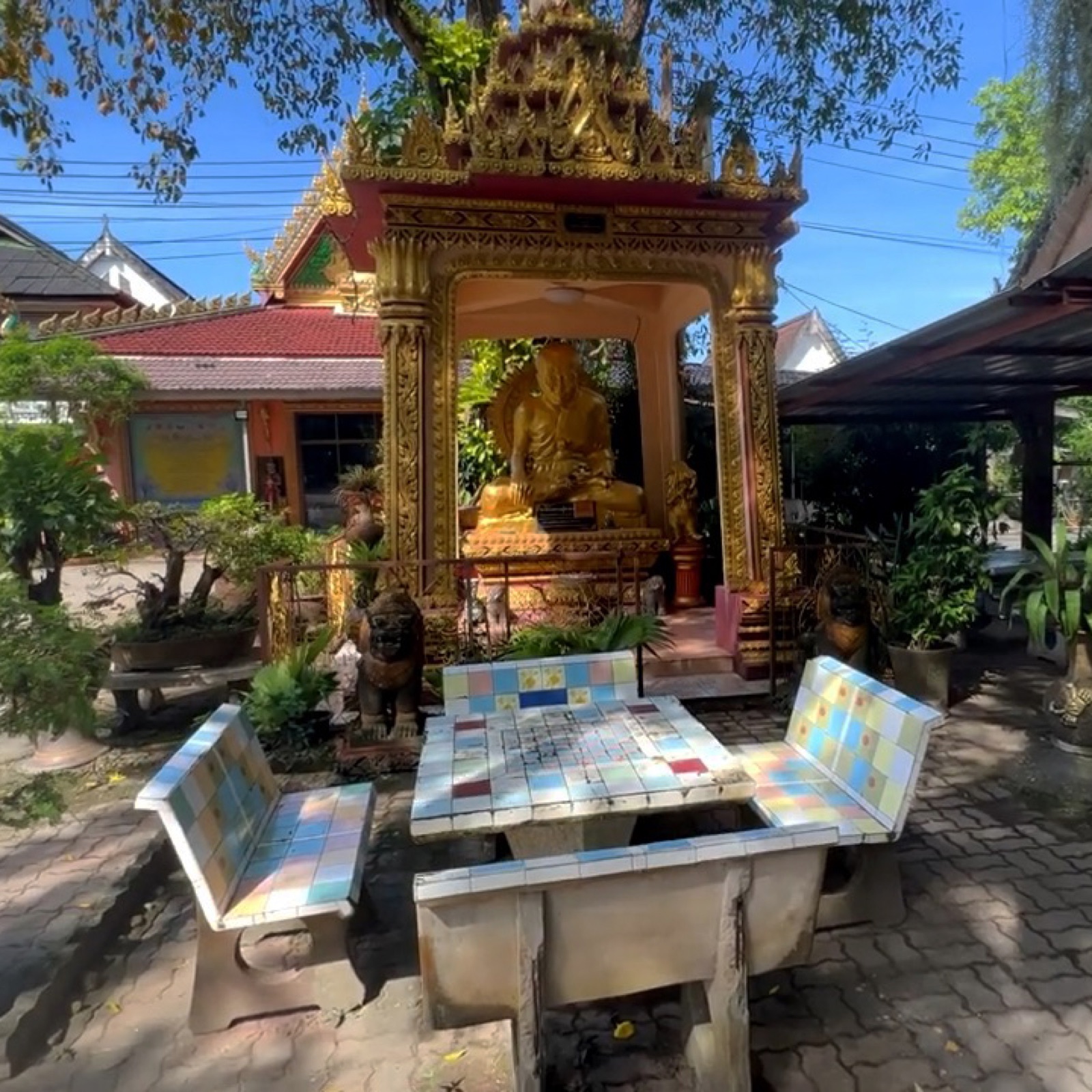
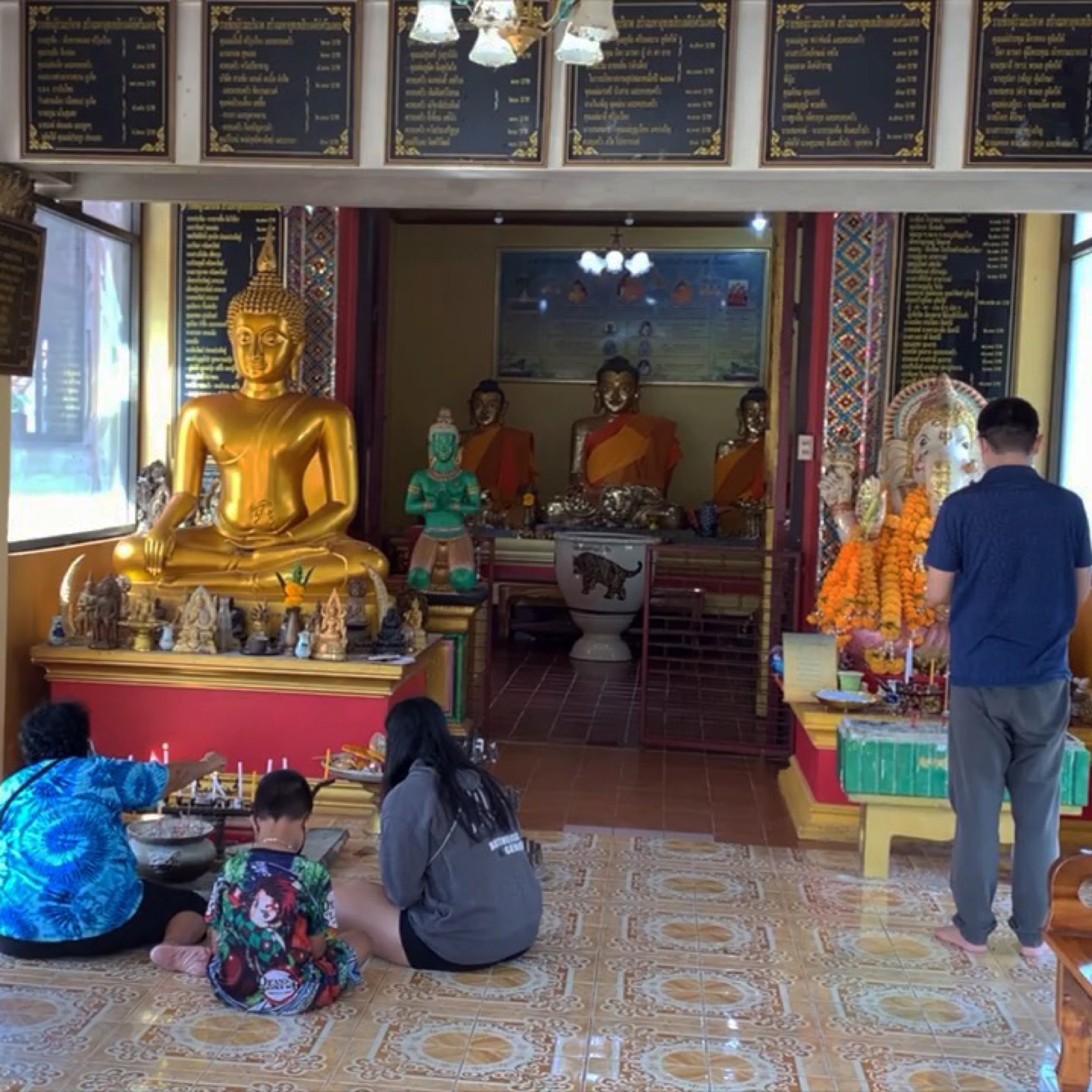
I spot a monk in the distance, wave to him, and he smiles back. He eventually comes over — but not speaking English, conversation proves impossible. After a greeting, he goes back to his domestic chores. The compound is large, with many buildings set among well-tended gardens. On a terrace, a small white buddha with black eyes watches over things beneath a canopy.
Sirinat National Park
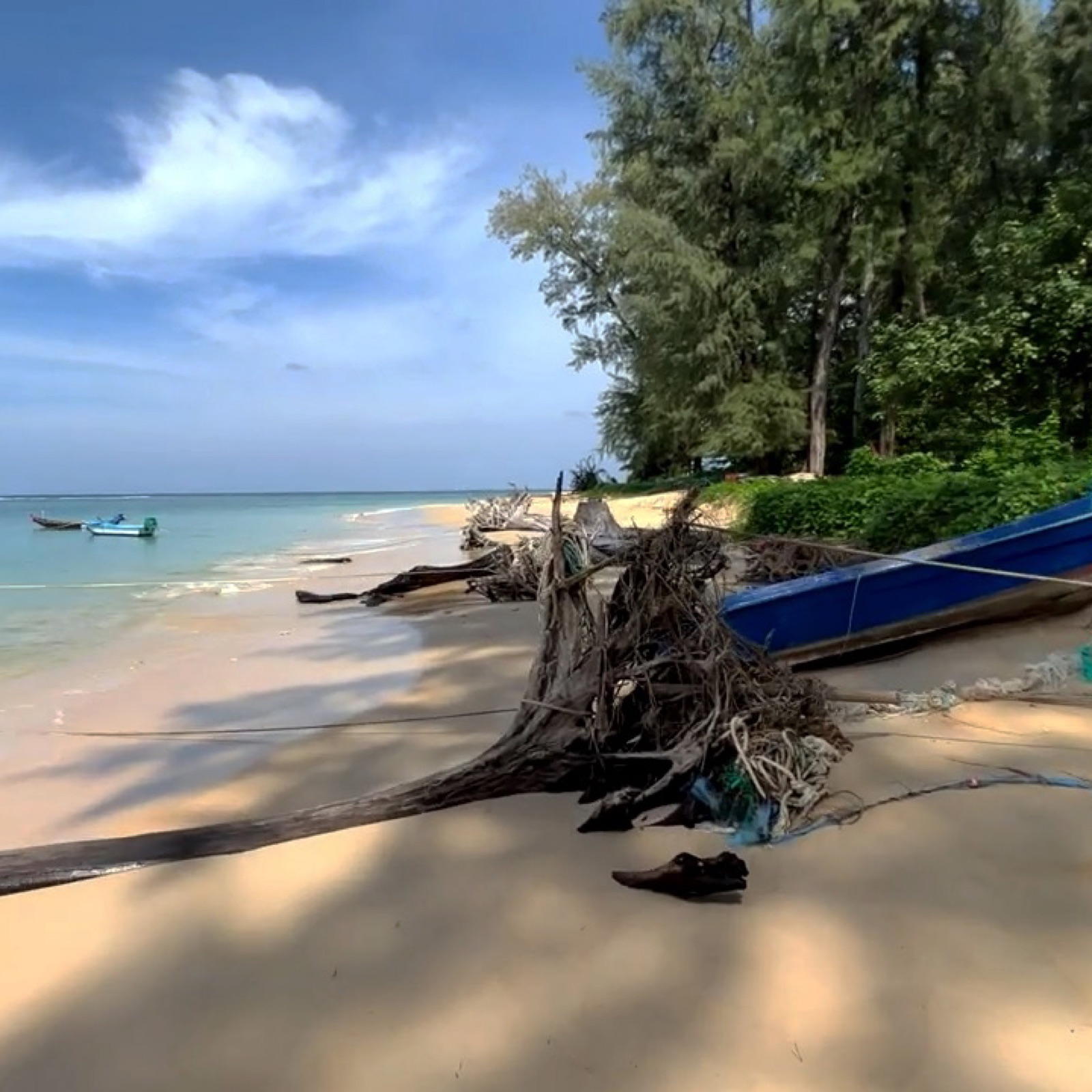
A little further on, Sirinat Park and its tall trees offer us a shaded stop. The place is beautiful: boats lined up and roped along the beach, some tucked under the foliage. A plane can be heard to the north; it appears low on the horizon, about to land at the nearby airport. Very quickly the silence returns — just the sound of waves and birdsong.
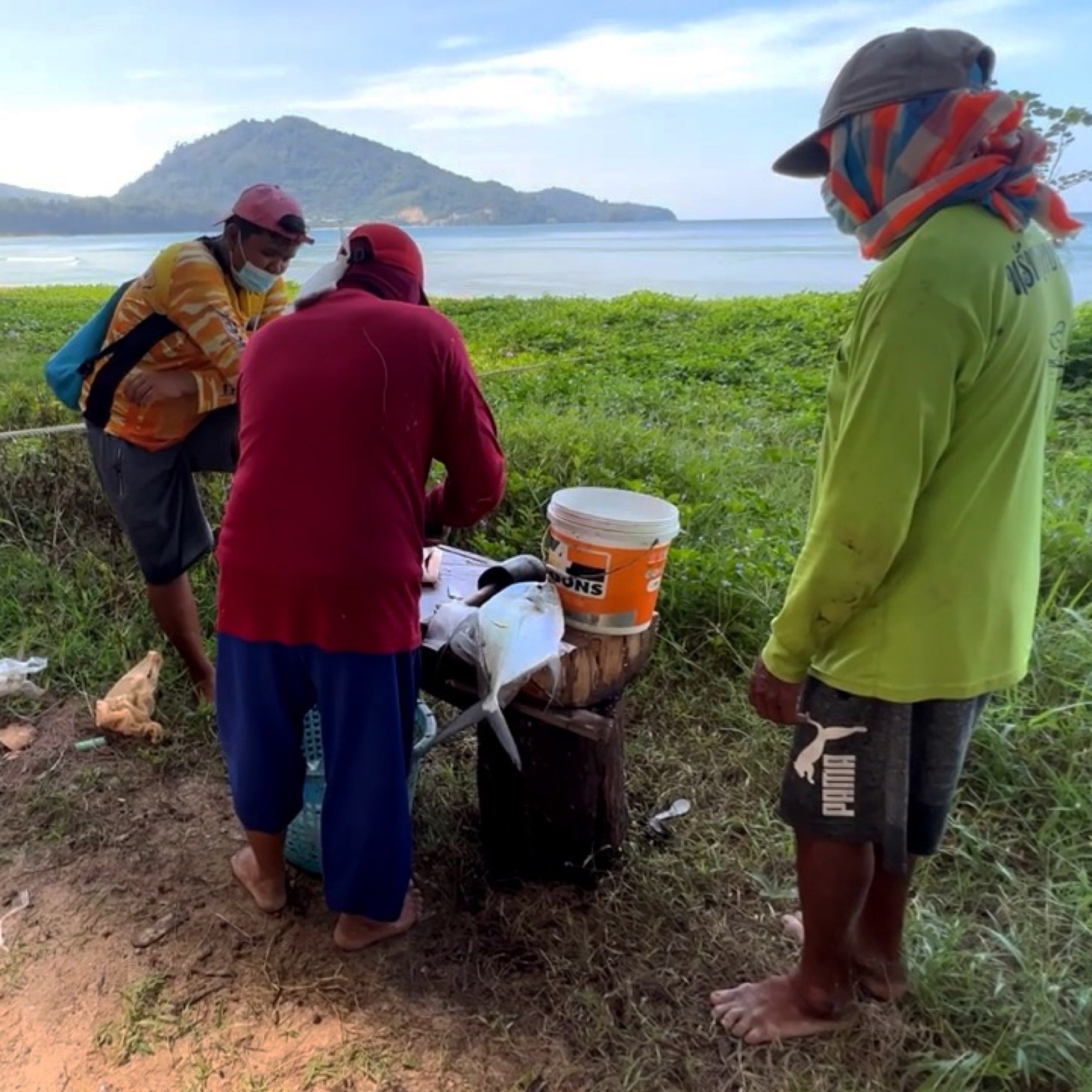
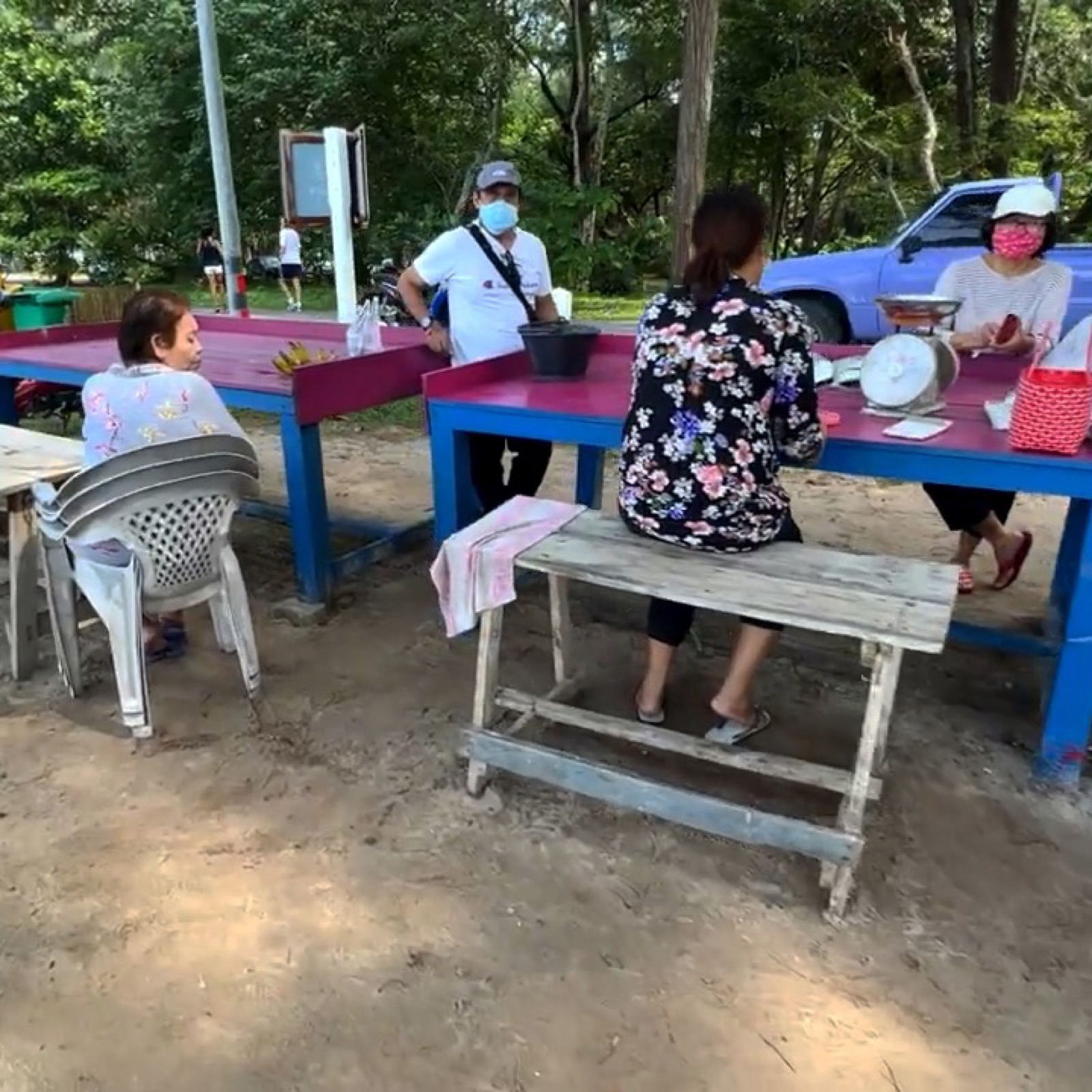
I hear voices: the fish sellers. Stalls set up on a few tables by the roadside, where fishermen come to sell the day’s catch — a local market. The scales gleam: you won’t find anything fresher. Not a tourist in sight, and yet everything is ready to welcome them: tall trees, easy walking paths, close-cropped grass, parking spaces and restaurants. We leave the beach behind and step into a green park, perfect for a king’s picnic.
The sea also gnaws at the coast: little by little it eats away at the base of the great trees, exposing their powerful roots to daylight. Over time the trees fall, age, and bleach in the sun, scattering the beach with driftwood in unexpected shapes. Gaunt, some still stand by sheer miracle — a strange, improbable sight. A few locals have come for the sea, the park and a fine picnic in the shade of the protective trees; the children play and wave to me. Foreigners are a rare sight here at the moment.
Bang Rong Pier, the mangrove across the water
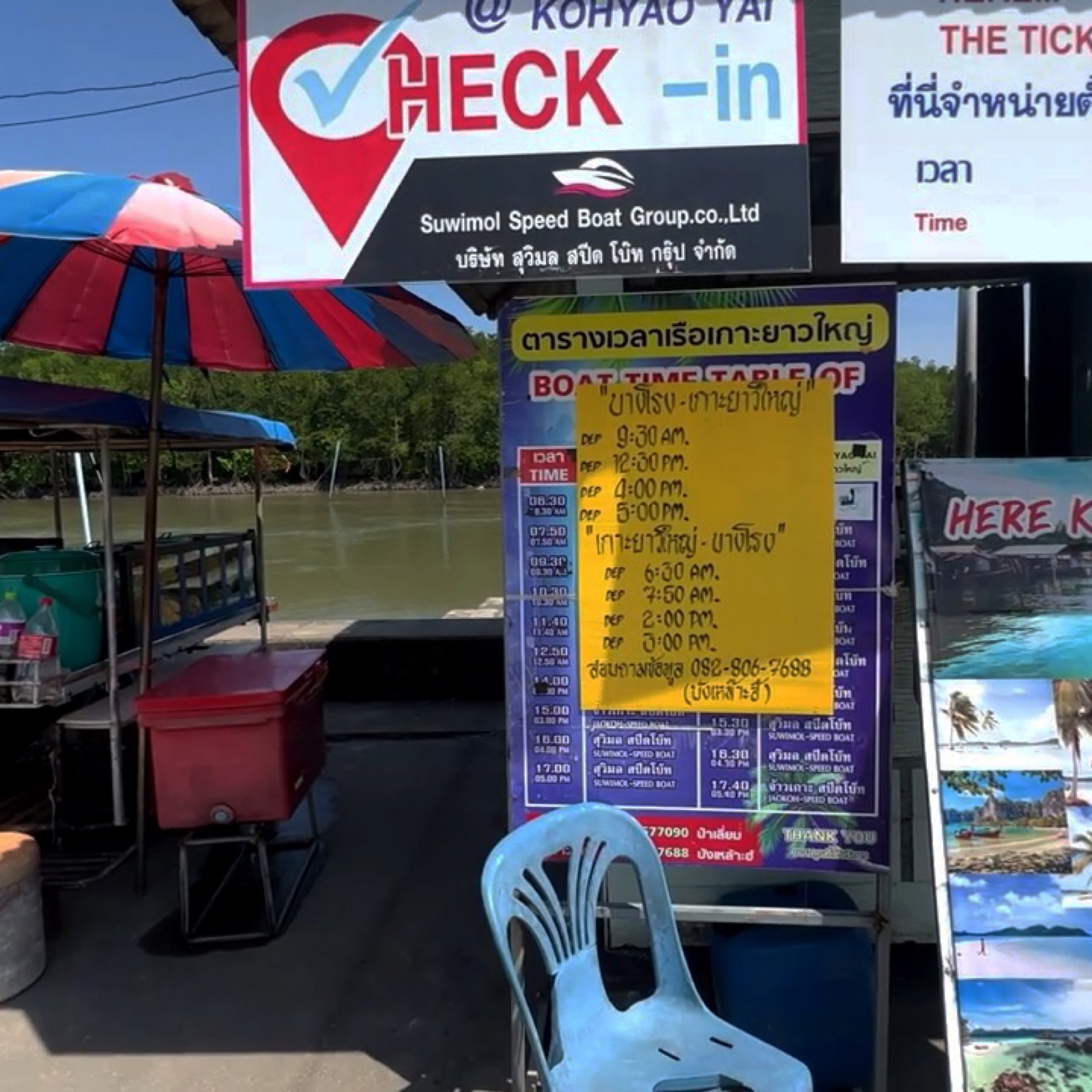
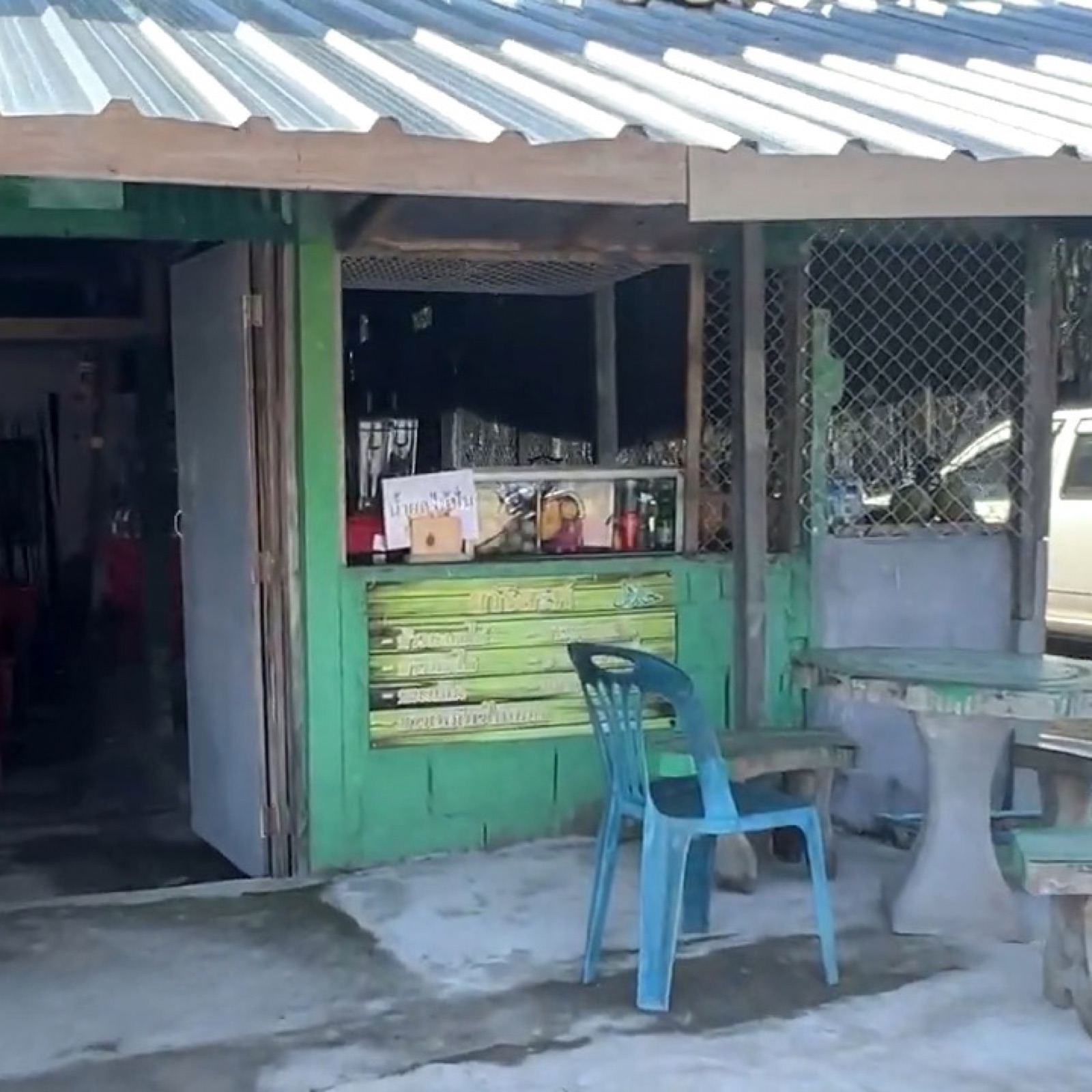
We cross the island from west to east to reach Bang Rong Pier. This is where the boats leave for Koh Yao. On the opposite bank, the mangrove looks impenetrable. Boats still depart despite the scarcity of tourists. A long-tail boat pulls away from the pier; I admire the sailors’ skill in handling their long pole. We have a coffee at the Kantary — the old man seems pleased.
Heading south: temples, Patong and Rawai
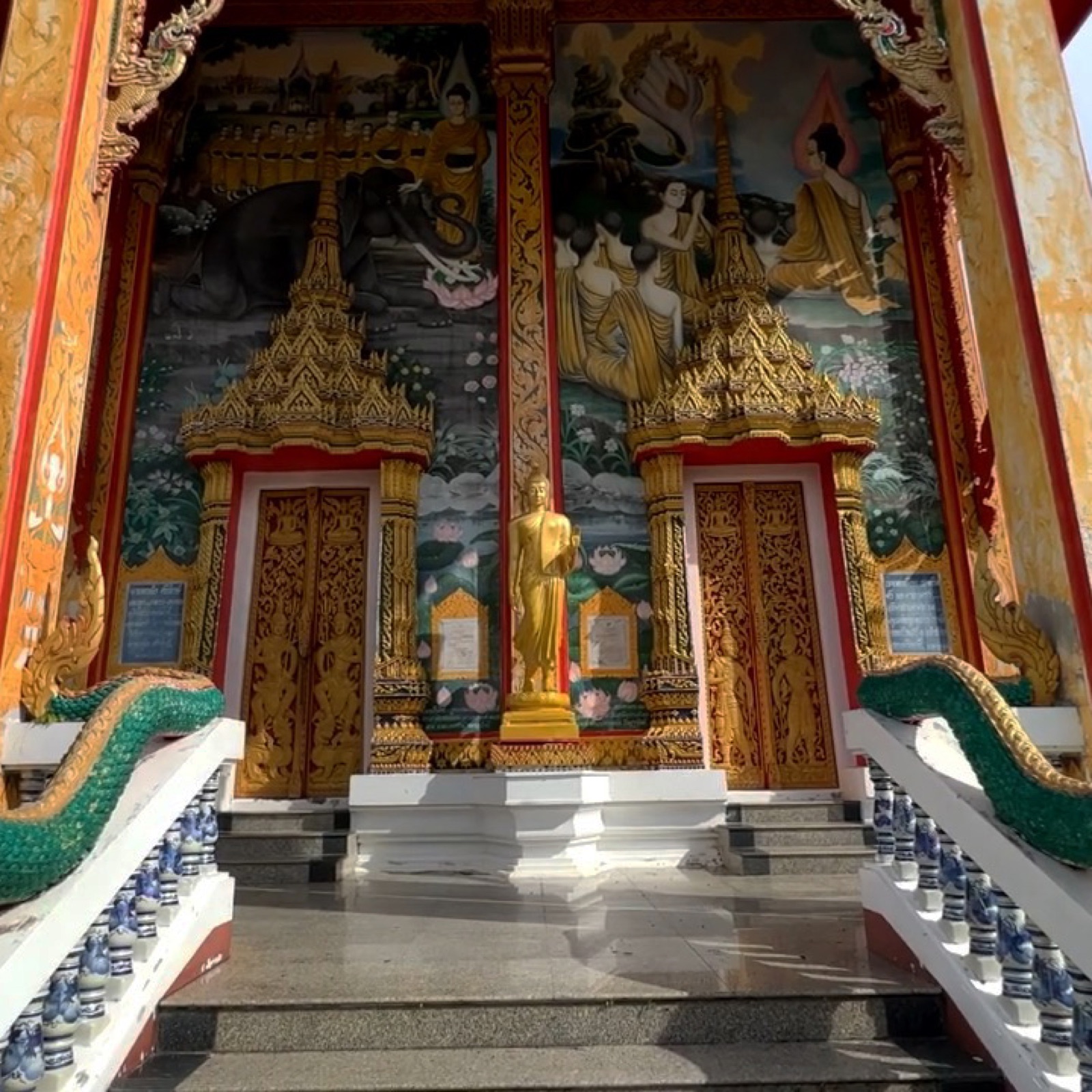
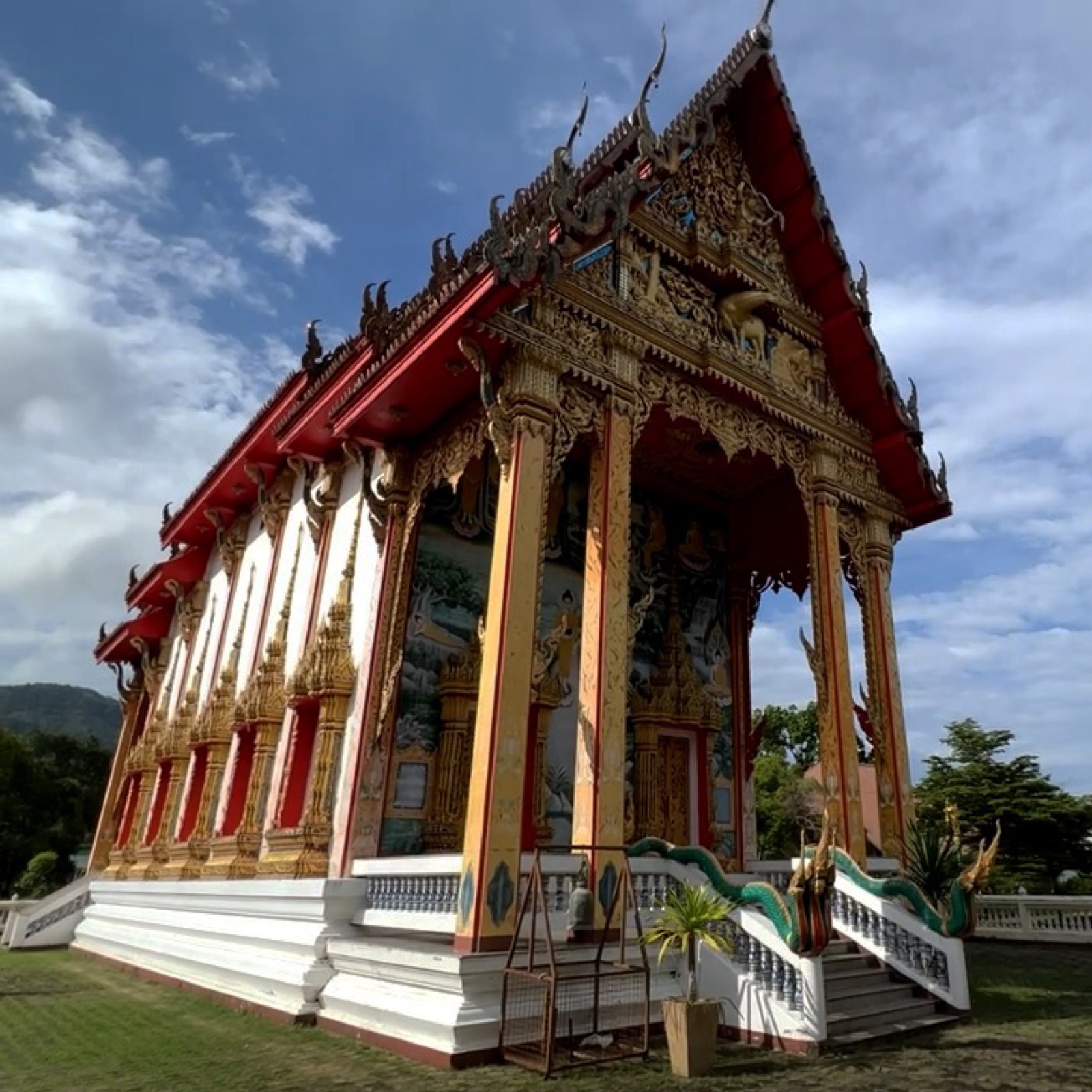
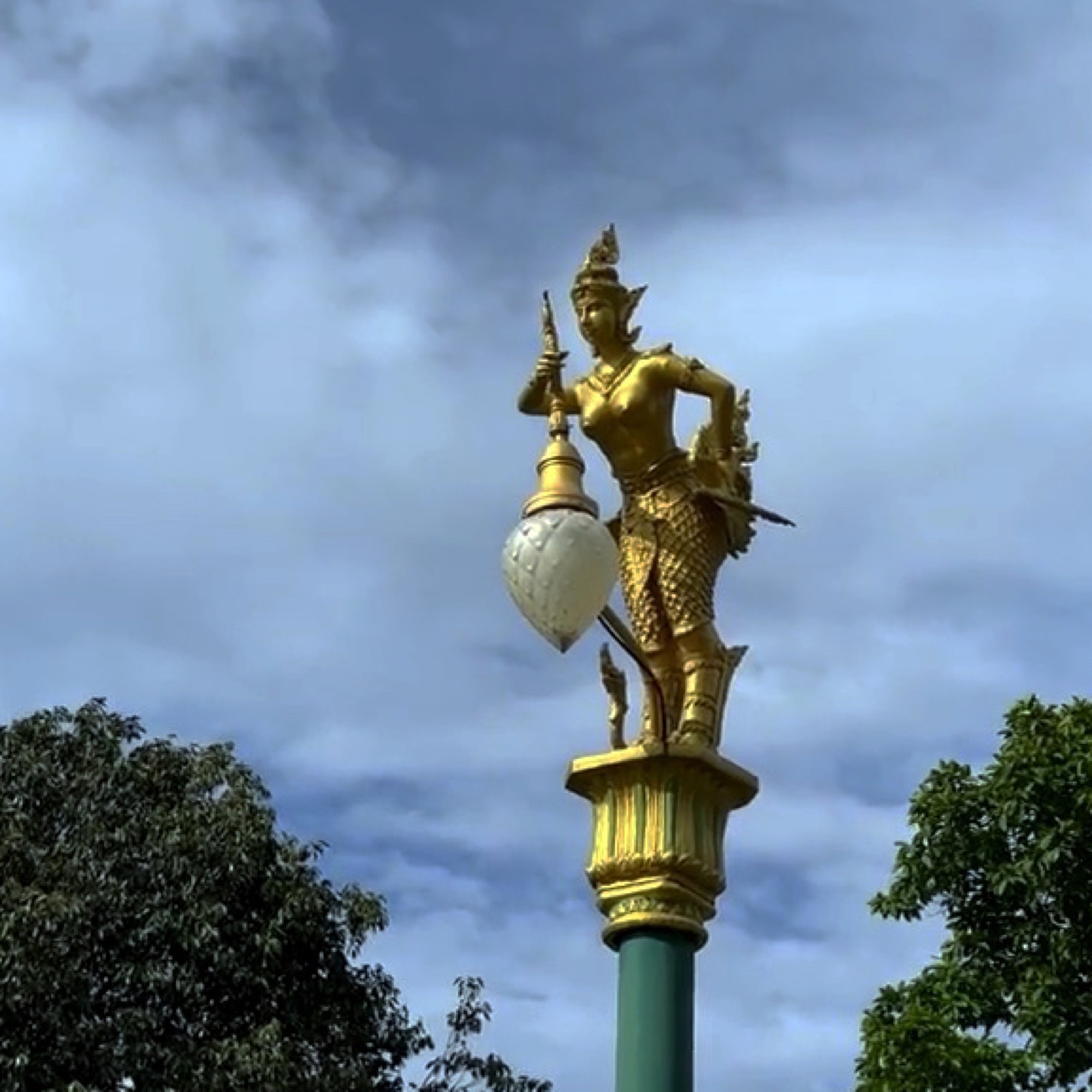
A stop at Wat Choeng Thale before heading to the Big Buddha in the south of the island. Brightly coloured temples blaze in the sun — but so does poverty, and a shelter for the needy has been set up nearby. Next to it, a temple with balustrades draped in black cloth: a mourning, I think. A lamppost topped with a Kinnaree (กินรี), that half-woman, half-bird creature from Thai mythology and traditional art, lights the garden after dark.
Then Patong Beach, deserted. A lone jet-ski on the sand, a few rot saleng lined up along the pavement, where vendors are starting to grill chicken for passing walkers. A few steps away, women have laid out fish on a tarp right on the ground: it’s an abundance, all kinds of species unknown to me. Locals buy them; cut up on the spot, the fish goes off ready to be cooked.
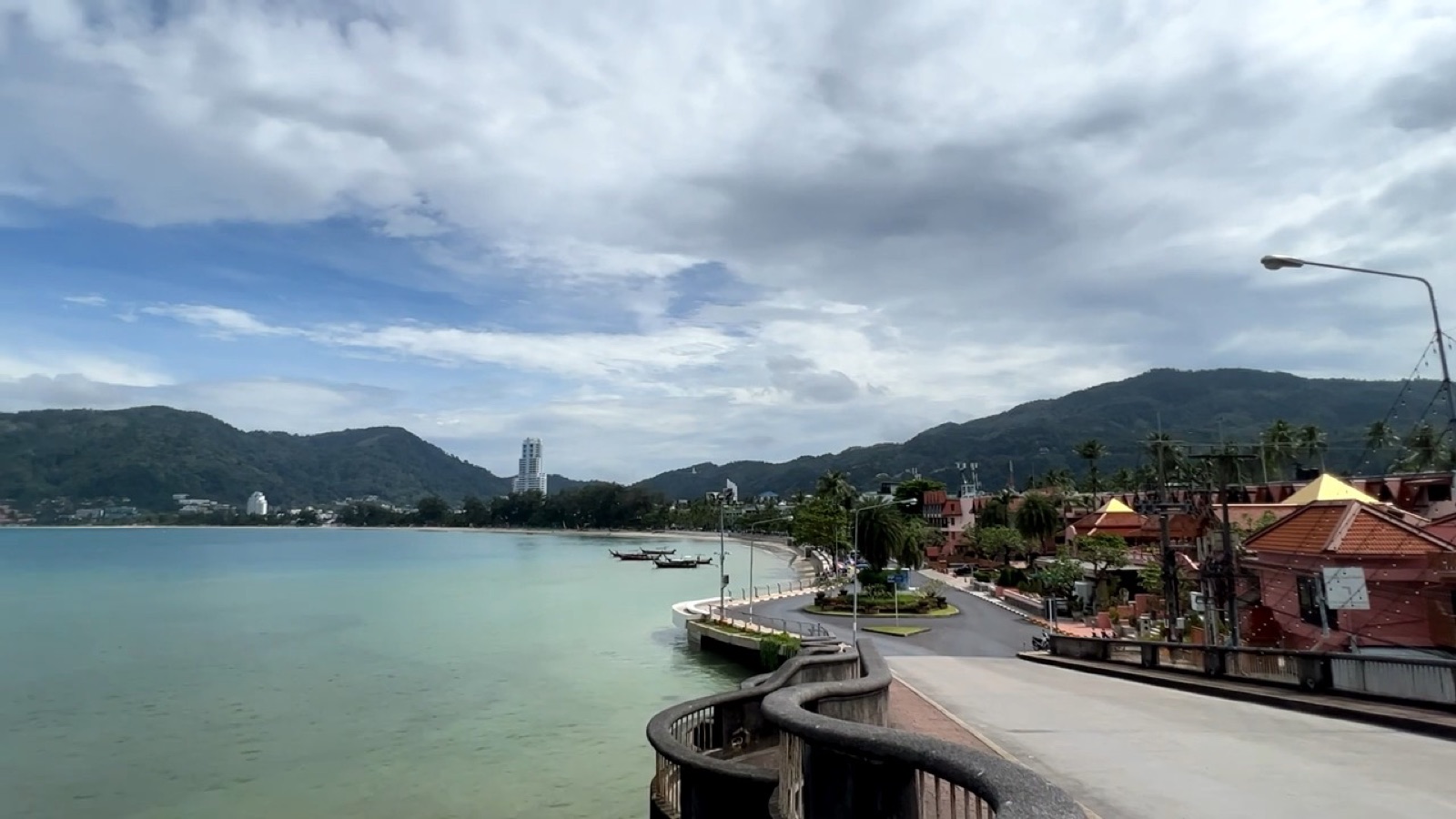
Patong Beach, deserted
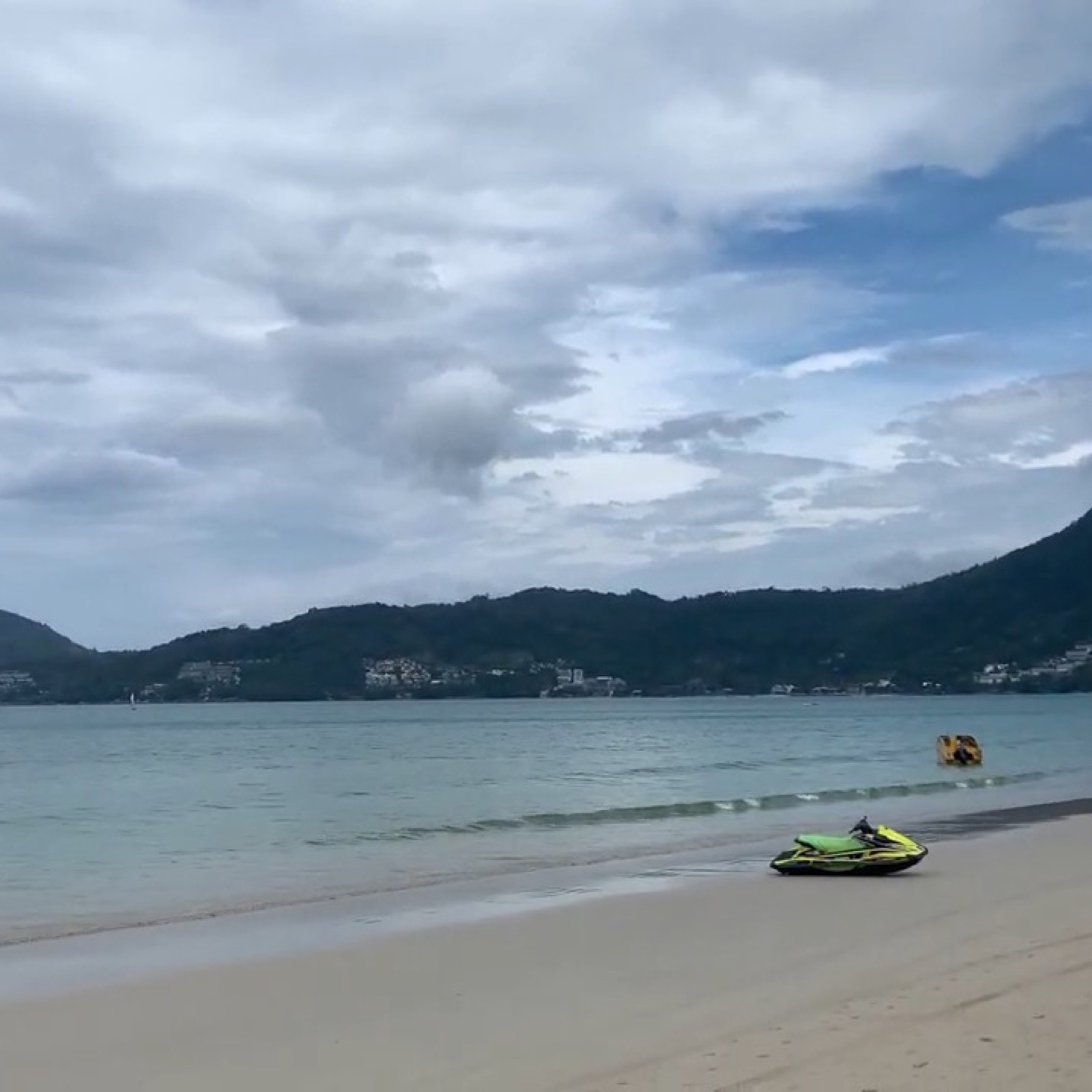 A lone jet-ski on the sand
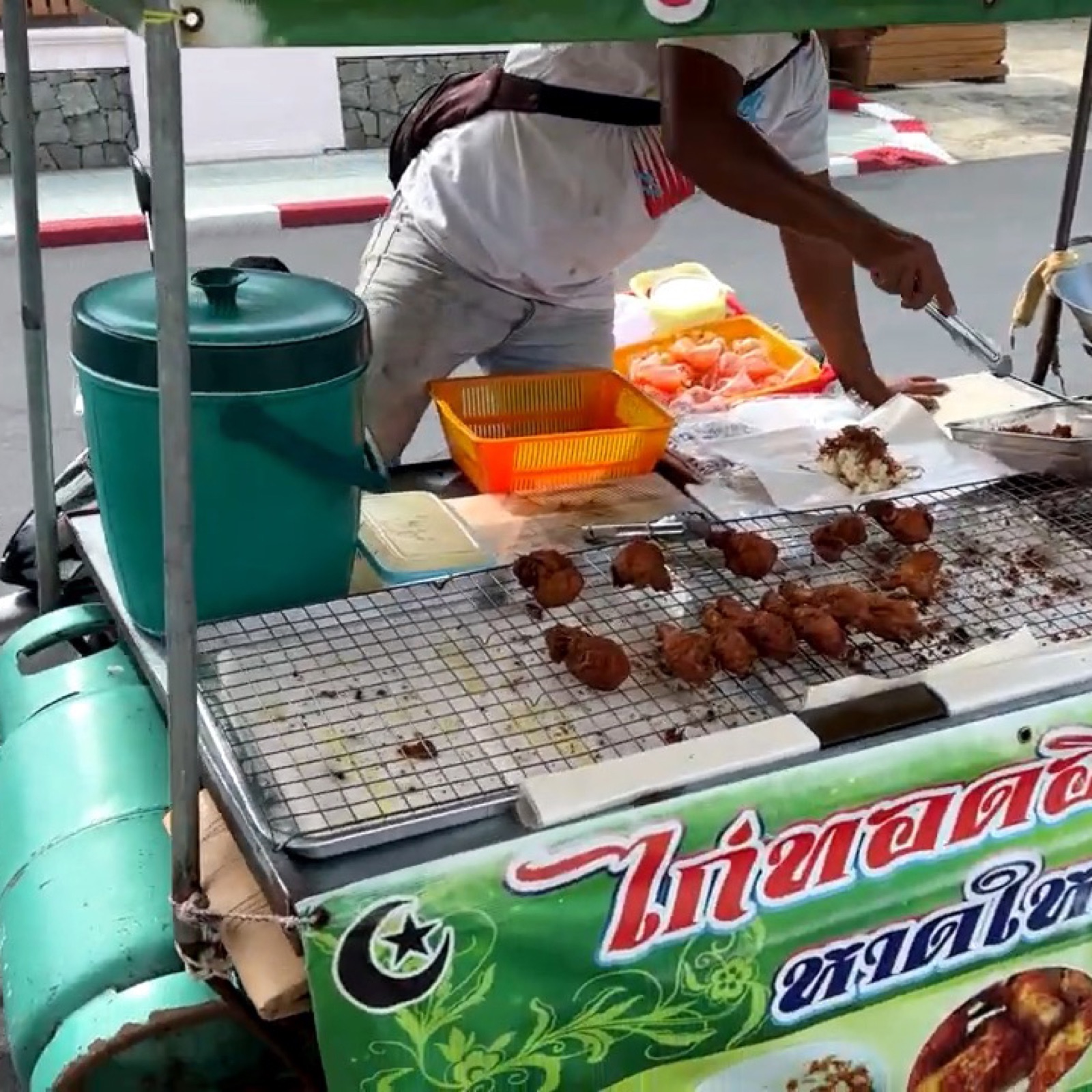 Chicken starting to grill
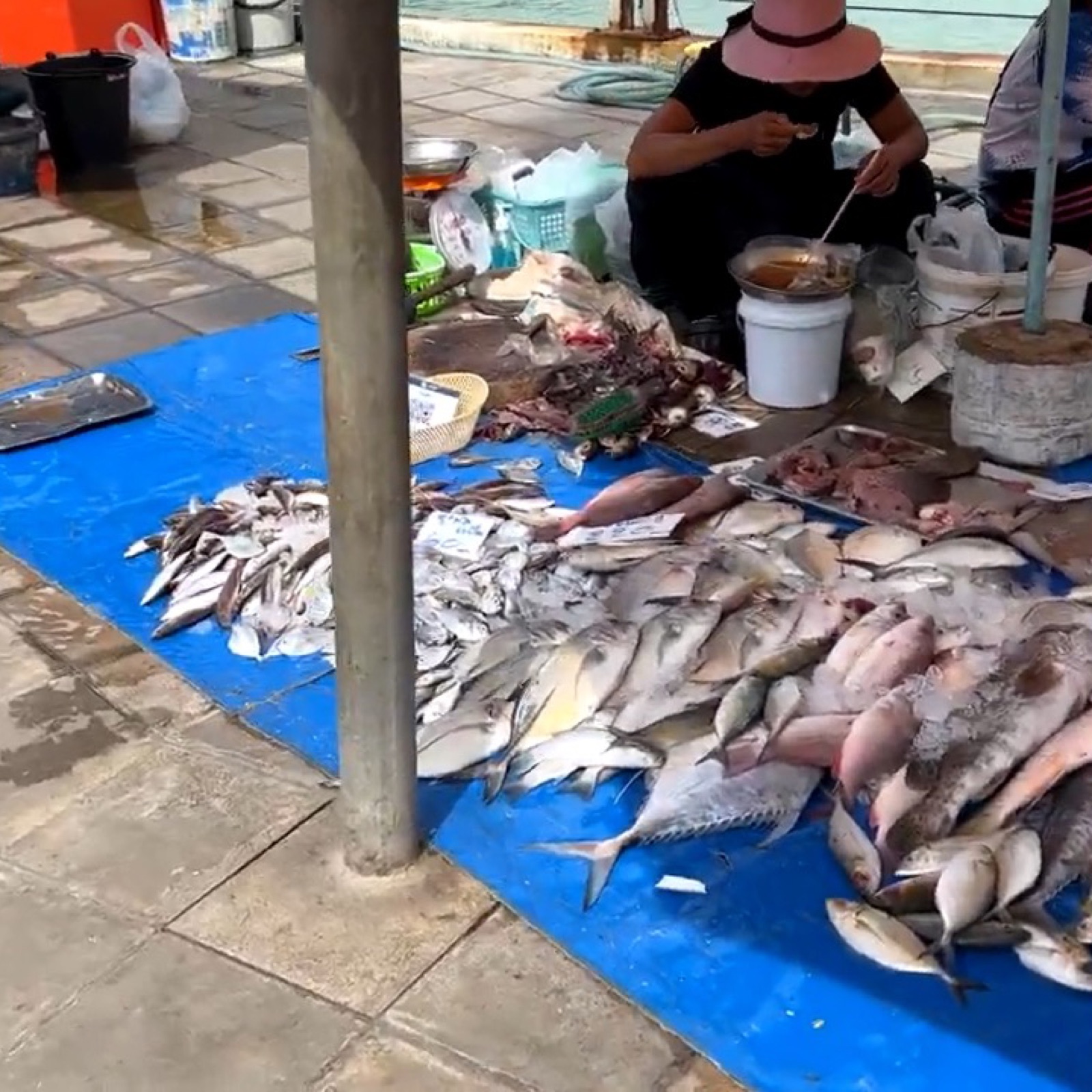 Fish laid out right on the ground
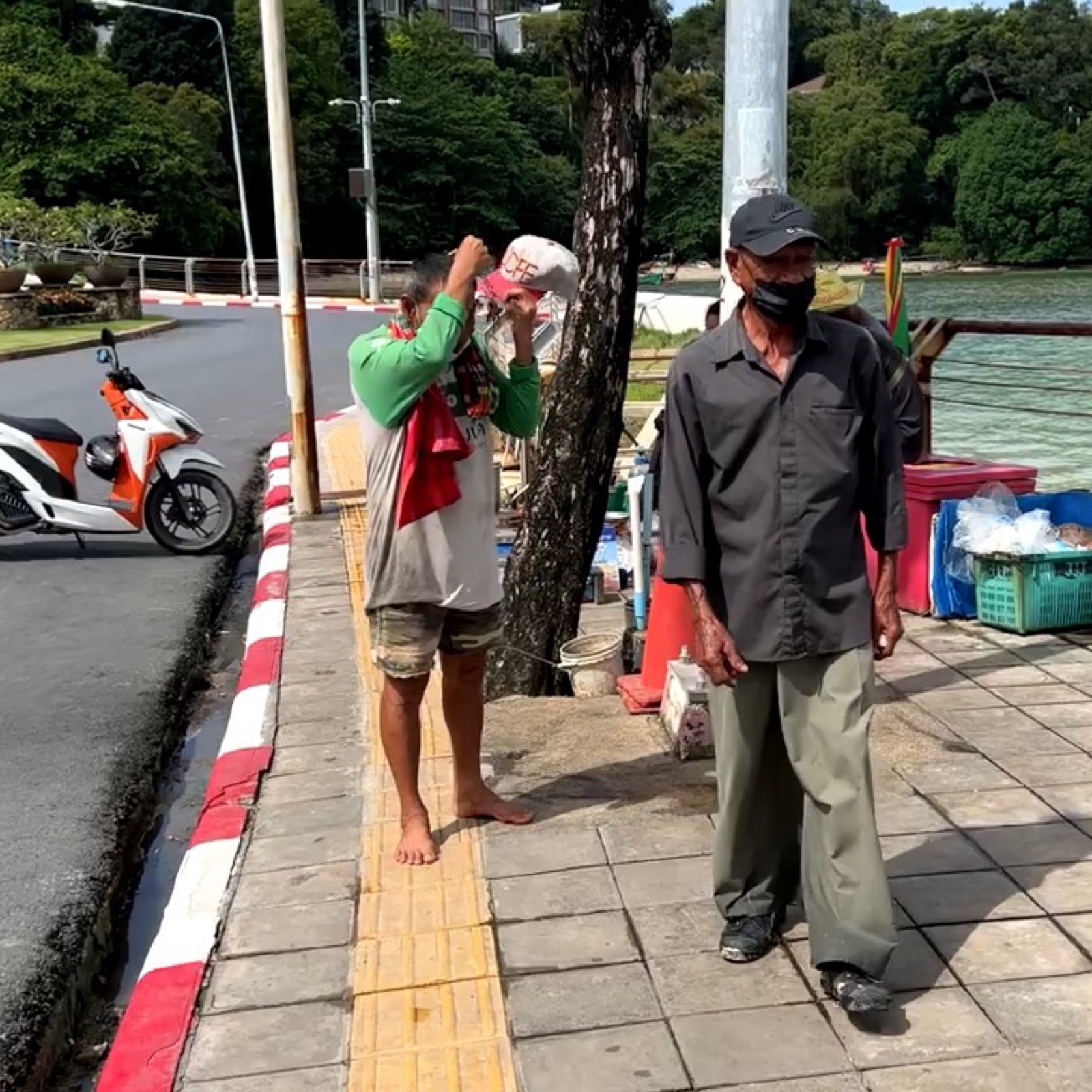 Early-morning buyers
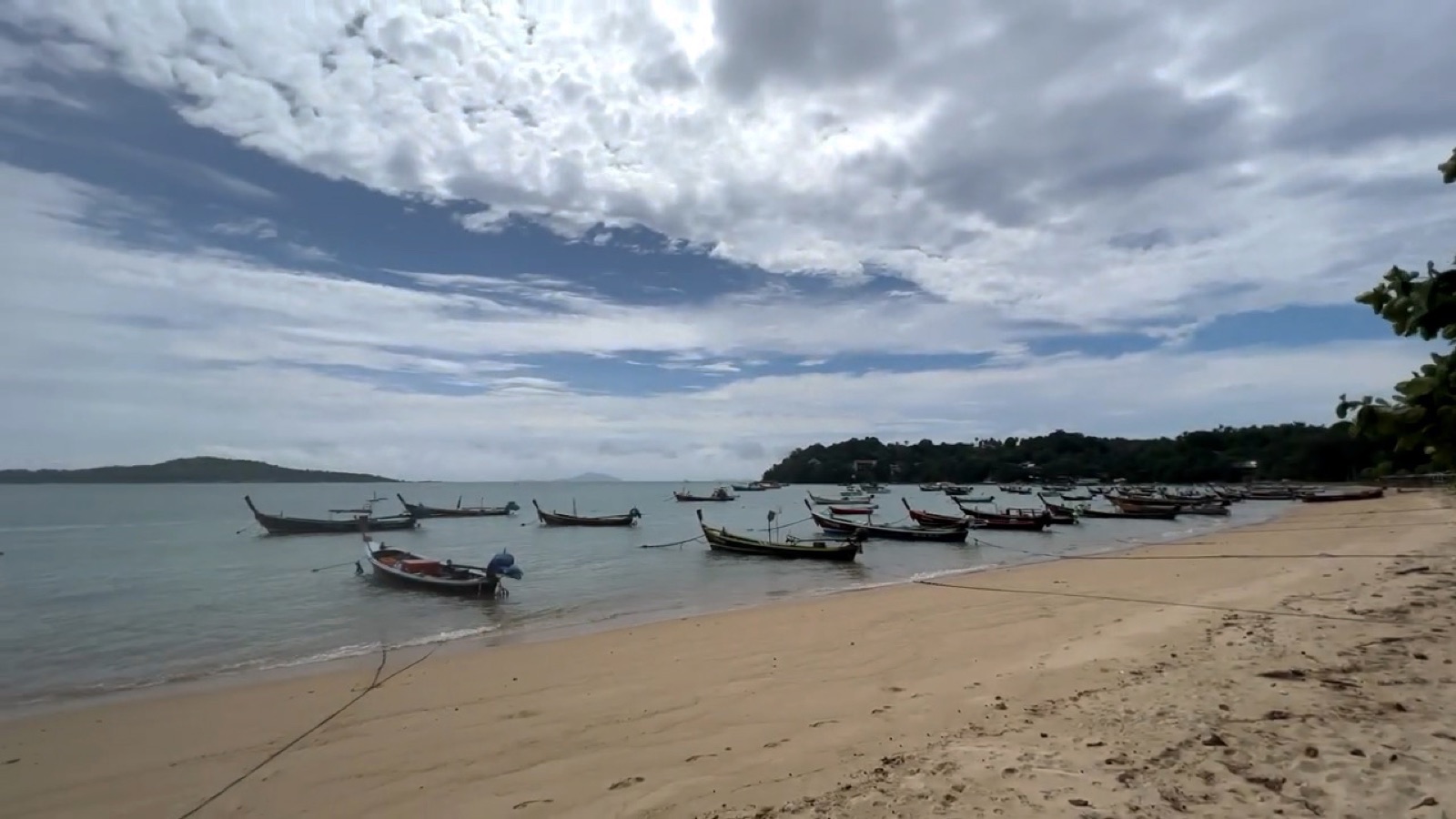
We set off again for Rawai Beach, a long beach lined with trees where many long-tail boats are moored. Two zebra doves that seem a little lost, and a couple glimpsed briefly — then gone.
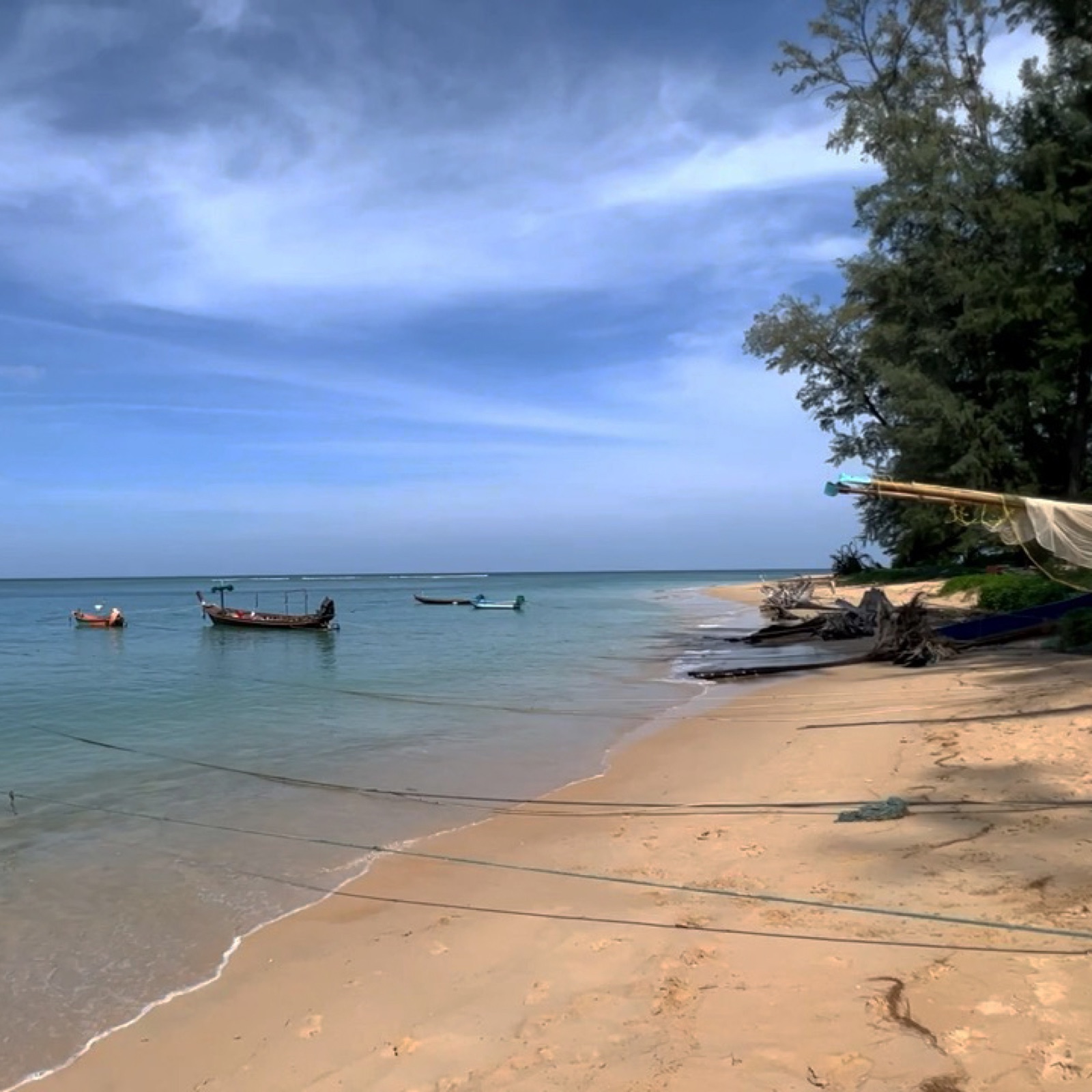
Nai Han, a day doing nothing
A little further along the same coast, Nai Han Beach — and this time with no plan beyond letting the day happen. A beach that is usually packed; today, a handful of people. We take a sun lounger and a parasol, and we’re set for doing nothing at all.
We walk along the shore, the sound of the waves coming to die at our feet, white foam on their lips, the water clear and soft. We follow the beach from end to end; at the far end, a stream runs down into the sea. We turn and walk back. So few people that you can almost hear the silence.
As we get closer to the hotel at the other end, I catch the sound of machinery running. The beach is so quiet that those technical noises are enough to break the spell. Such a shame — we really were in paradise.
I don’t think I’ll ever see Nai Han the way it was that day.
The Big Buddha of Nakkerd Hill
Arriving on Nakkerd Hill, the Great White Buddha turns his back to us, as though uninterested in human affairs. To his right, a small golden buddha keeps him company. At his feet, a great terrace offers visitors a magnificent view over Phuket City, Chalong Bay, and Koh Lon island.
The Big Buddha esplanade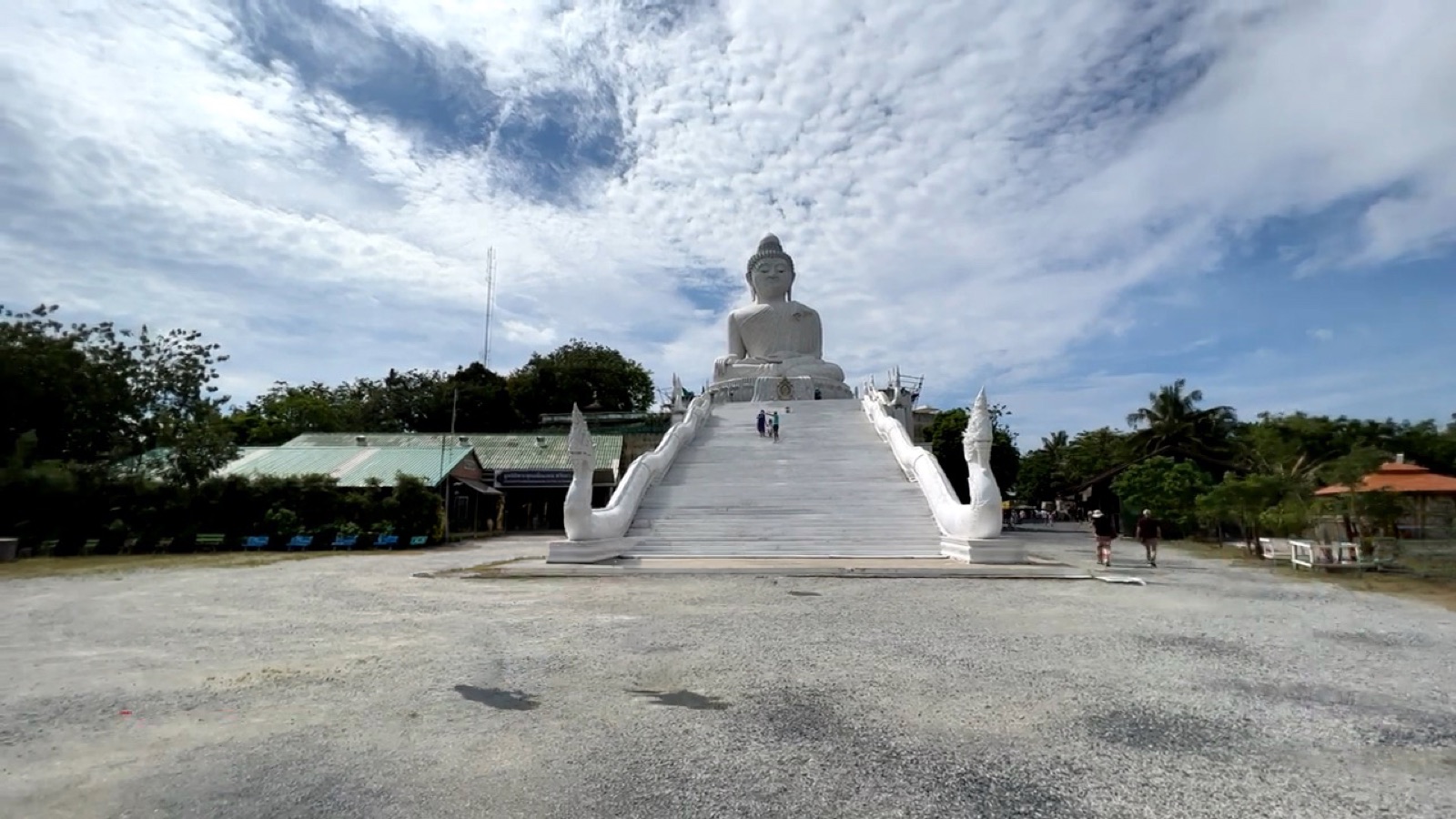
We turn around, and the 45-metre statue looms over us in all its splendour. He looks at us, seated and draped in white marble, victorious, as if calling us to witness. Grey-blue clouds filter the light. We climb the great staircase, flanked by white dragons, and he appears in all his splendour — immense, seated on a rotunda of reinforced concrete columns gradually clad in Burmese marble.
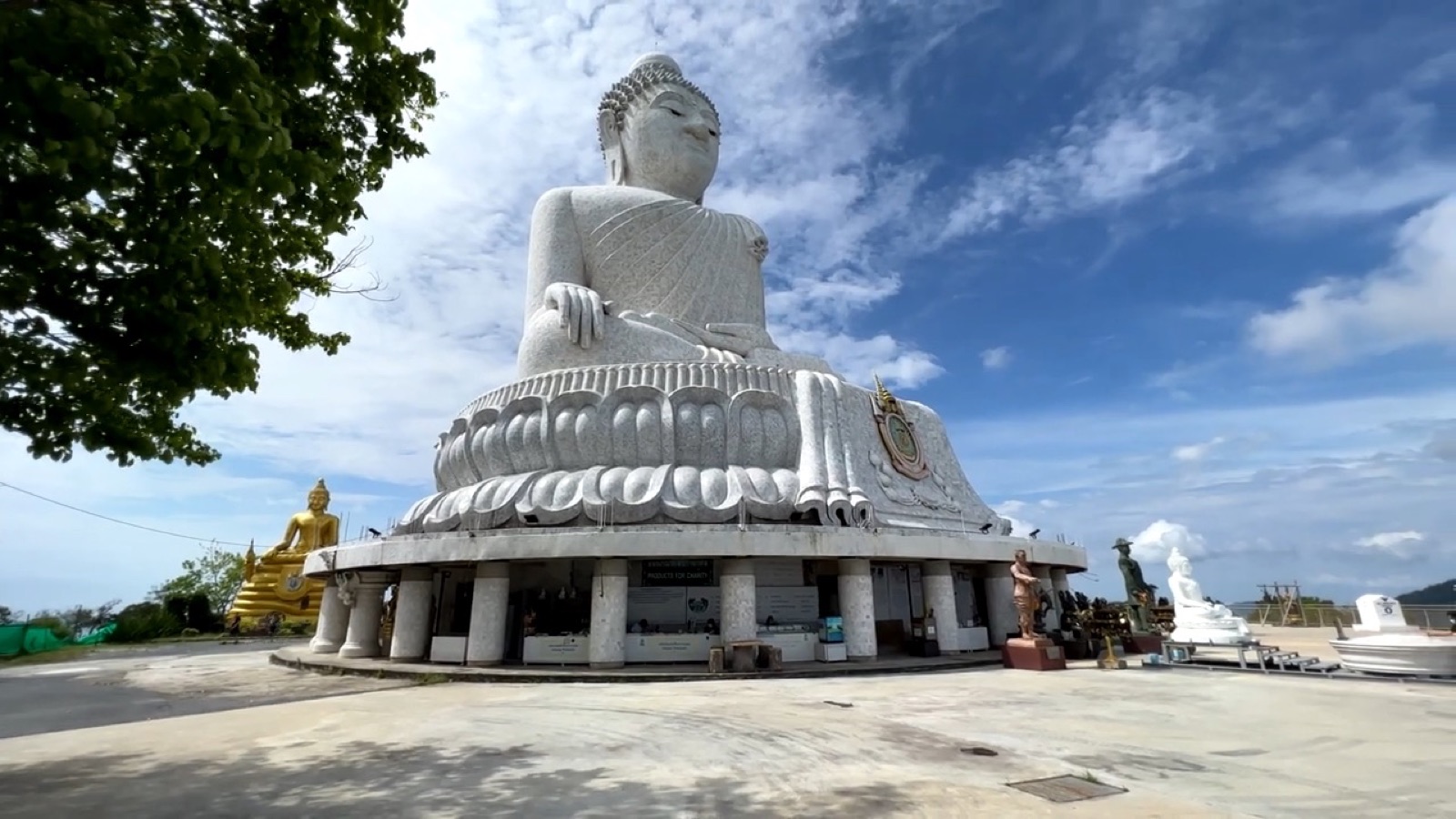
The Great White Marble Buddha — 45 metres
Arranged around the platform, golden buddha statues represent the days of the week. Thais look for the statue matching their day of birth, to pray or leave offerings there. I was born on a Sunday in the Gregorian calendar — which still holds in the Thai calendar (1954 = 2497 of the Buddhist era): my buddha is therefore standing, the Pang Thawai Net, and my colour is red. For Elisabeth, born on a Thursday, it’s a seated buddha, the Pang Samathi, and her colour is orange. Slightly set back to the right, the golden buddha erected in honour of Queen Sirikit — a tribute from the Thais to the Queen Mother.
Along the way, we pass under the marble shelter where a seated monk waits. He seems quite alone; he smiles at us — this is Thailand. We pass the 32 golden Thursday buddhas, a large black bowl at their feet. A symbol of bodily health, the 32 buddhas watch over our 32 vital organs; I admire them without really knowing the ritual behind it.
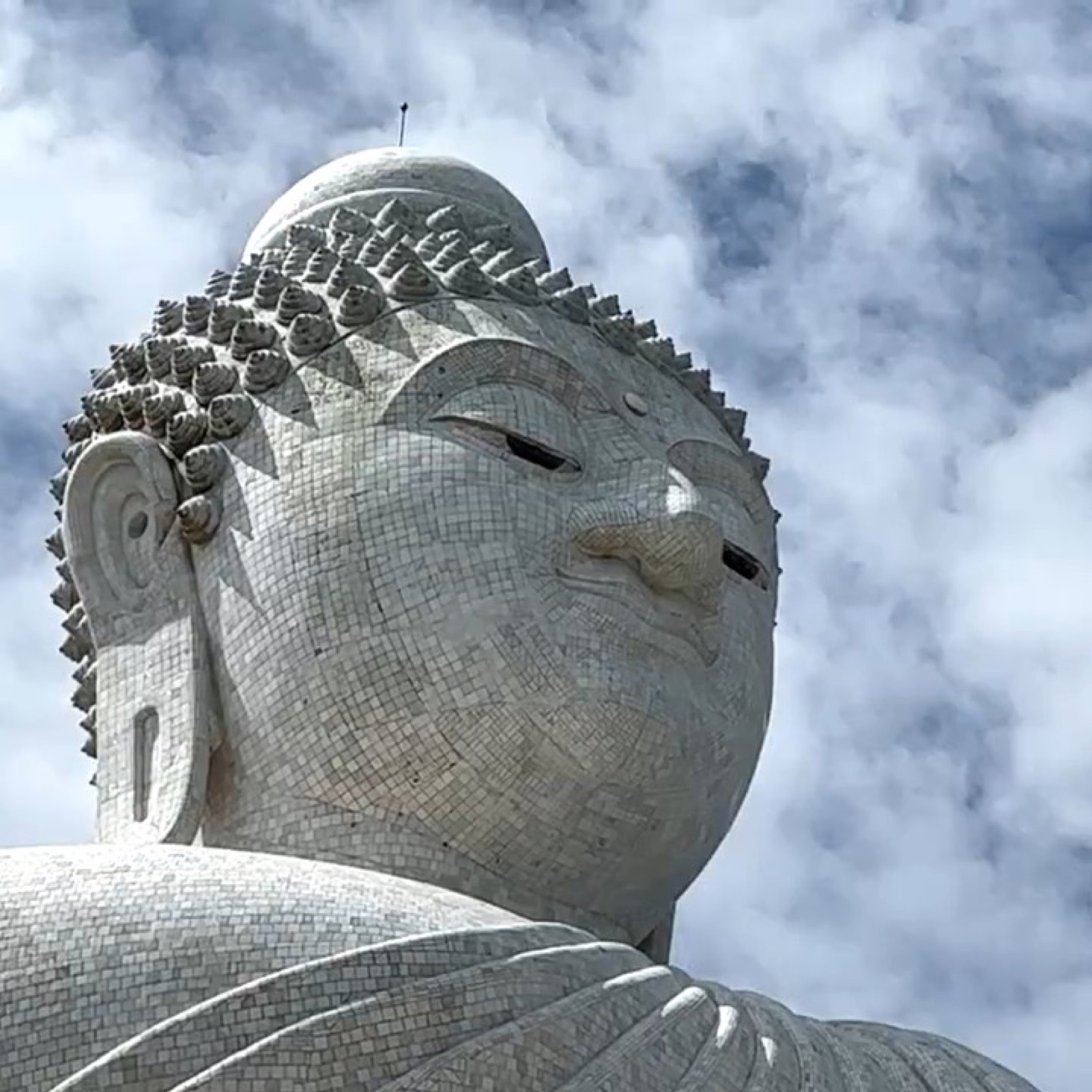 Draped in white marble
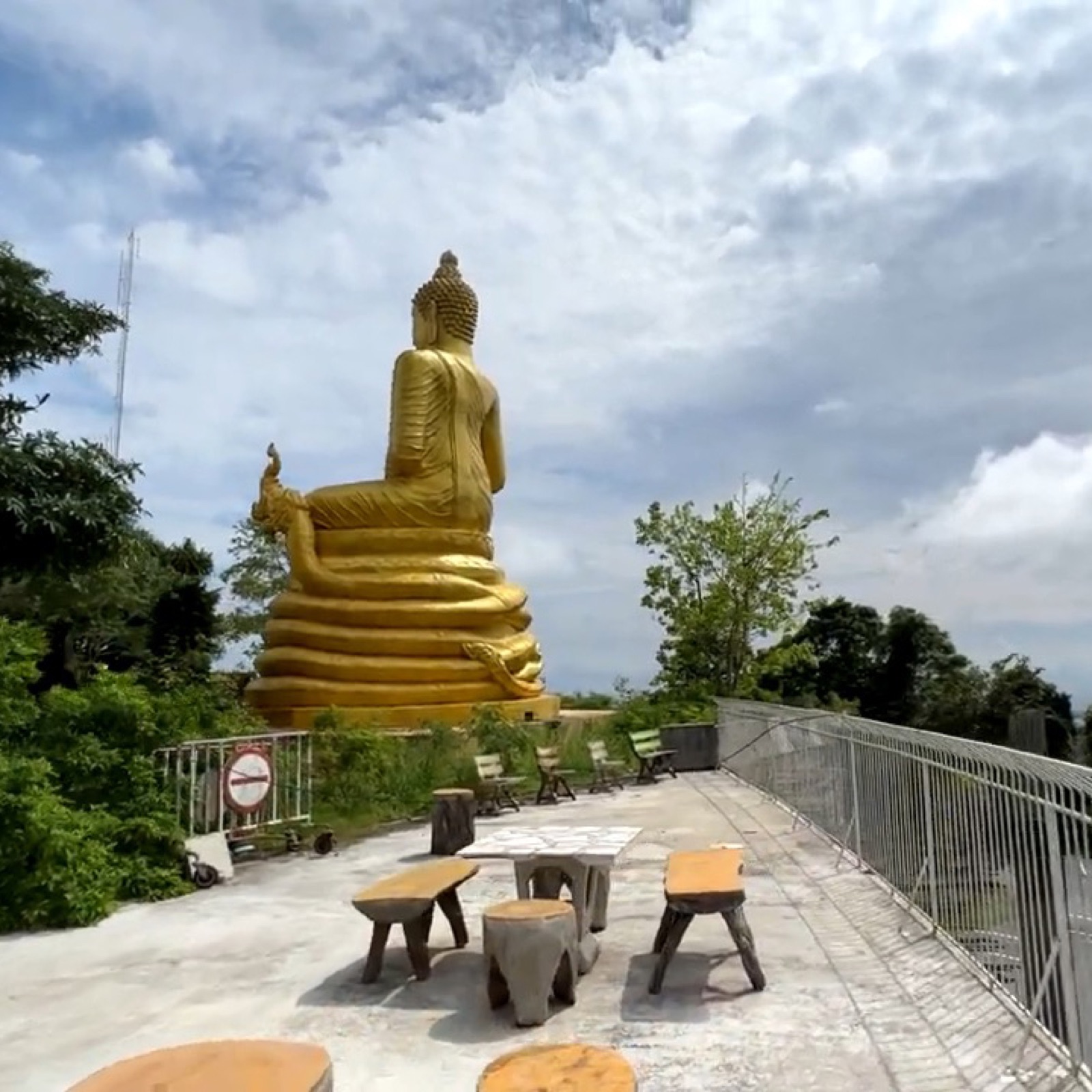 The golden buddha in honour of Queen Sirikit
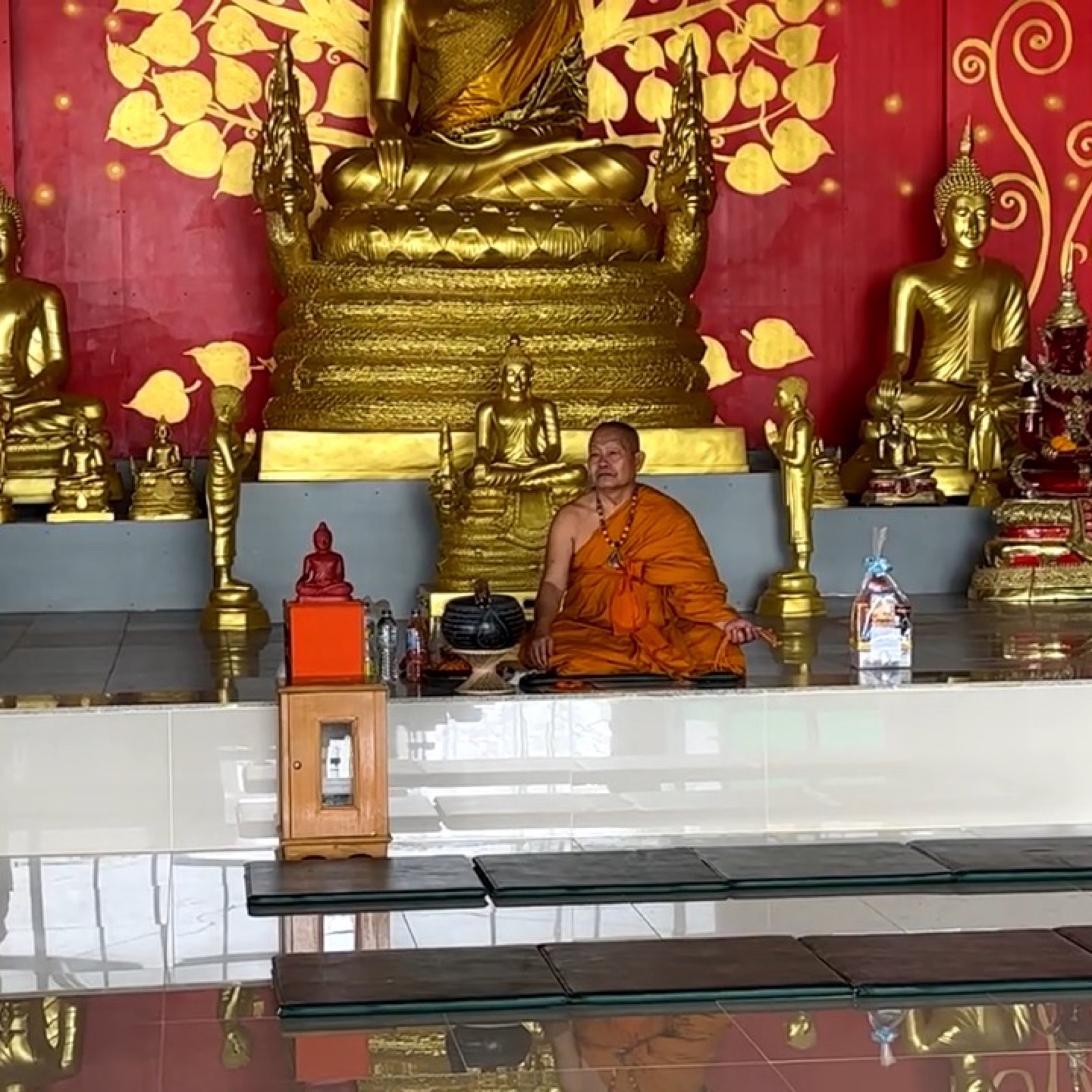 Under the marble shelter, a monk waits...
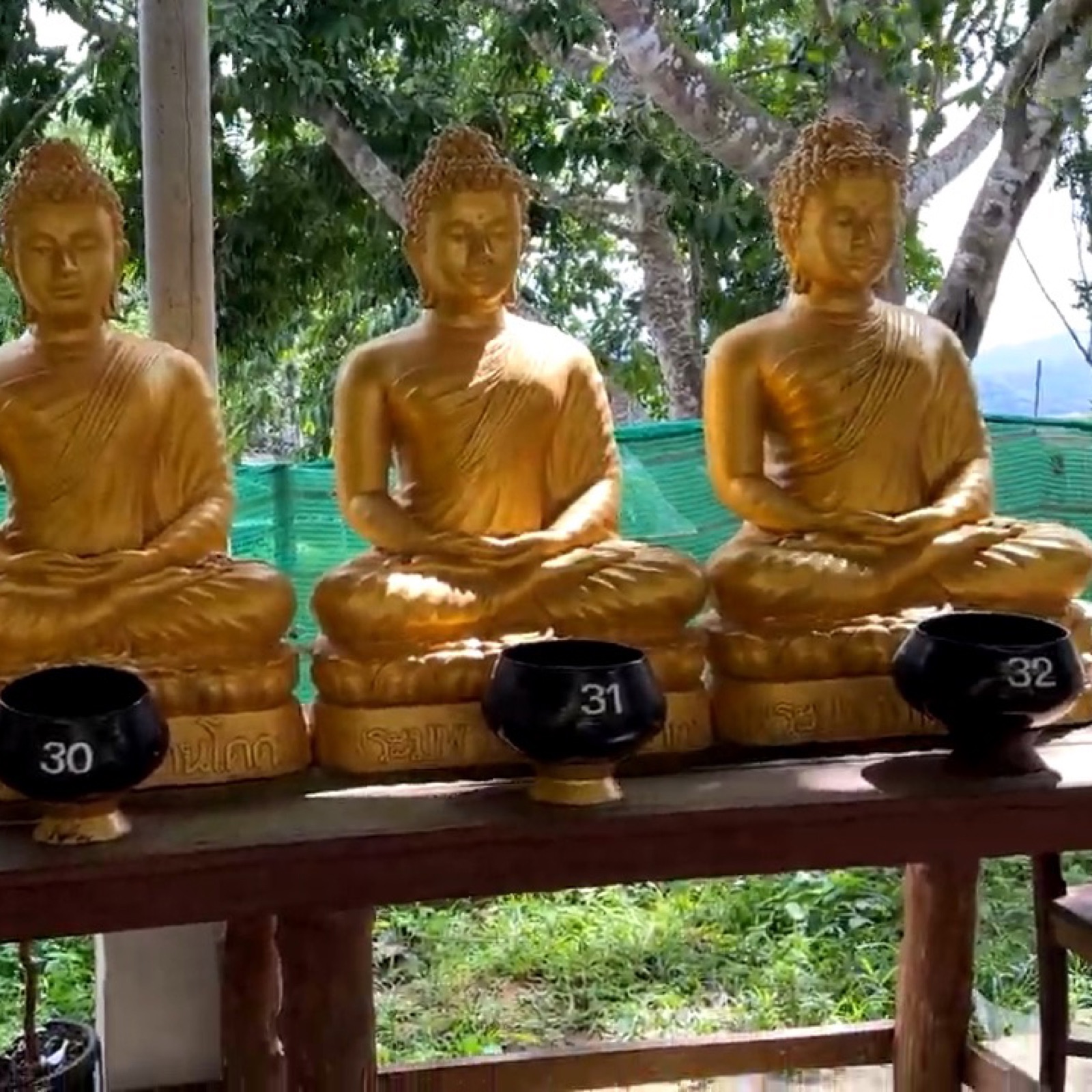 The 32 golden Thursday buddhas
The visit ends with this wonderful view over Chalong Bay and the blue of the Andaman Sea.
Chalong Bay and the Andaman Sea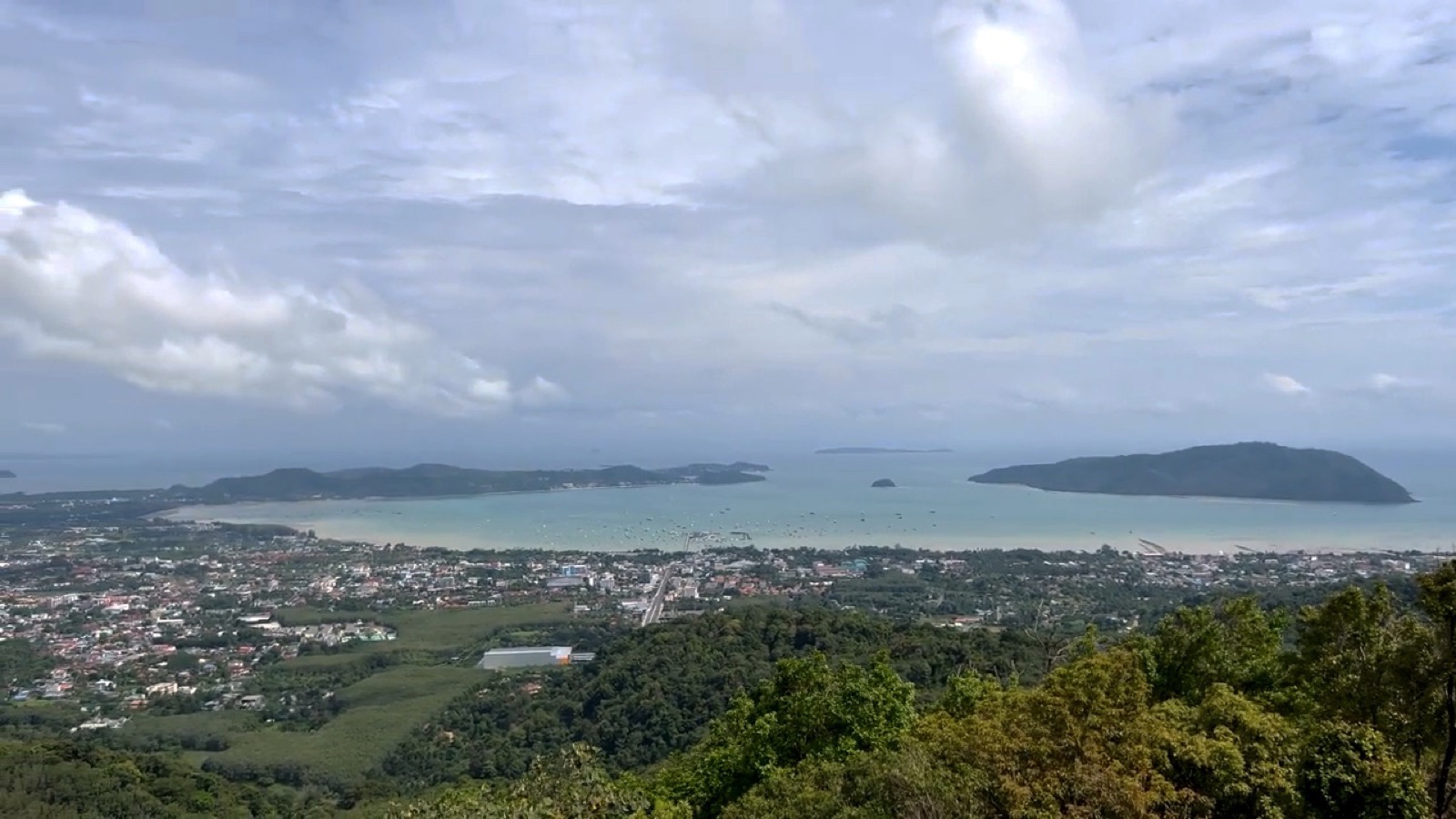
Next episode: Phuket’s old town and its Sino-Portuguese lanes, the Saeng Tham Shrine, a young monk’s ordination at Wat Mongkhon Nimit, and the reclining buddha of Koh Sirey…
All the videos from this journey are on our YouTube channel.