Thailand 2021, a country without tourists — 3. Phuket's old town and Koh Sirey
Continuing our three-month journey through the Thailand of 2021, barely reopened after Covid. In the previous episode: Banana Beach, Sirinat National Park, the northern temples, deserted Patong, and the Big Buddha of Nakkerd Hill.
Phuket’s old town
We walk up Soi Romanee, in Phuket City, with its pastel-coloured houses, a legacy of the Sino-Portuguese era. Once a place of ill repute, today it’s home to trendy shops and cafés. The pandemic has left its mark here: the street is quiet, many shops are closed — a far cry, I imagine, from the pre-Covid bustle.
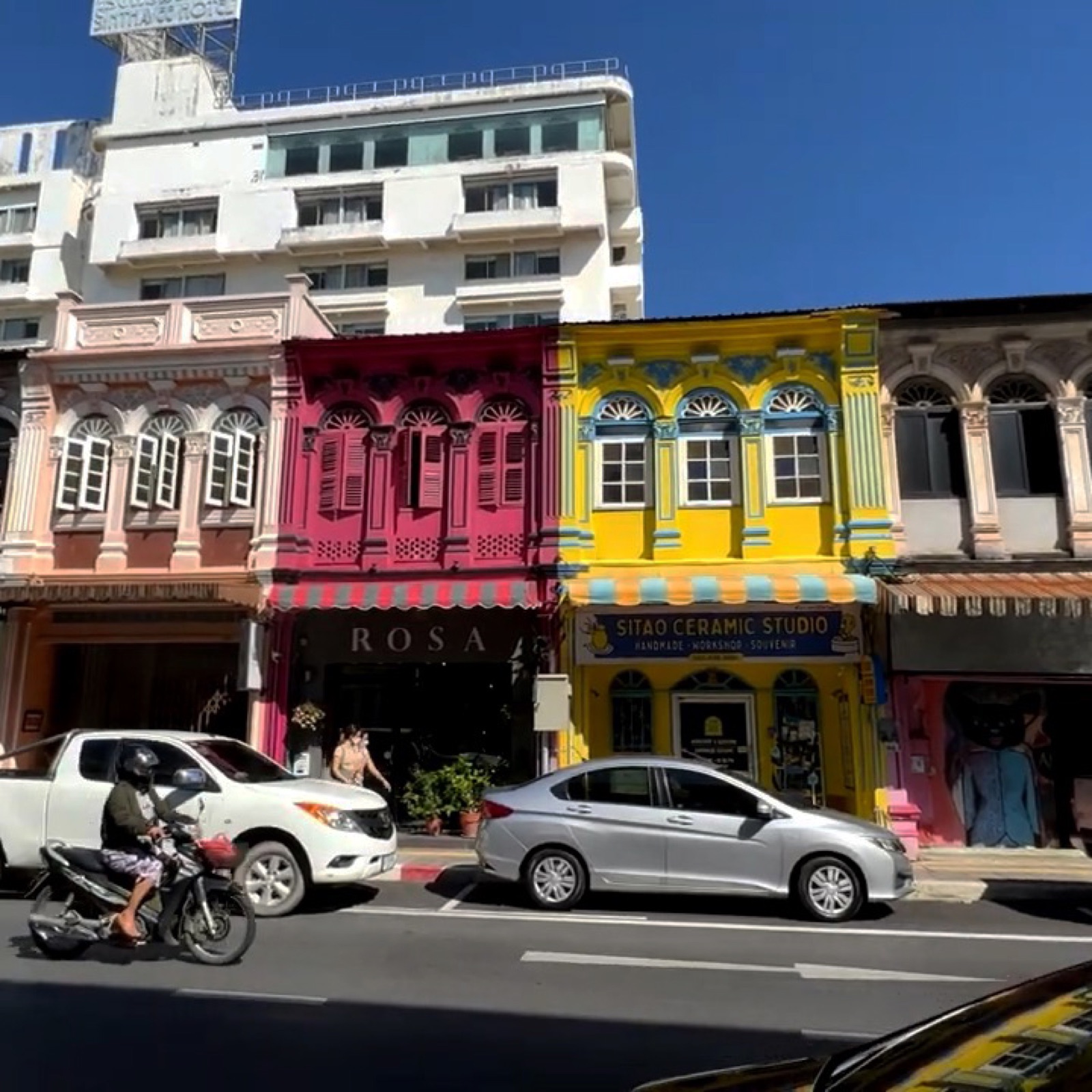
Sino-Portuguese houses in pastel colours
We wander from one street to the next. On Thalang Road, artisan workshops give way to clothing stores; further along, a cook is busy making colourful rotis. The butter sizzles, a warm, sweet scent fills the air — instant happiness drifting through the street. We never found the taste of those wonderful Phuket rotis anywhere else: even in Hua Hin, where we live today, they don’t taste quite the same. The next shop overflows with offerings and festival items. Let’s pray for the festival to come…
The cook making colourful rotis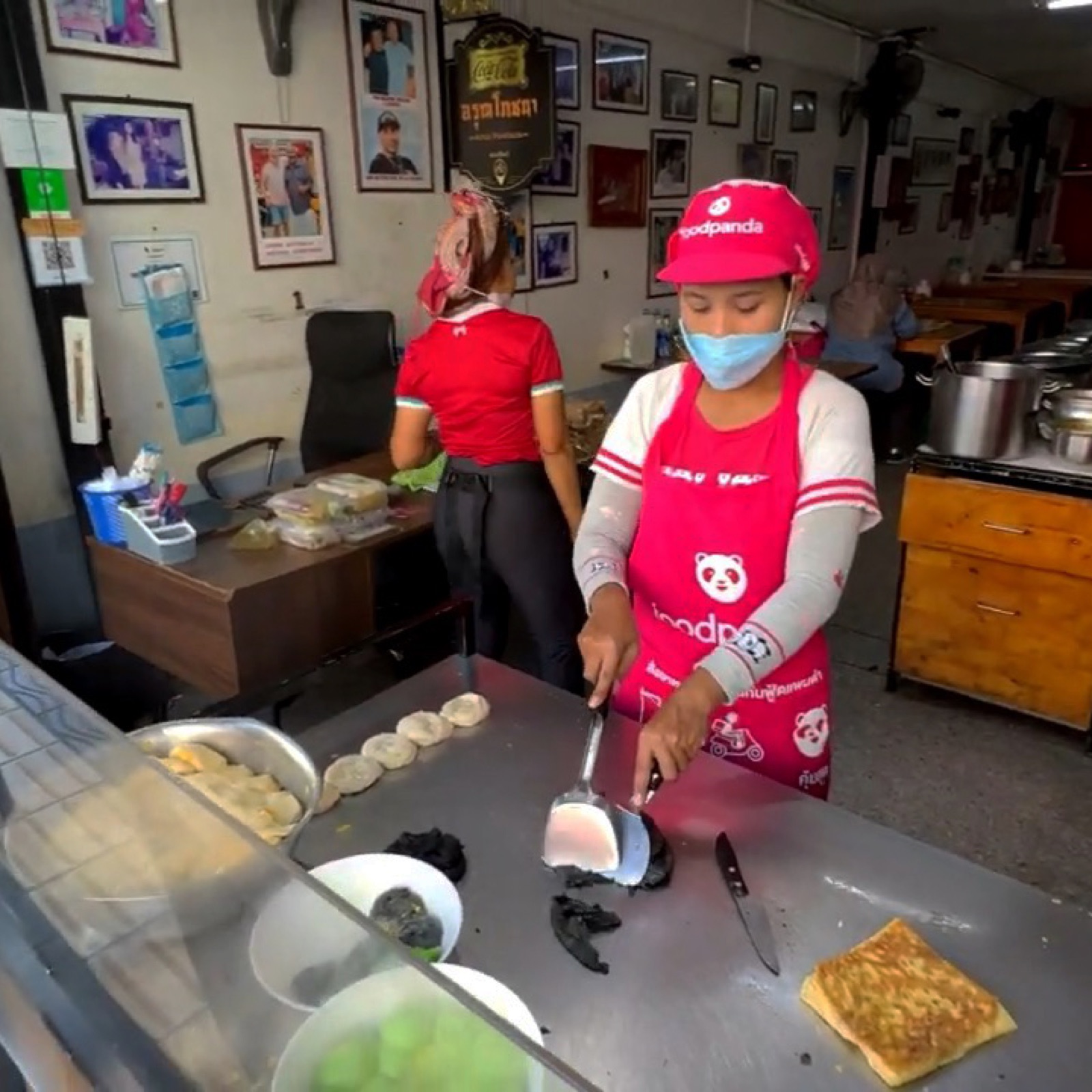
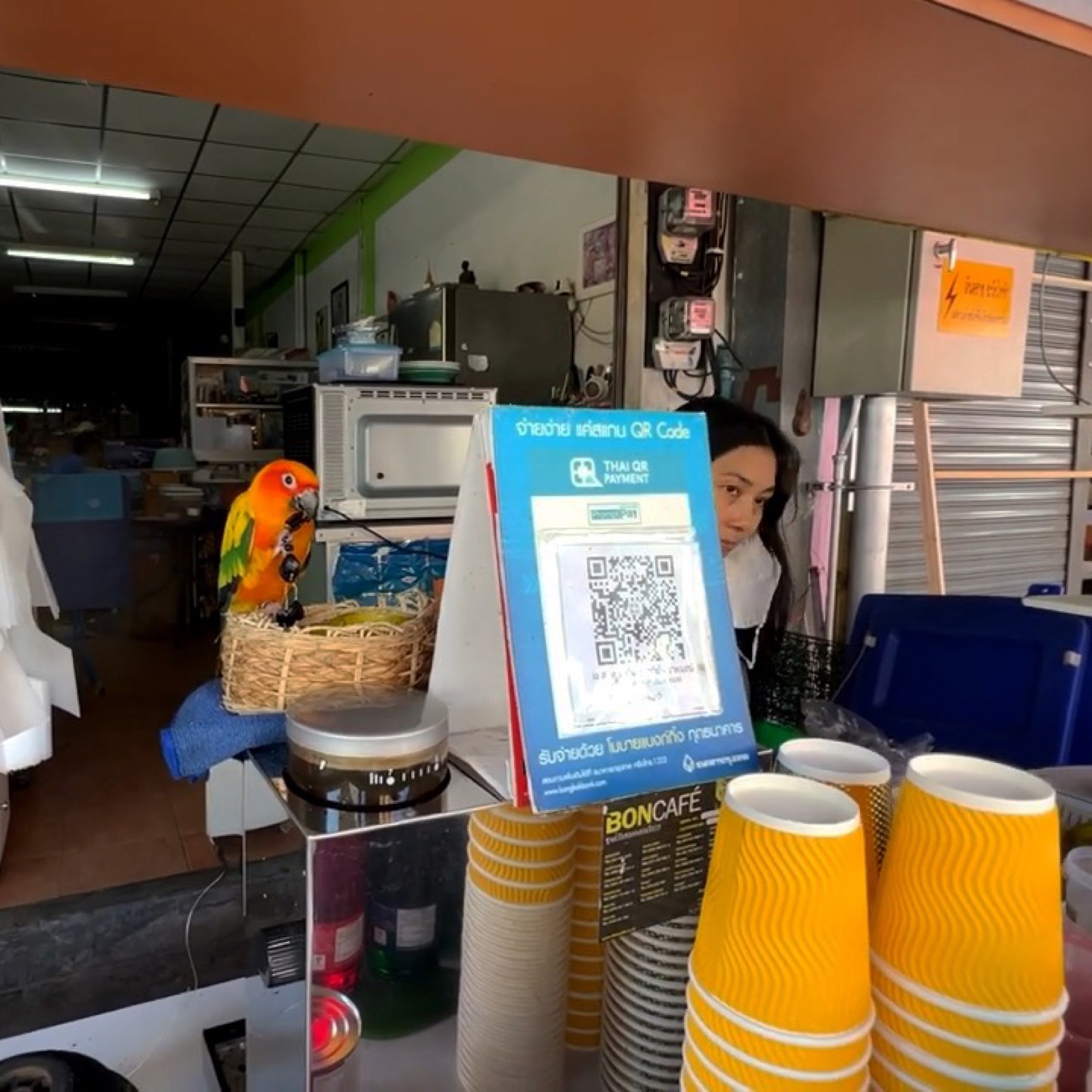
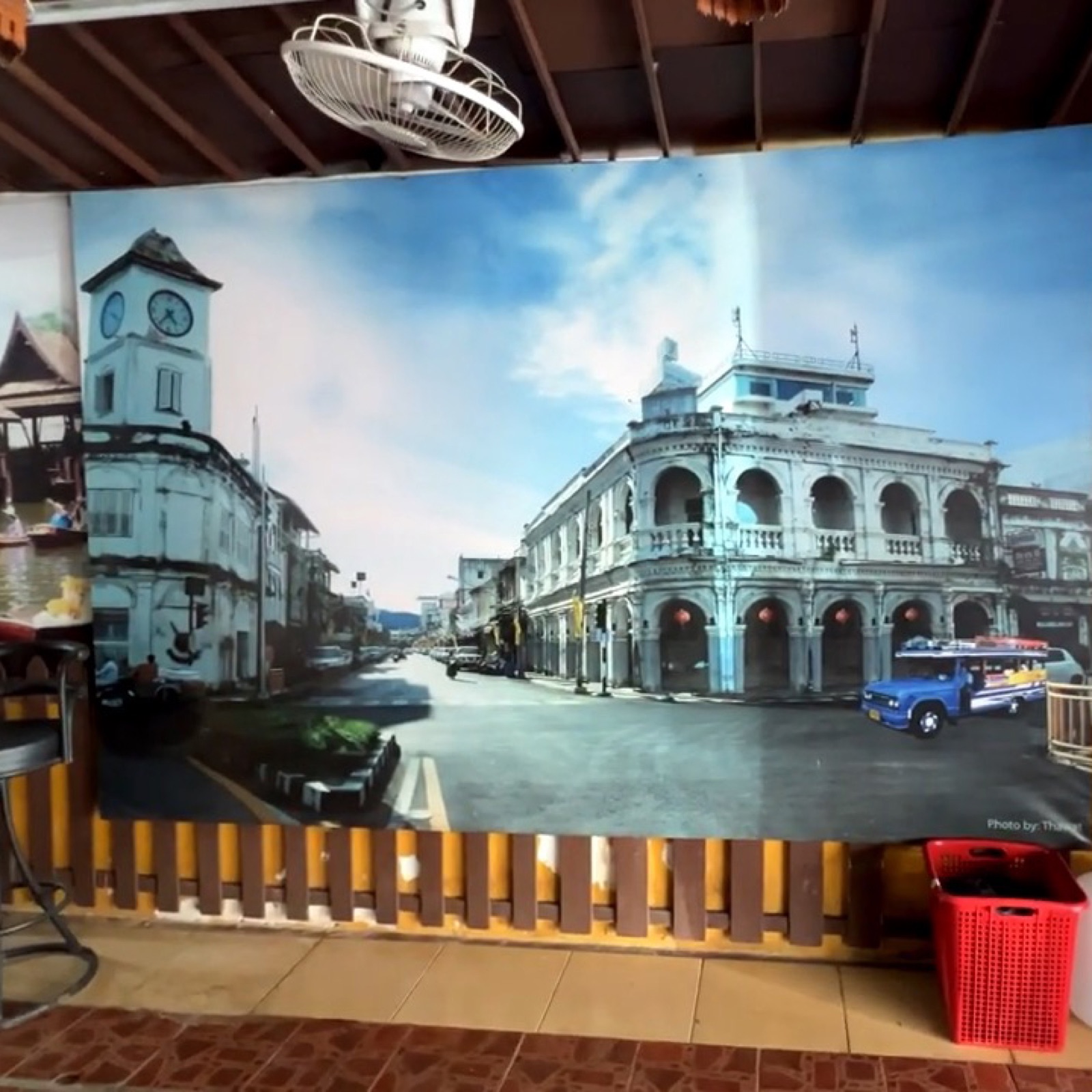
A few tables on the pavement, already serving meals to early risers eating heartily. We continue our walk, seeking out the shaded pavements — it’s already hot at ten in the morning. Taxi drivers with no customers sometimes call out to us, without insisting. Graffiti on the lowered shutters of closed shops on Phang Nga Road; we pass beneath bamboo scaffolding that looks so fragile. An art shop, a parrot reciting its rosary behind the drinks seller’s QR code — then a creaking shutter rises, and old Phuket appears before me! The second-hand bookshop has just opened; a huge photo of old Phuket covers an entire wall: the yellow clock tower and the old Phuket bank in their original splendour. Now restored, both buildings house the Phuket museum today. The shopkeeper tells me the photo shows them as they were a hundred years ago — it must have been taken before the 2012 renovations…
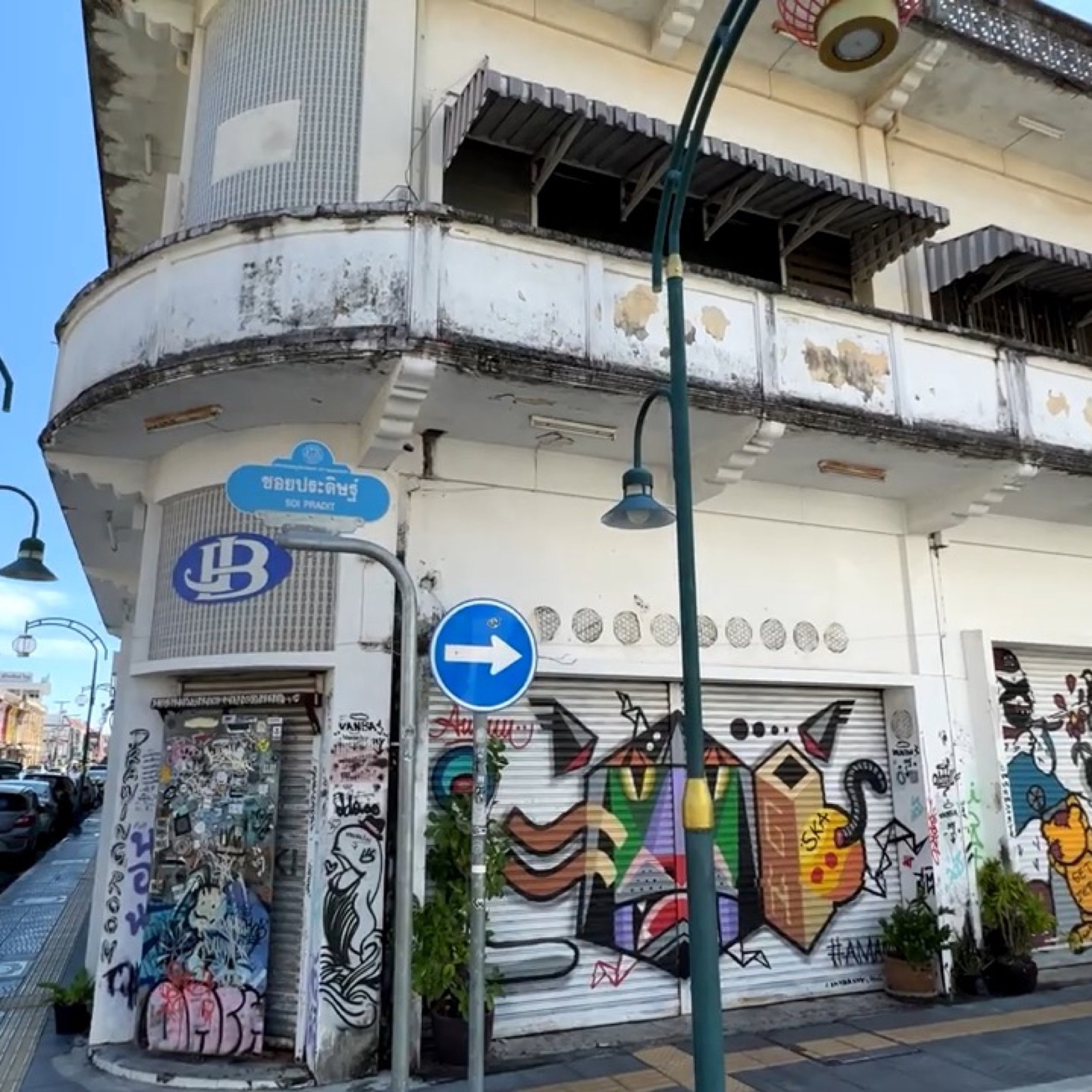
We continue our wanderings, marvelling at the beauty of this town. The hotel with its crumbling façades nonetheless retains a certain elegance, with its clean, unfussy lines. And it’s while lingering over that façade that I notice it, right next door: a large arch decorated with dragons.
It opens onto the Saeng Tham Shrine, long kept secret. This Chinese sanctuary founded by the Tan clan is a very old Taoist temple. We follow the narrow alley, its walls decorated with drawings, where women love to strike a pose. At the end of the lane, the “serene light” illuminates Chinese dolls, flamboyant dragons, and the white, wood-panelled façades of the On On Hotel. Happiness for every visitor begins here! We go in: two visitors prepare their incense-stick offerings; gold leaf trembles in the breeze, held to the stone ball at its top by a few coins. This Thai practice spread through the culture of Chinese immigrants — a religious syncretism, part of Phuket’s cultural beauty. Merit is accumulated through offerings, a Luk Nimit for good luck.
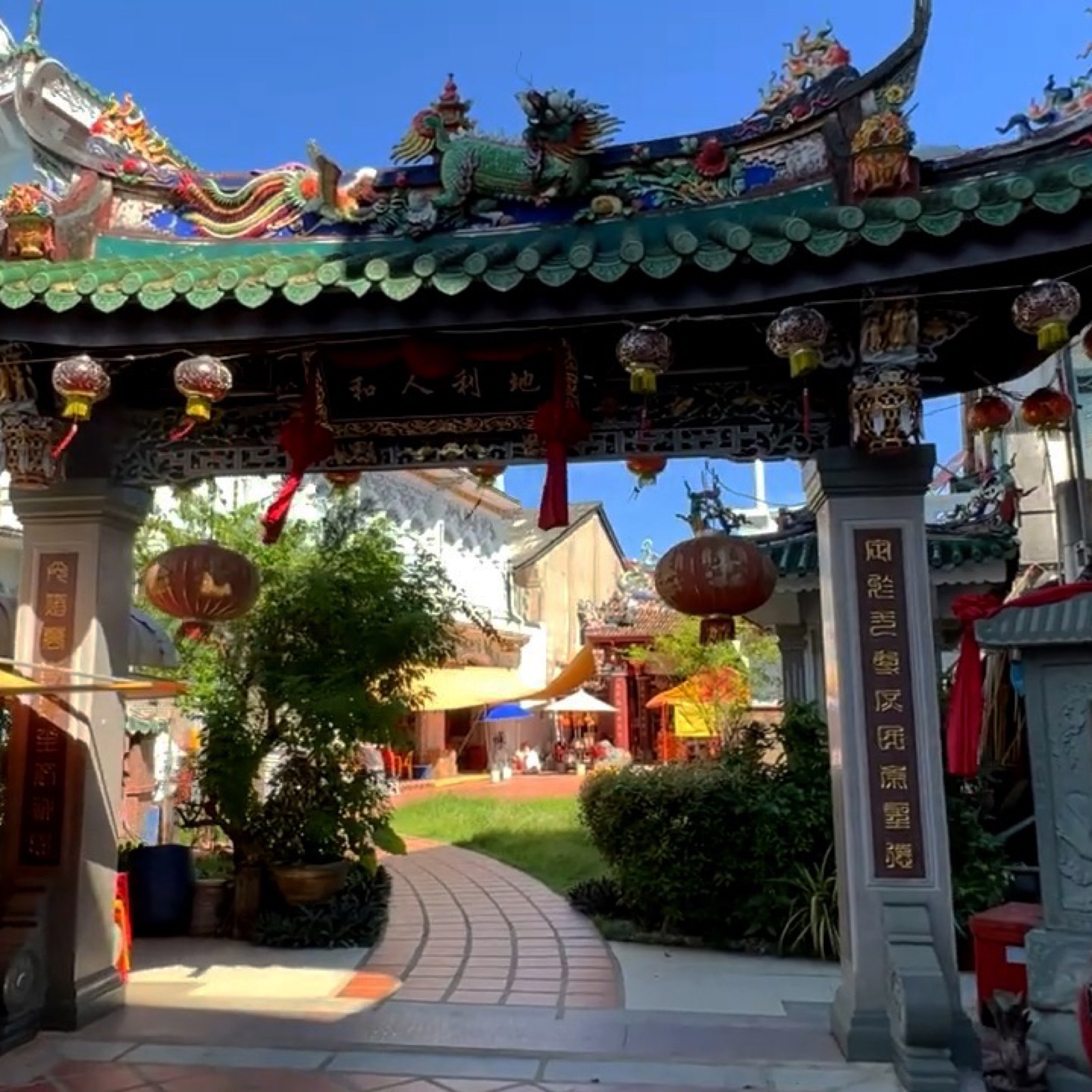 The dragon-adorned entrance arch
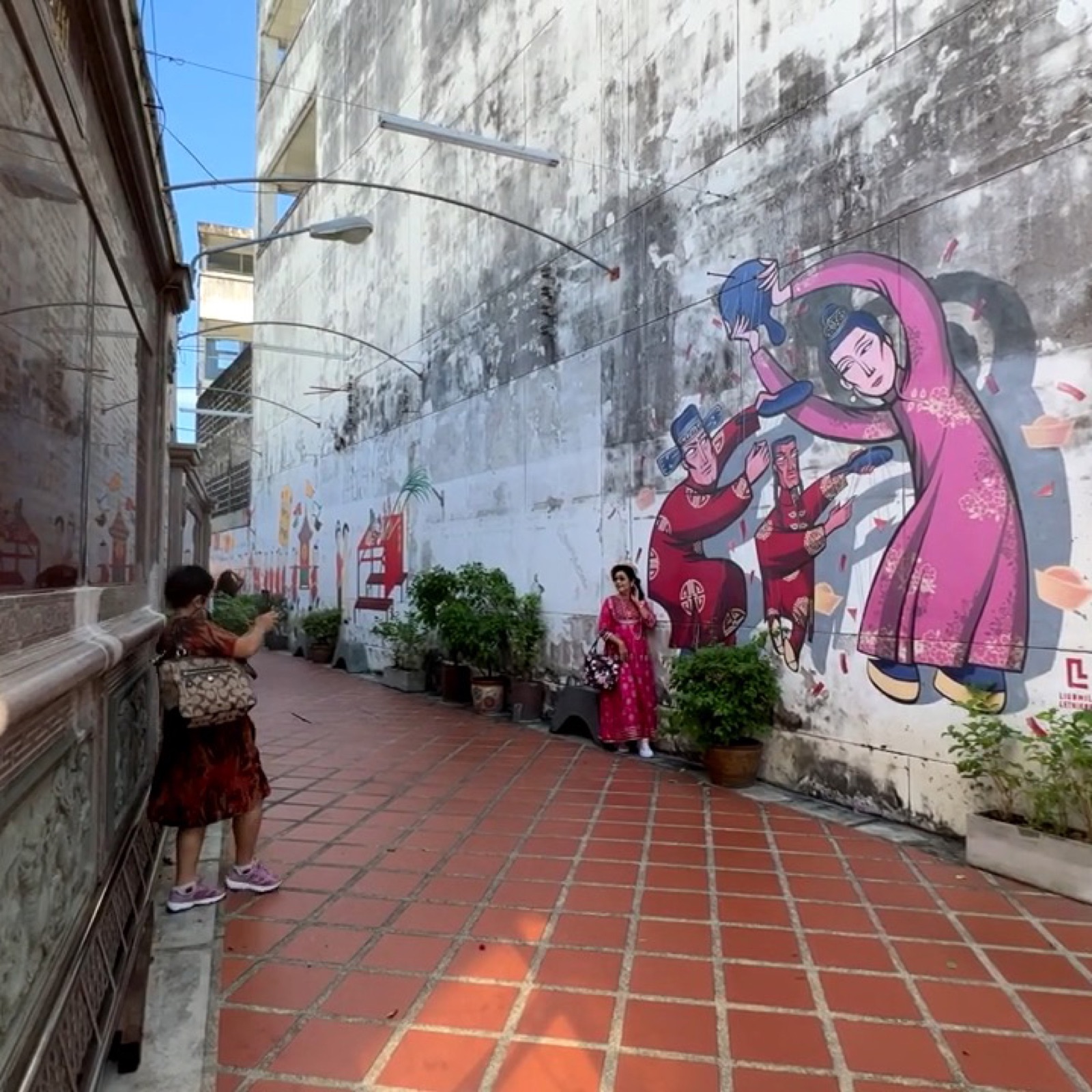 A pause for the fashionable, in the alley
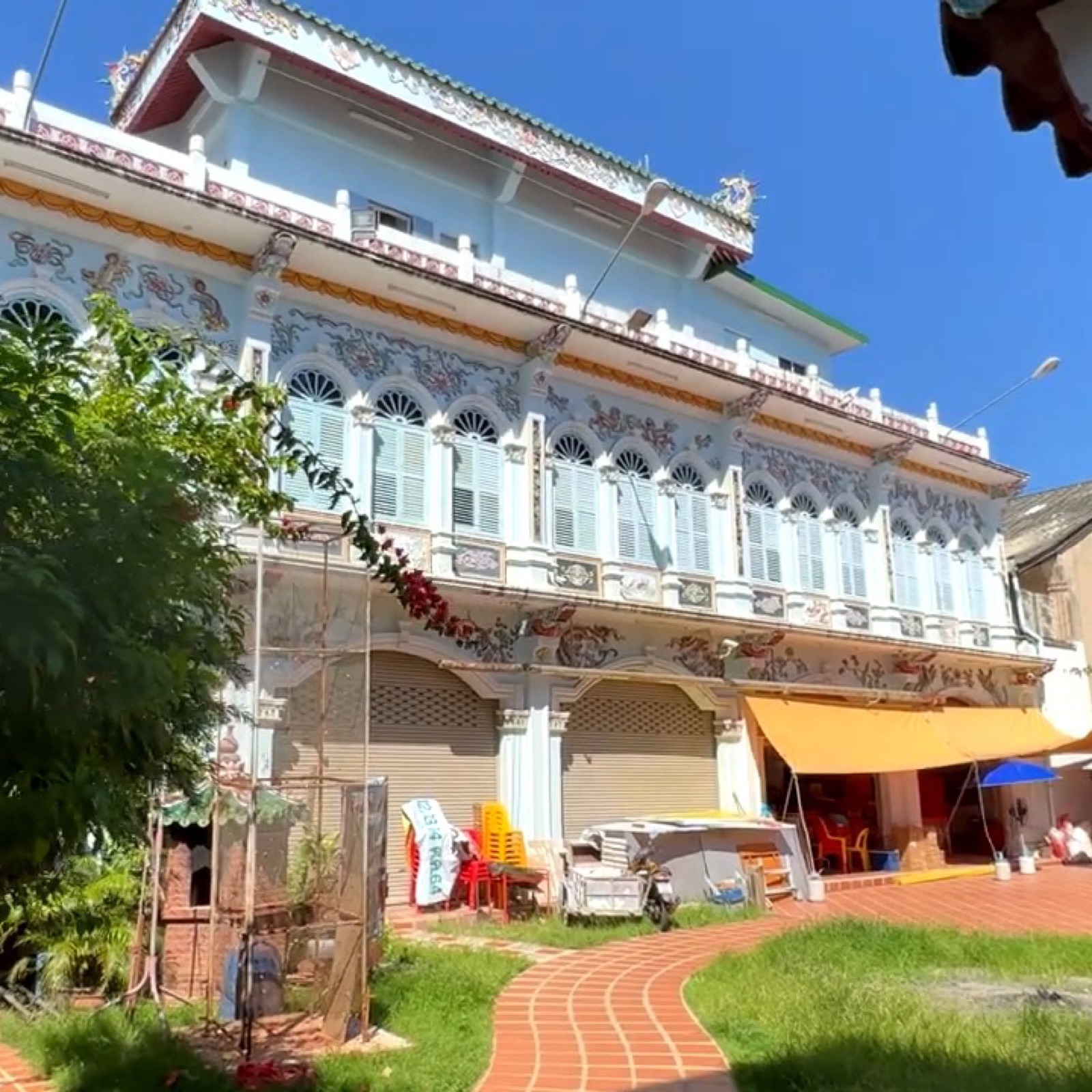 The white façades of the On On Hotel
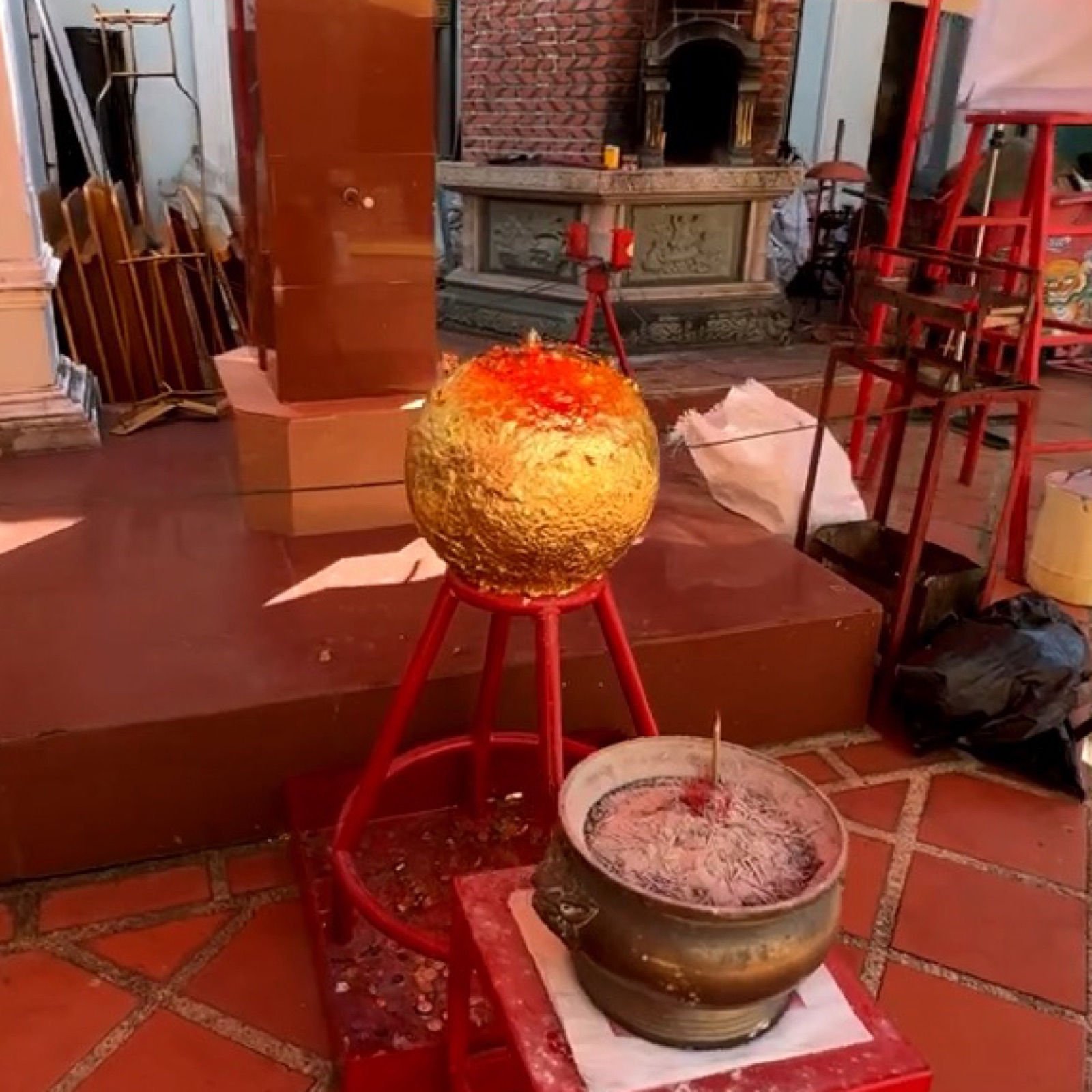 Gold leaf on the stone ball
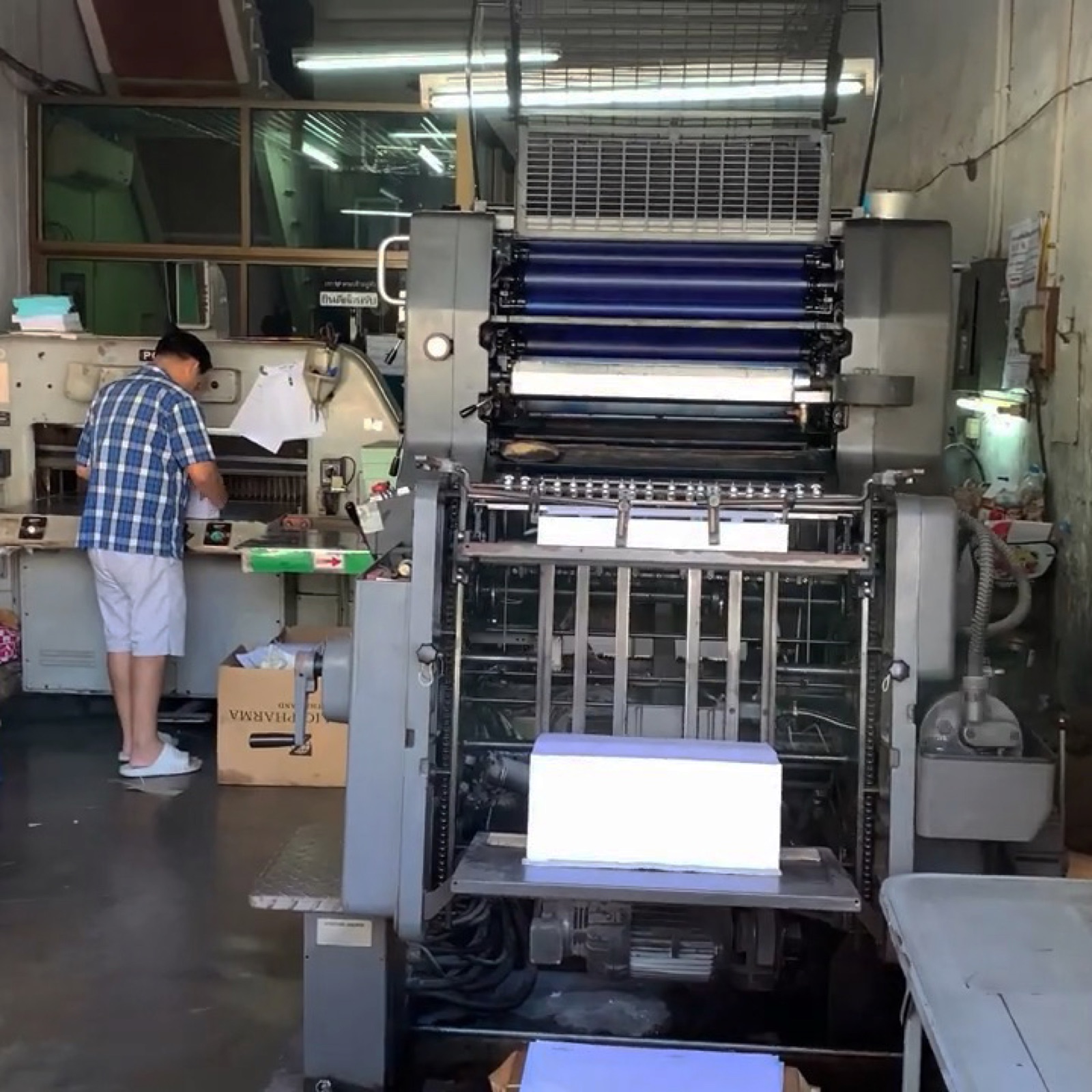
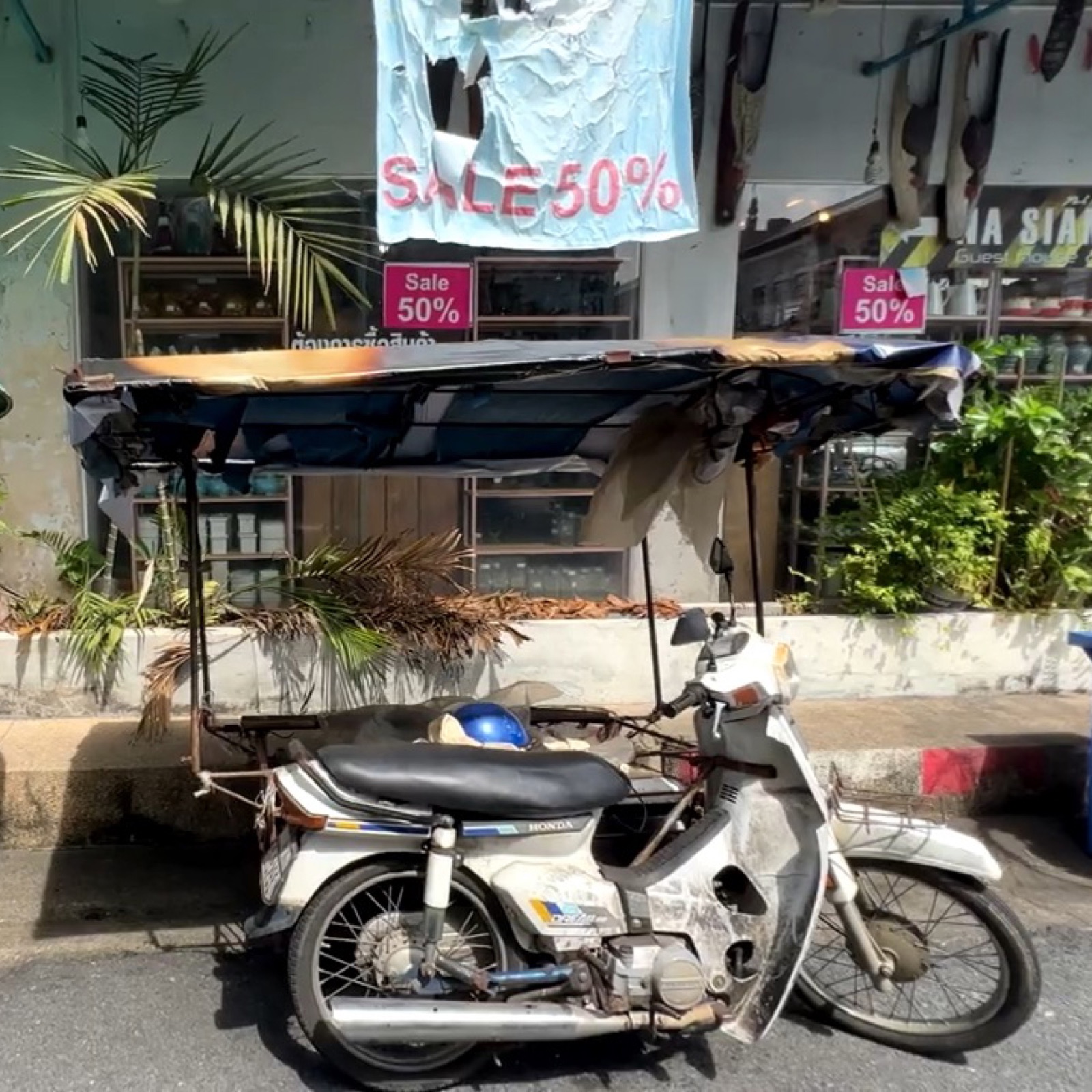
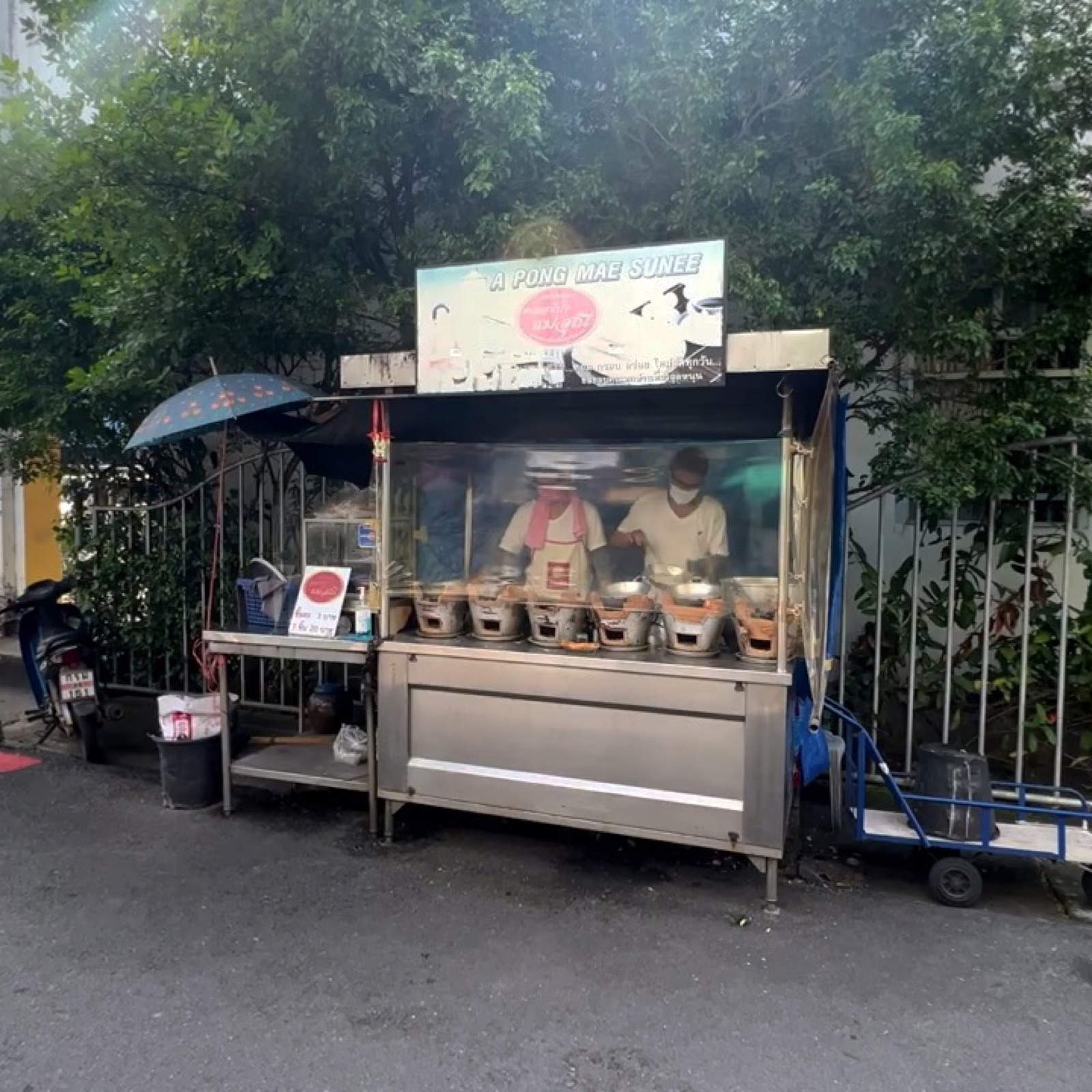
A print shop by the roadside runs its machines flat out; fabric and clothing stores follow one after another on Yaowarat Road. A few tourists here and there, streetlamps with Chinese lanterns, colourful songthaew waiting hopelessly for customers, saleng carts emptied for the evening ahead — while further along, two cooks work busily preparing light a-pong pancakes, their precise gestures never pausing.
Wat Mongkhon Nimit: a young monk’s ordination
Wat Mongkhon Nimit, at the heart of the old town, is well named by its former title: Klang — “middle”, in Thai. Its richly ornamented roofs can be seen from the surrounding streets. Some buildings are Sino-Portuguese in style; at the back, a great brick chedi (or stupa) contrasts beautifully with the eleven small golden stupas surrounding it.
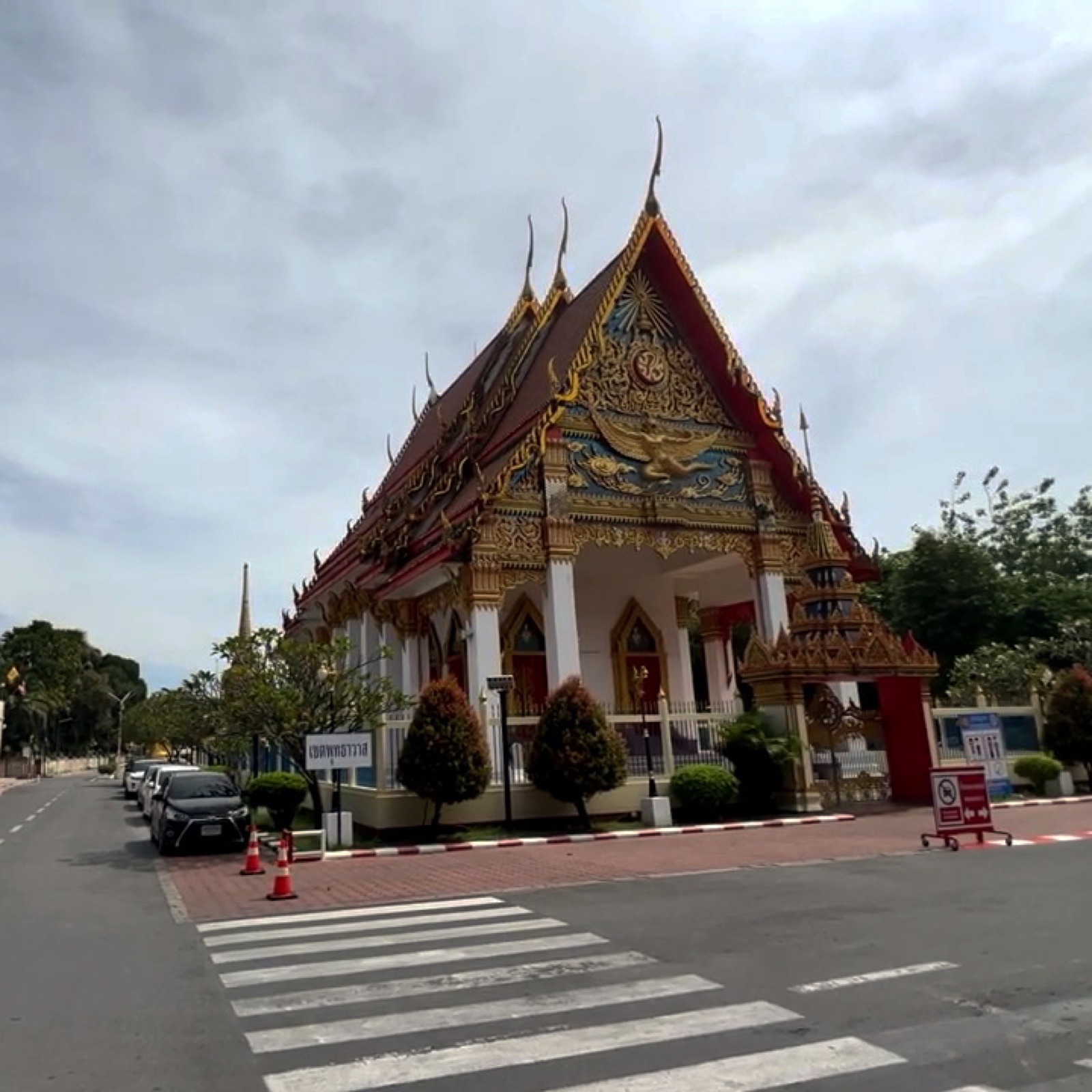
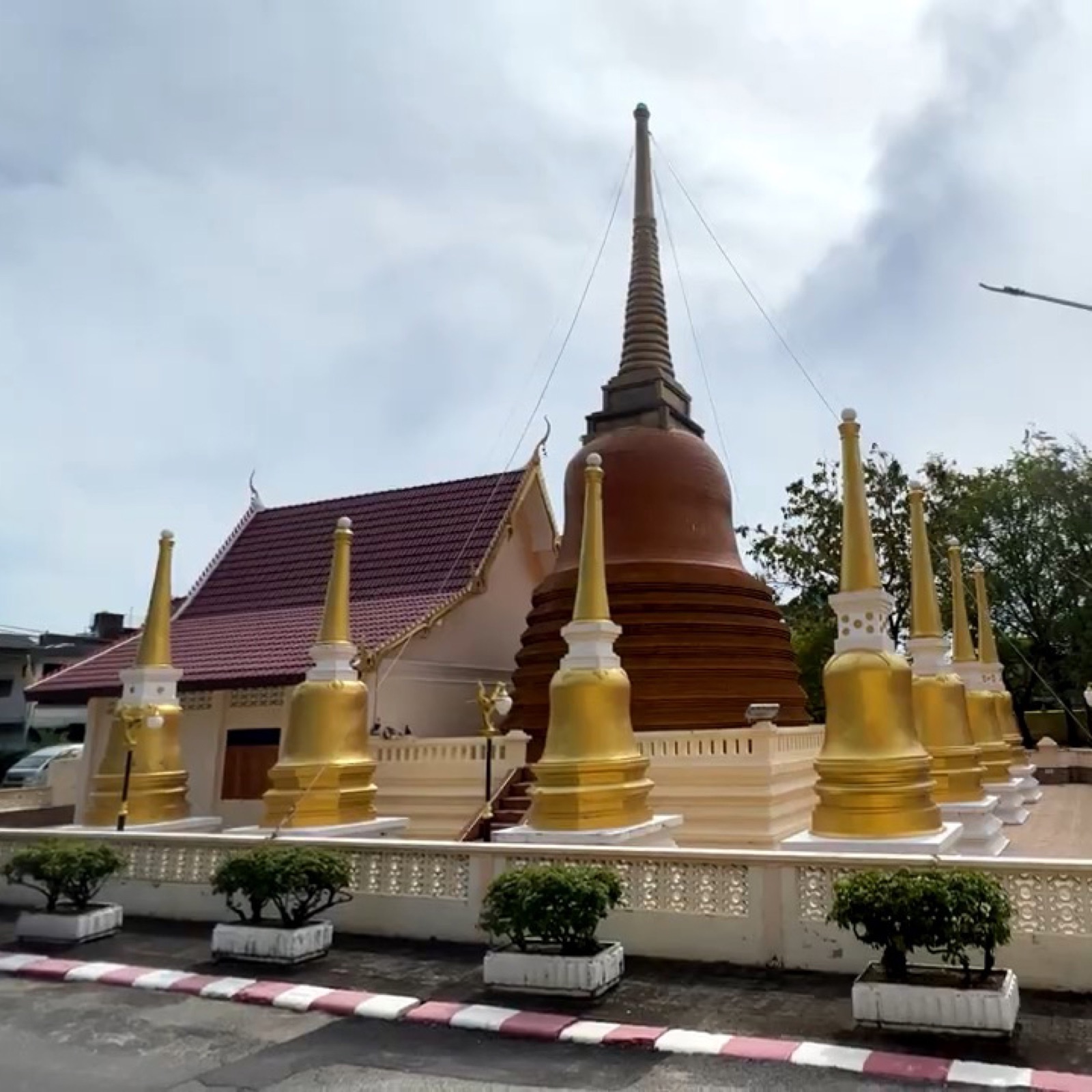
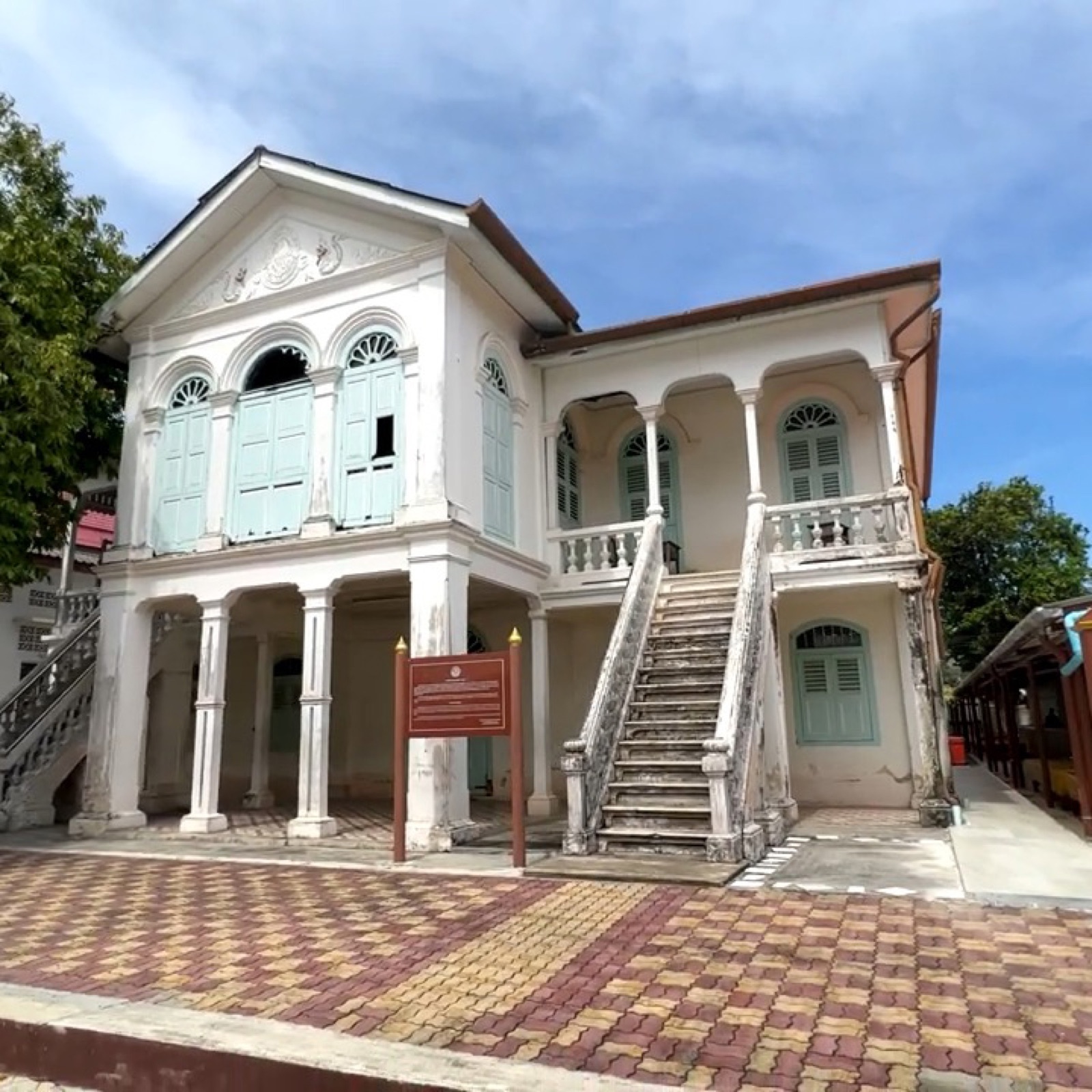
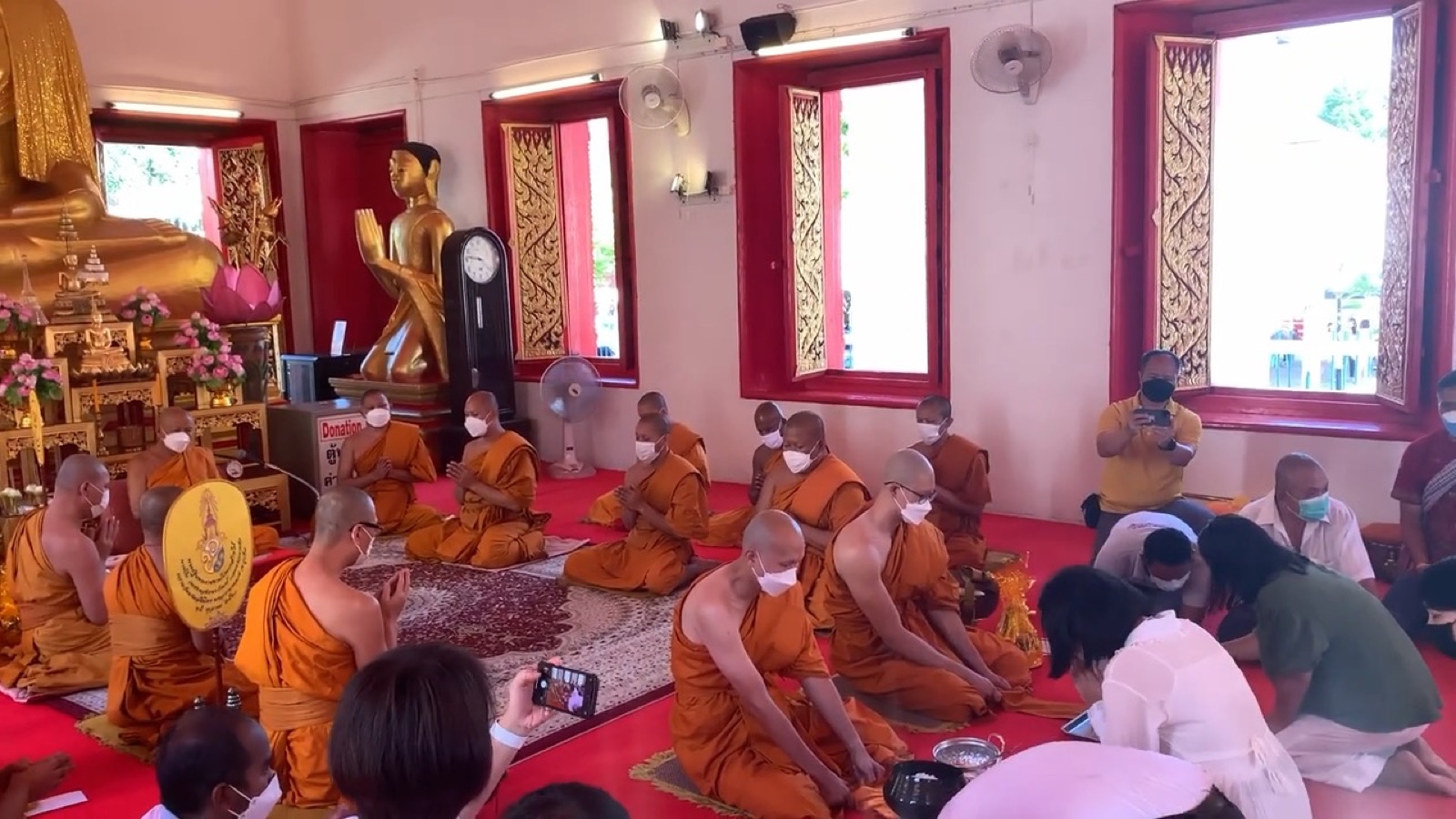
We hear the monks’ voices; we head towards the ubosot. Inside, an immense seated buddha — Luang Pho Khao — at the far end of the hall; a kneeling crowd presses close to the monks who, in a circle, chant mantras. By chance, once again, we have arrived during a young monk’s ordination ceremony, the Buat Phra.
The ceremony draws to a close, the monks leave the temple. The young monk, his head shaved, stays among his family and friends, who come to place gifts in his bat (บาตร), the stainless steel bowl — before a photo session that will immortalise the moment for the whole family. The young man remains dignified and calm, impassive amid the joyful commotion. Everyone is wearing a mask: Covid is still very much present…
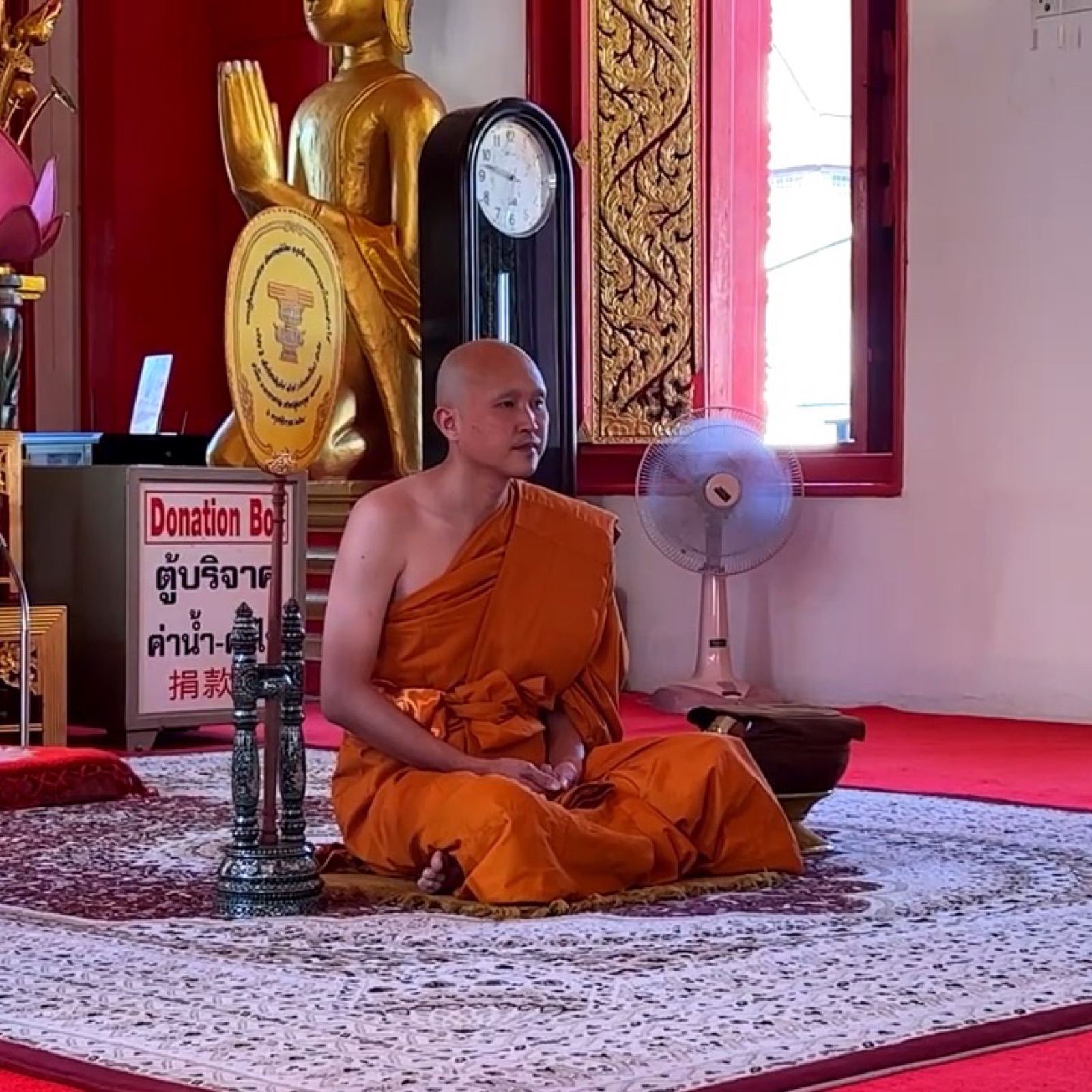
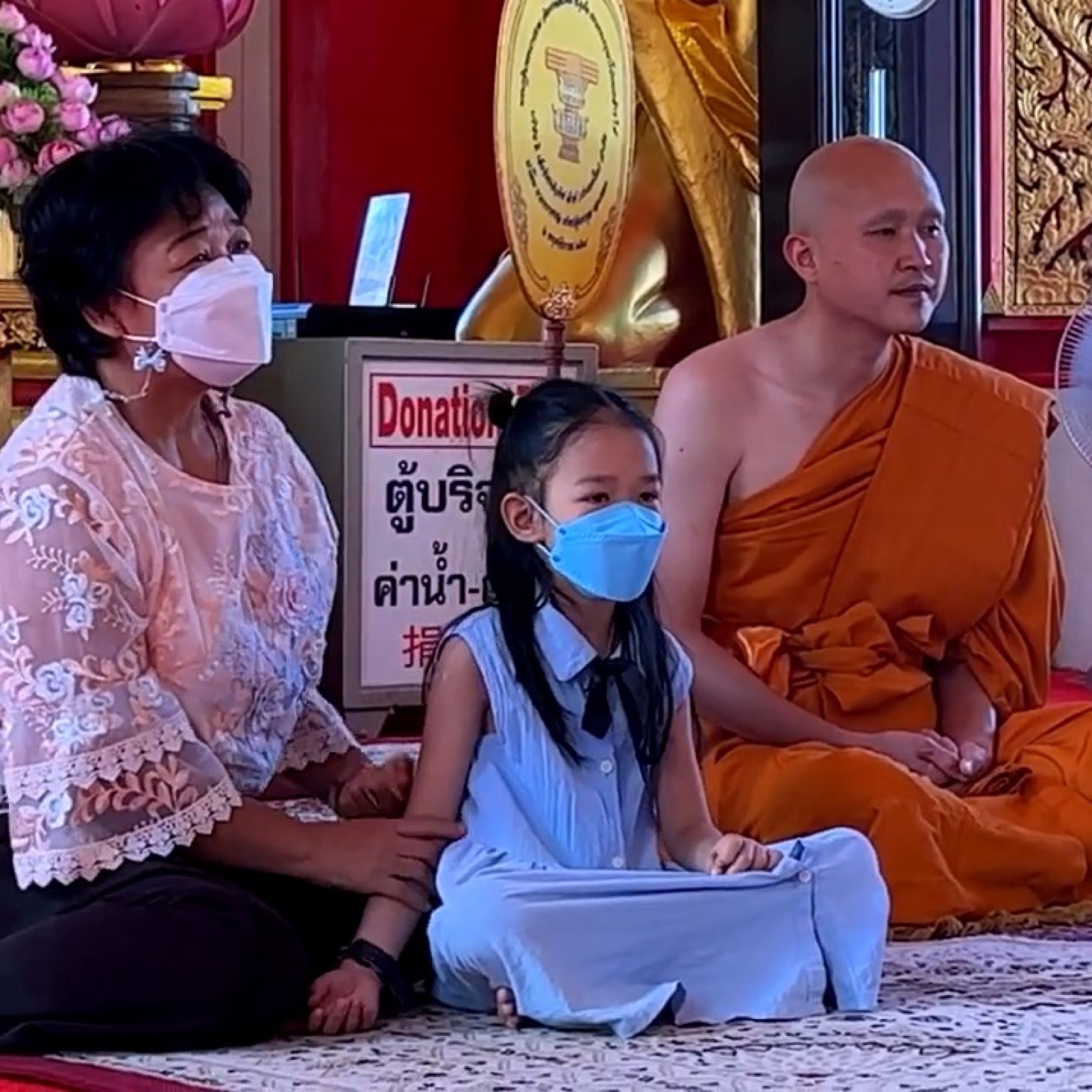
I stay to watch the joyful crowd leave. The monk walks with them, then steps away. His mother lingers a little longer, motionless, her eyes fixed on her son leaving for another life… A moment that lingers. What is she thinking?
A moment that lingers…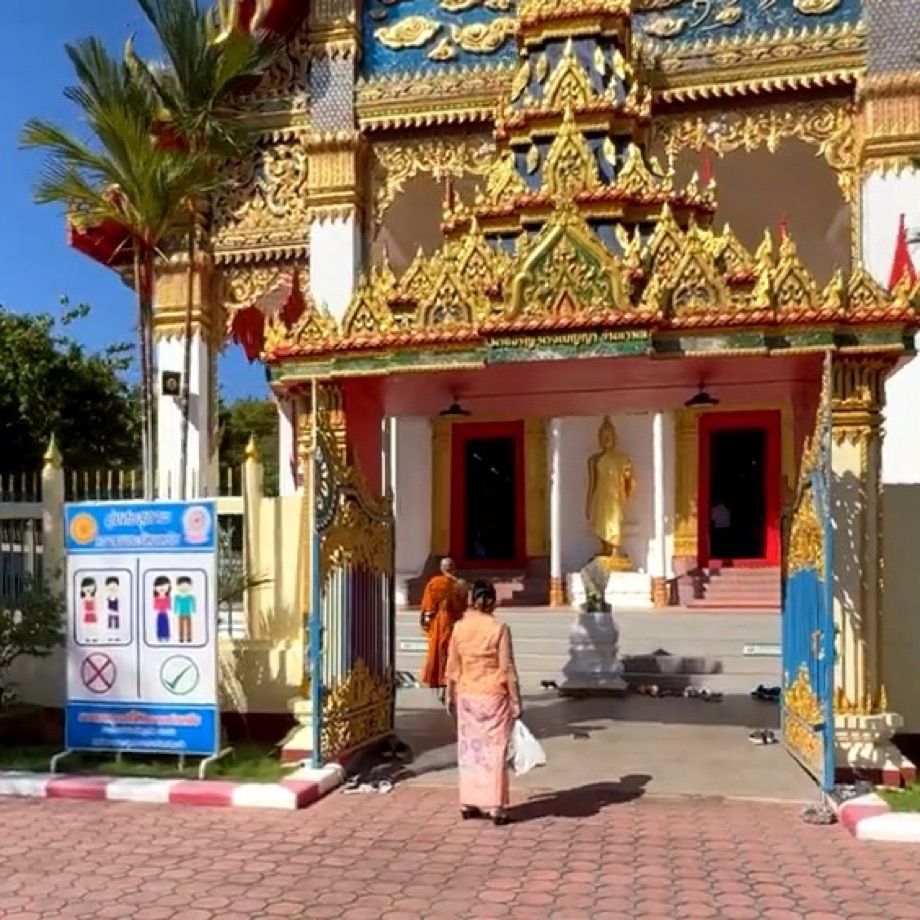
Koh Sirey, the reclining buddha and the sea gypsies
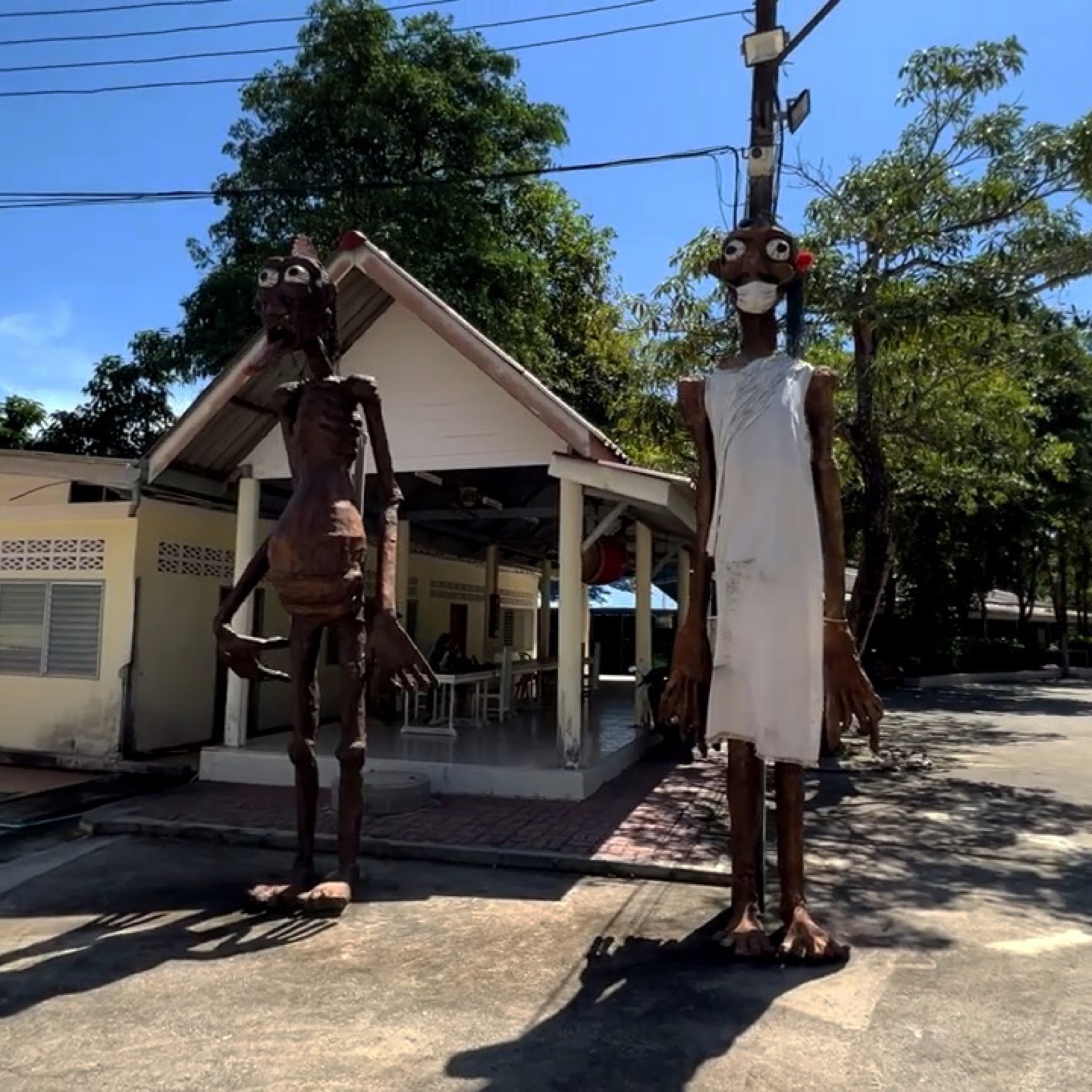
On to another temple, on the island of Koh Sirey. We cross the bridge to reach Wat Koh Sirey; a monk shows us where to park. A little further on, two enormous statues: the guardians watching over the site, Yakshas (ยักษ์) that here take the form of Mokens (or Chao Lay), the sea-gypsy people who settled at the foot of the hill.
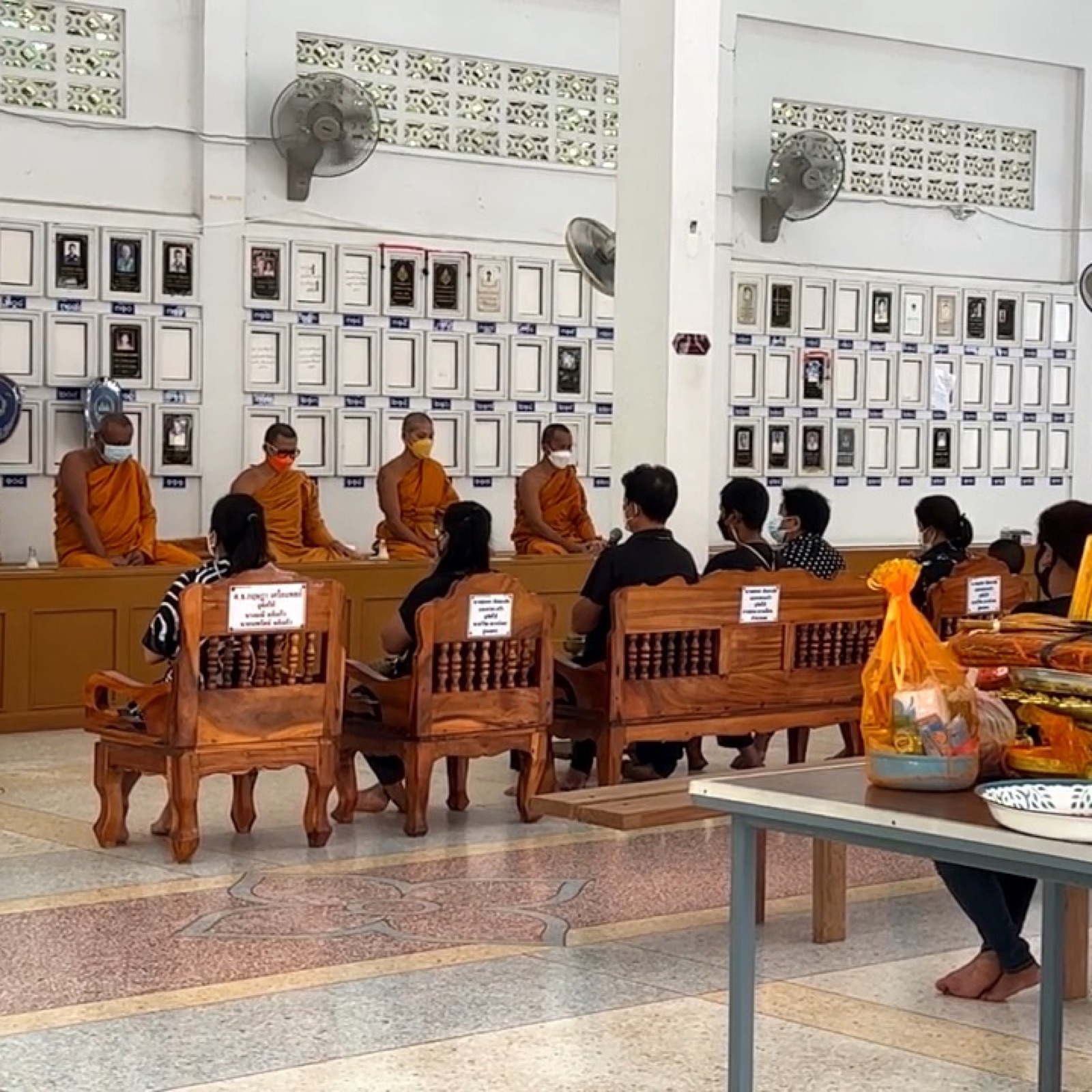
In the great sermon hall (Sala Kan Parian), monks in a row chant mantras before a praying congregation, seated on wooden benches. I leave the hall, and a monk points me towards the temple, up on the hill — now it’s time to walk. It’s hot on the paved road, I get a little out of breath. A small temple with golden buddhas in every posture, then there are still the last steps to climb, red and green.
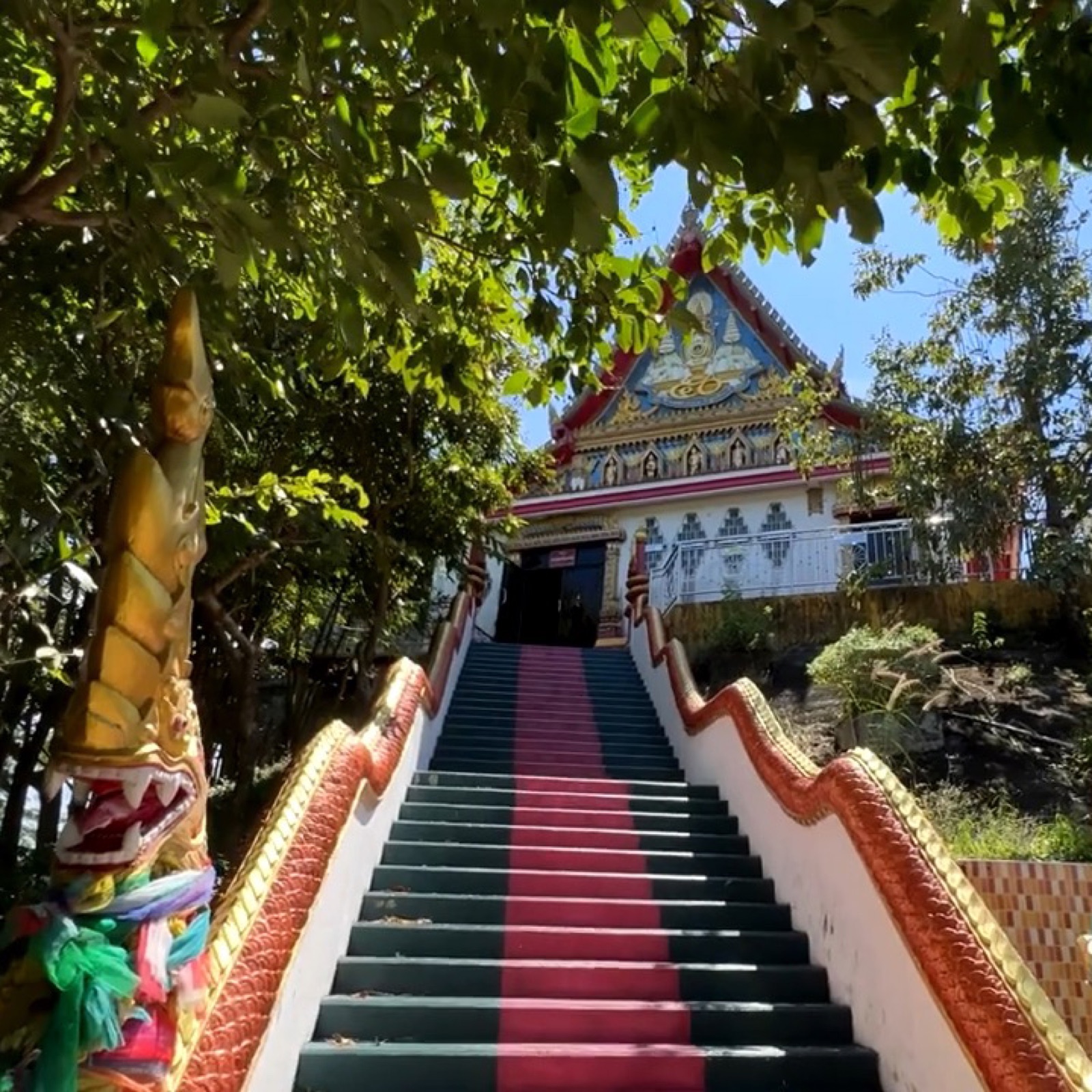
Inside, a great reclining buddha, draped in golden silk cloth: I am standing in the great viharn that houses this eighteen-metre giant. I am alone. On the outer terrace, a 360° view over the bay and the Andaman Sea.
The reclining buddha, eighteen metres of golden silk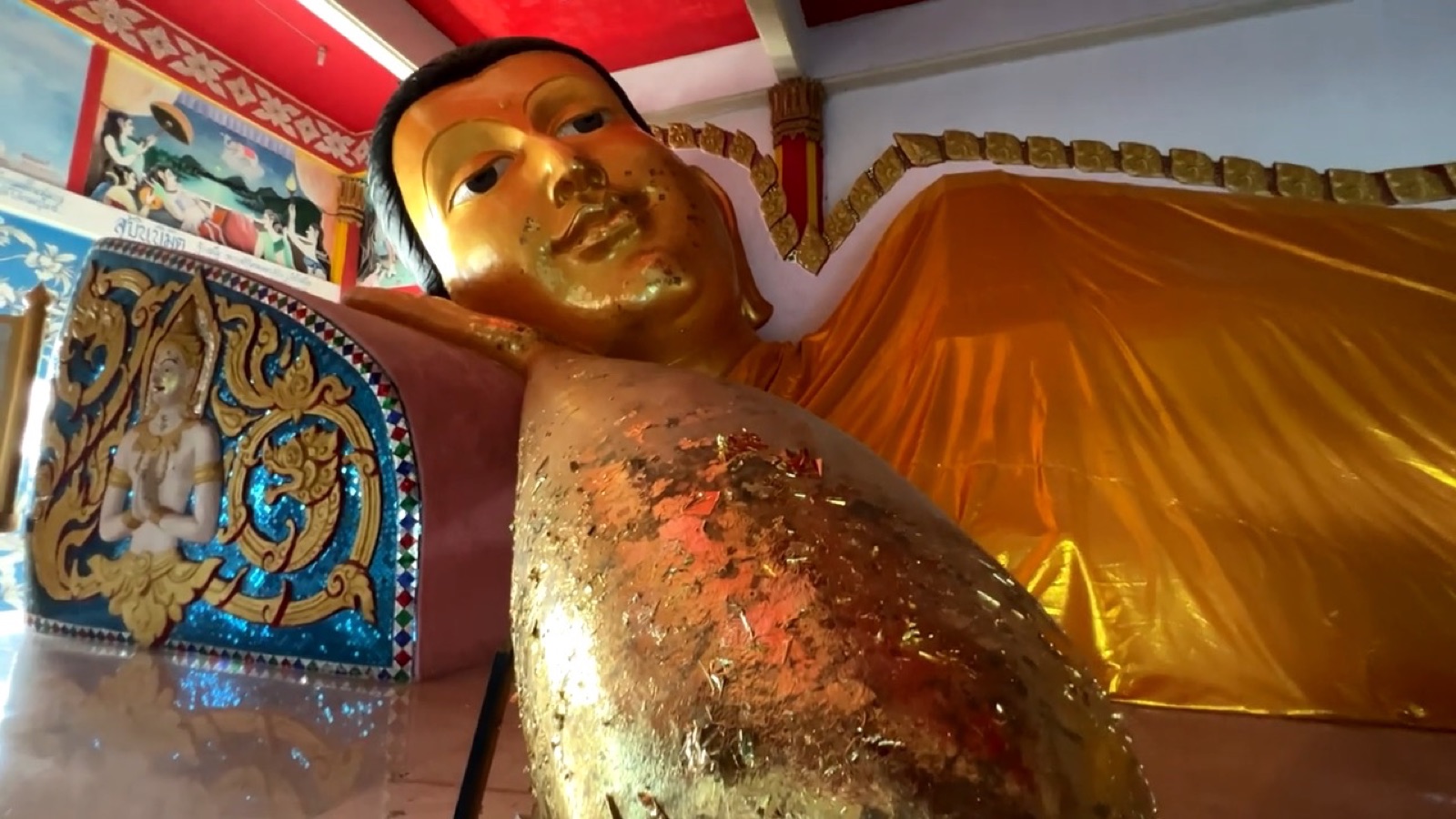
Next episode: Wat Chalong, the most revered of Phuket’s temples — then out to open water! Koh Phi Phi, Khao Lak and the Similan Islands, and the karst peaks of Phang Nga Bay…
All the videos from this journey are on our YouTube channel.