Thailand 2021, a country without tourists — 4. Wat Chalong and the open sea
Continuing our three-month journey through the Thailand of 2021, barely reopened after Covid. In the previous episode: the Sino-Portuguese lanes of the old town, the Saeng Tham Shrine, a young monk’s ordination at Wat Mongkhon Nimit, and the reclining buddha of Koh Sirey.
Four years later
I’m writing these lines from Hua Hin, where we have been living for three months now. I like Thailand every bit as much as I did in the sandbox days — but it isn’t the same country any more, and Phuket less than anywhere else.
On social media the same refrain keeps coming back: Phuket has supposedly become “unliveable”. The traffic, the noise, the building that never stops, the rising prices, the tourist pressure back all at once after the lean years. It’s a fair question to ask.
That’s why these images from 2021 seem strange to me today. What I was filming then wasn’t a quiet island: it was an island at a standstill, and we all knew it. Nobody wanted it to last. But for a few months, we saw a Phuket that almost no one will see again.
Wat Chalong, one morning
We set off in the morning for Wat Chalong. The grounds are vast, plenty of empty parking spaces, a monk has arrived by car, and at the far end of the avenue I catch sight of a great chedi lifting its spire towards the sky.
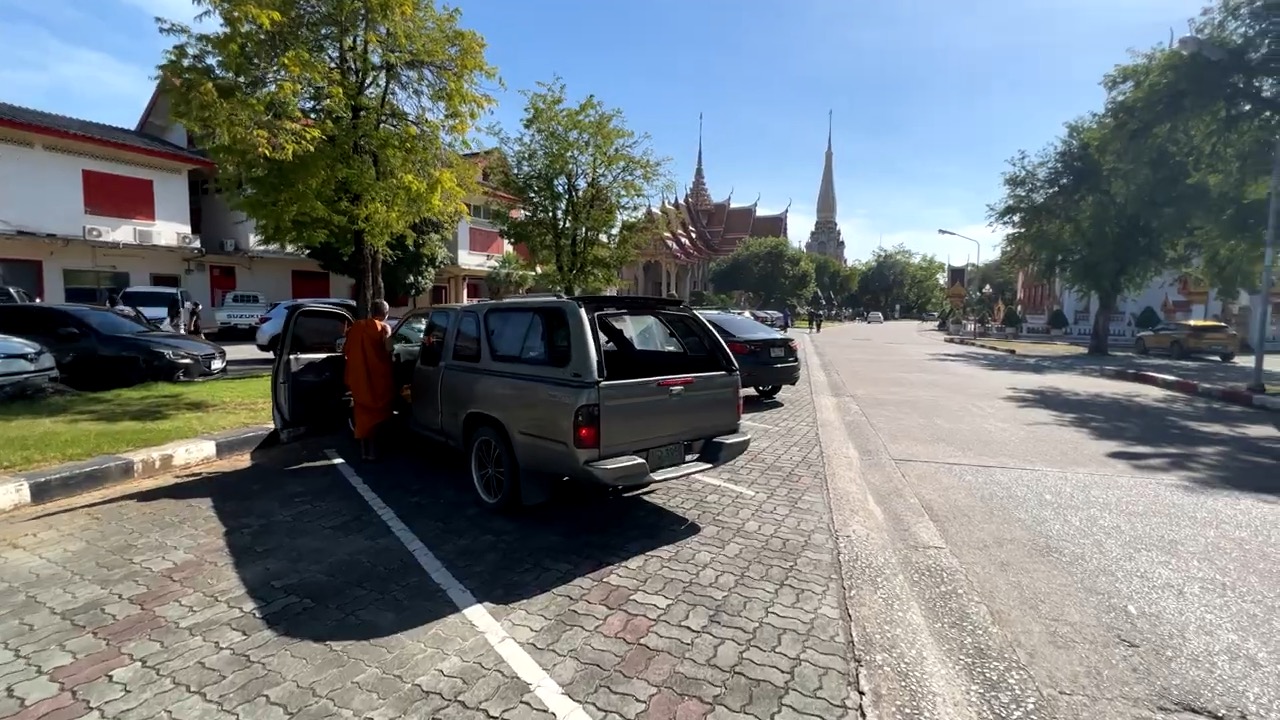
A monk steps out of his pick-up. At the end of the avenue, the spire of the great chedi.
The temple, with its tiered roofs, glows with colour in the sun. On the other side, another temple already, and outside, in a boat-shaped tray, candles are burning. A couple dressed in white come to light incense sticks there. Curious, I move closer: they look like newlyweds. The man seems to be in military dress, a uniform as white as the bride’s gown.
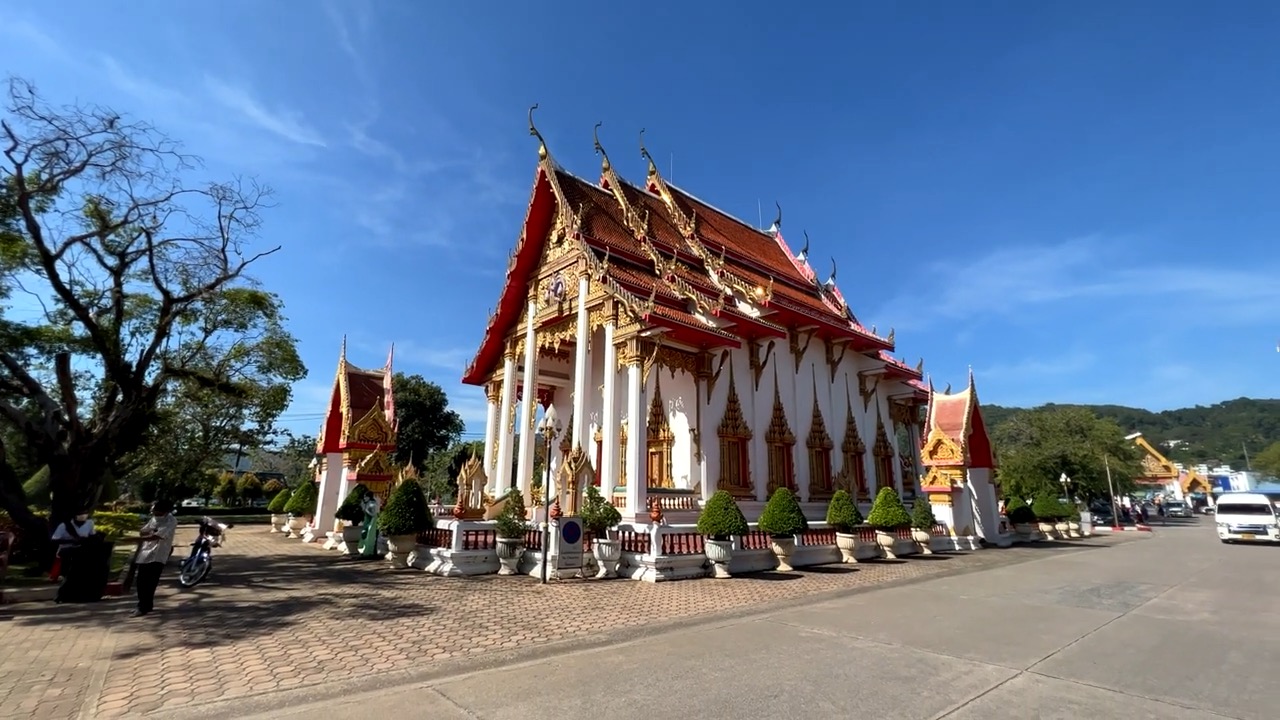
The main temple and its tiered roofs
I head for the entrance. A great many shoes at the foot of the steps: the temple must be packed. Firecrackers go off. Smoke pours out of the brick kiln where people throw them in. A wish accompanied by firecrackers brings good fortune in work and study. Had I known, I would have stocked up at sixteen.
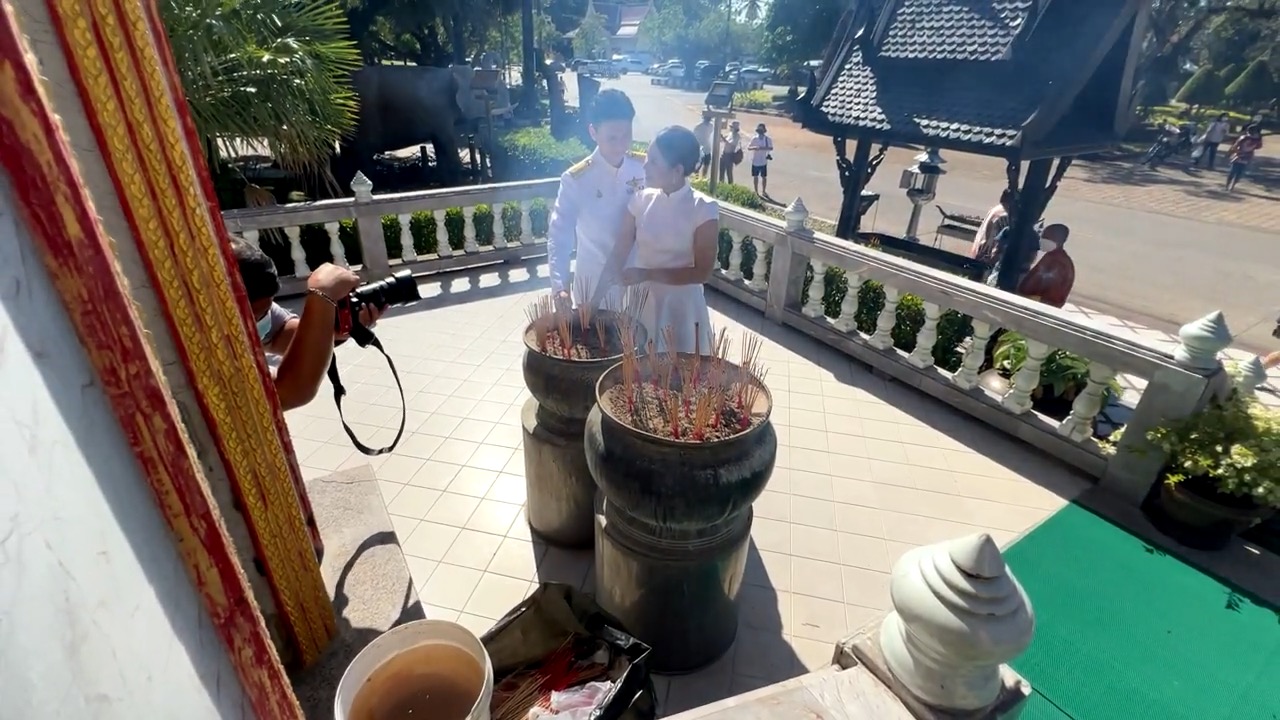 The newlyweds plant their incense sticks, the photographer follows them everywhere
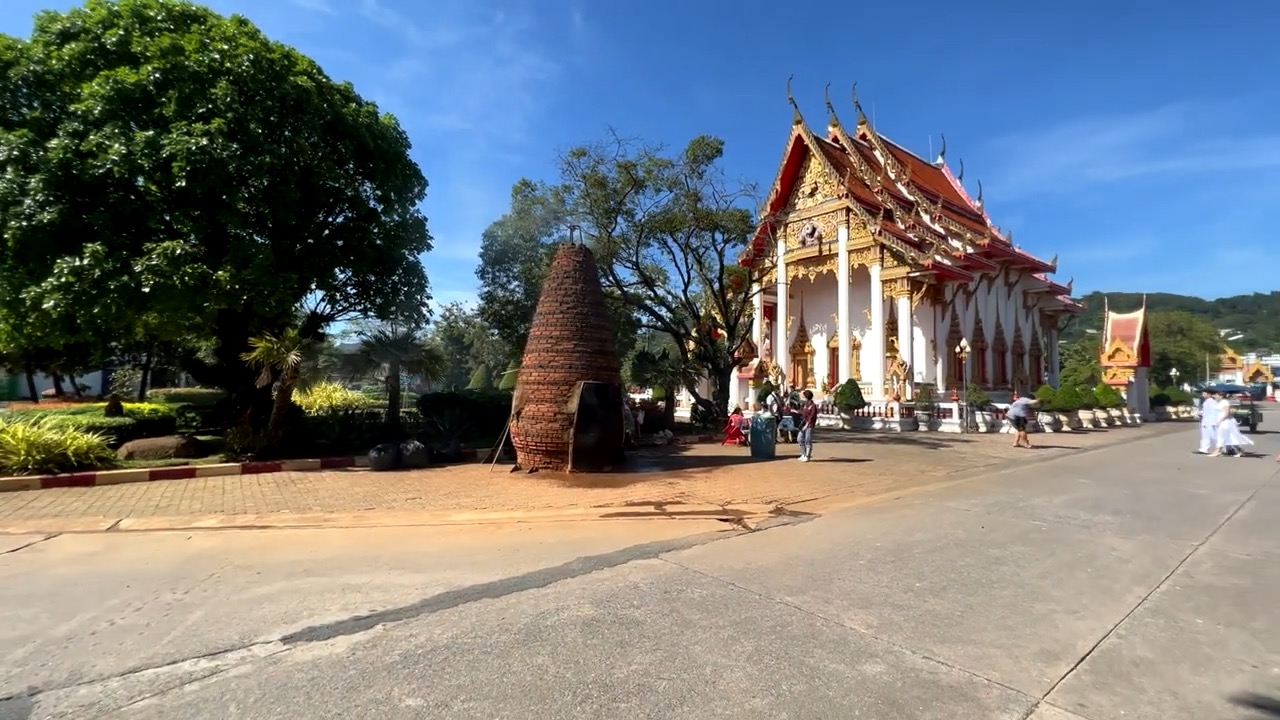 The brick firecracker kiln, in front of the temple
Meanwhile the couple in white stand waiting devoutly before the temple entrance. I wait too. They walk over to the large urns to plant their incense sticks. A photographer follows them everywhere. They look up and notice that I’m filming them — two lovely smiles. This is Thailand.
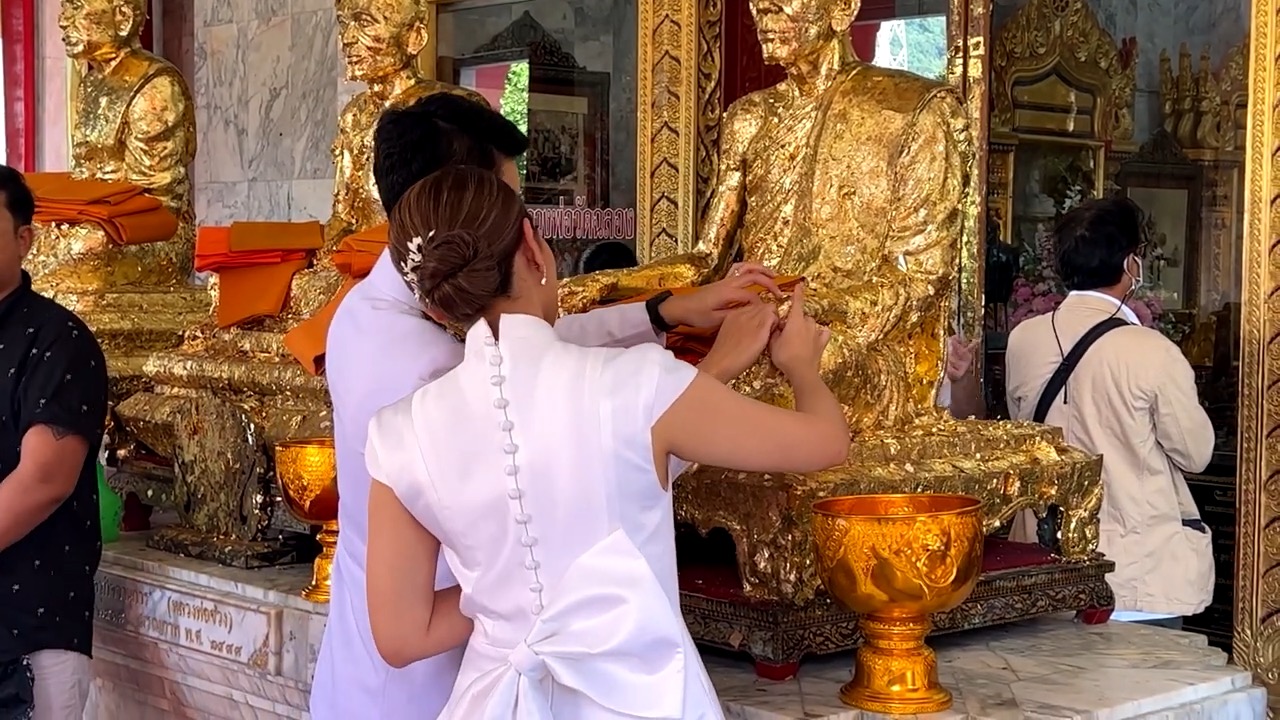
I go in. The crowd comes to pray before three large statues of monks covered in gold, and tirelessly, one after another, each person adds another layer, leaf by leaf. The story goes that fishermen caught in a storm vowed that, if they came through it, they would stick gold onto the abbot himself; that he objected one does not gild the living, and that he eventually gave in to their insistence. The custom stayed.
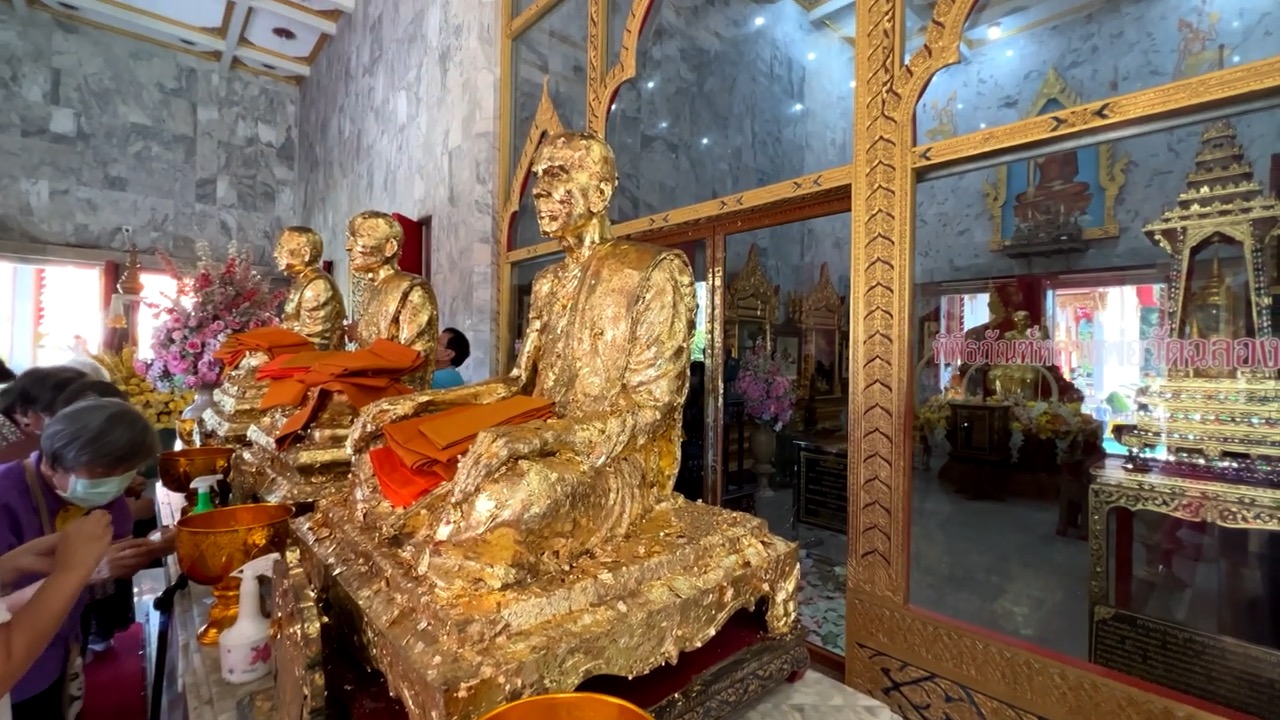
The three monks, literally covered in gold, an orange and red robe between their crossed legs.
I turn round: the couple have come in and are kneeling at the entrance, hands joined before a small altar.
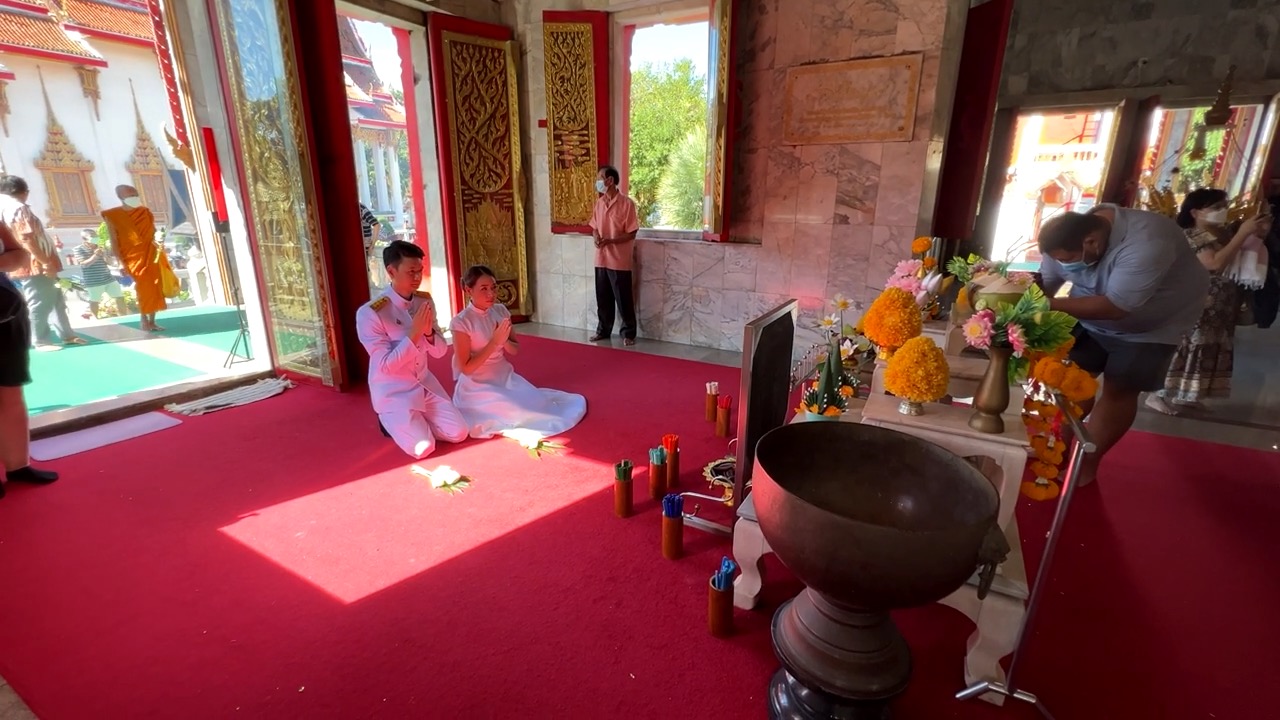
Kneeling at the entrance, hands joined
The newlyweds come to add their own layer of gold to the three monks. Pressed close together, they repeat the same gestures, their gilded hands helping one another with a few stubborn leaves. Outside, the firecrackers go off again.
I get talking to a very elegant lady. She tells me the bride is her daughter, and her son-in-law a customs officer. She is happy with this fine day.
I see the couple come out of the temple and head for the kiln: they too will throw their firecrackers in, quite safely. Good luck for the whole year ahead.
It’s the second time we have walked into a temple and come upon something of ordinary life — a monk’s ordination the first time, a wedding this time.
The great chedi
We wander through the grounds, in the shade of the tall trees. What I took from a distance for a stupa is a temple. I go in through the golden door and pass my hand in front of the temperature sensor: 36.7 °C, I’m fine. Covid obliges, still.
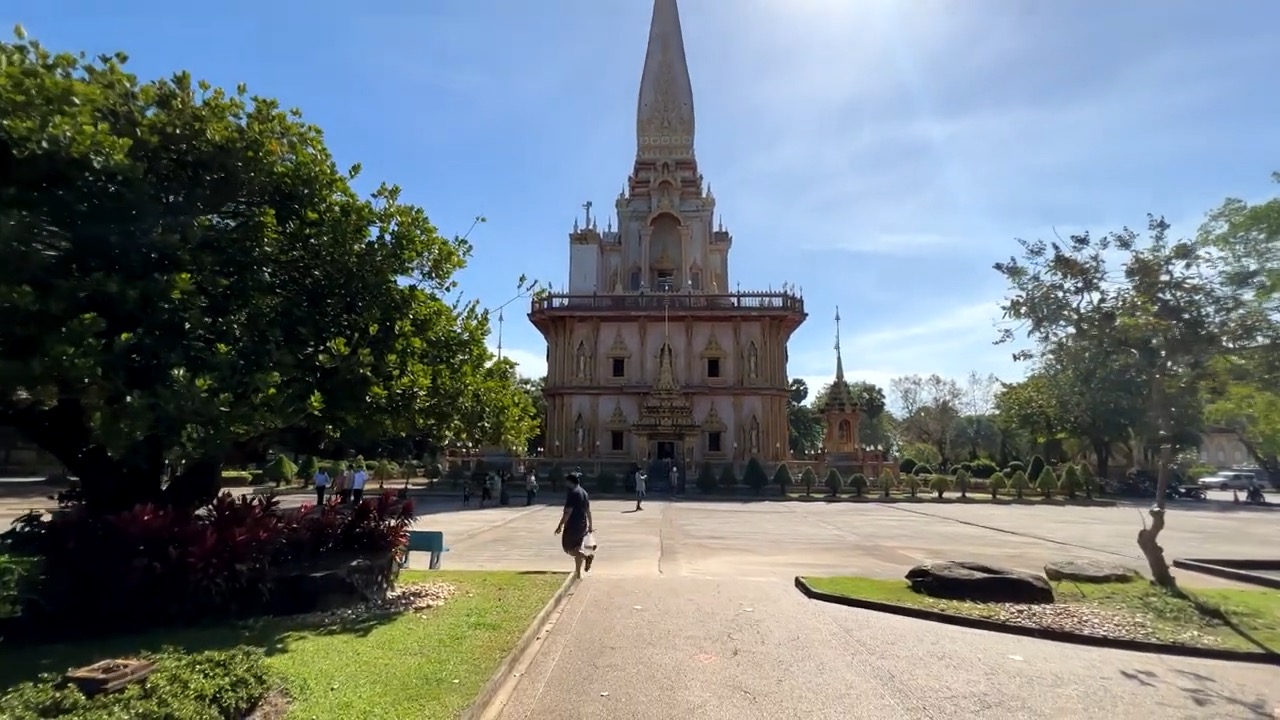
The great chedi, which I had taken from a distance for a stupa
Inside, statues of the buddha in every position, two rows separated by an empty space. The buddhas look down at the ground — a gaze turned towards the earth, full of kindness towards men.
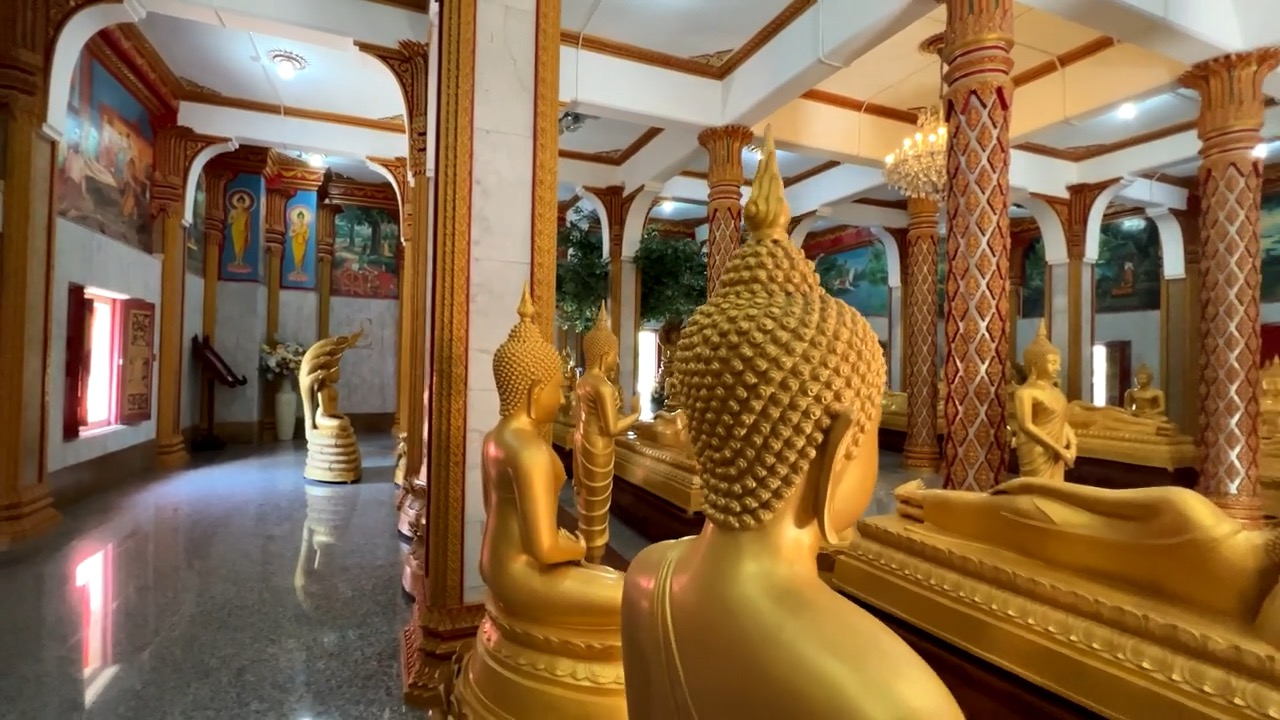
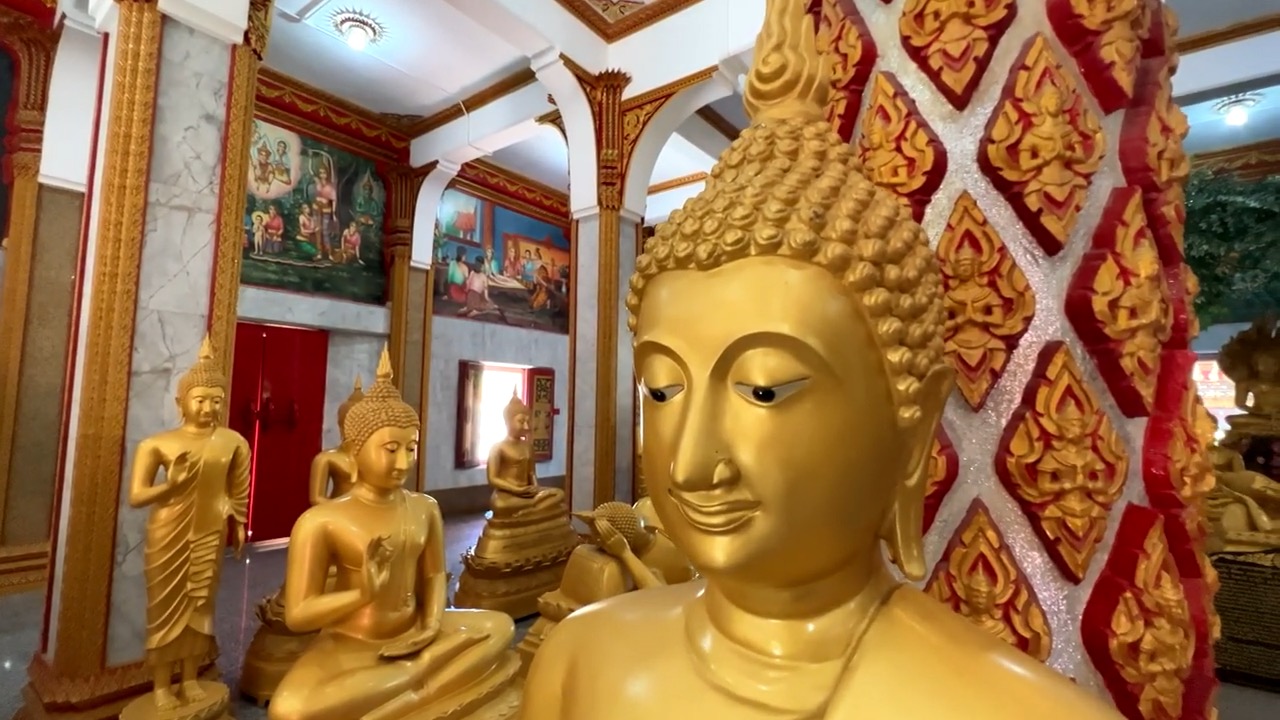
A sign, in English: Do not hug the Buddha. The thought had not occurred to me. Now it has. Just beside it, a buddha receives the gift of an elephant and that of a monkey — no doubt the episode of the Parileyyaka forest, where the elephant offers him water and the monkey a honeycomb.
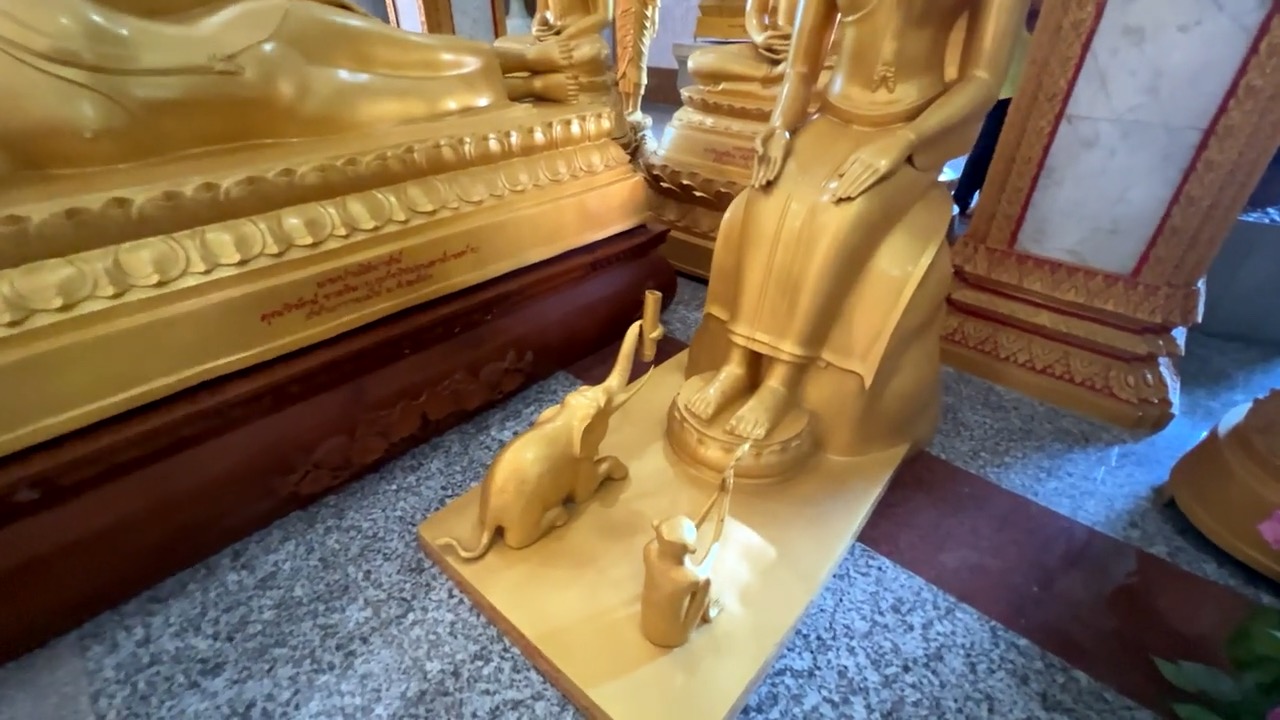
The elephant and the monkey, at his feet
A staircase with a dragon banister leads to the first floor, a richly decorated hall, an altar in the middle and golden buddha statues all around. A man is praying before a large white buddha.
I take another staircase up to the terrace. It looks out over the whole compound, the temples and the garden. On the horizon, the great white buddha of Phuket stands out clearly on its hill — the very one we had climbed a few days earlier.
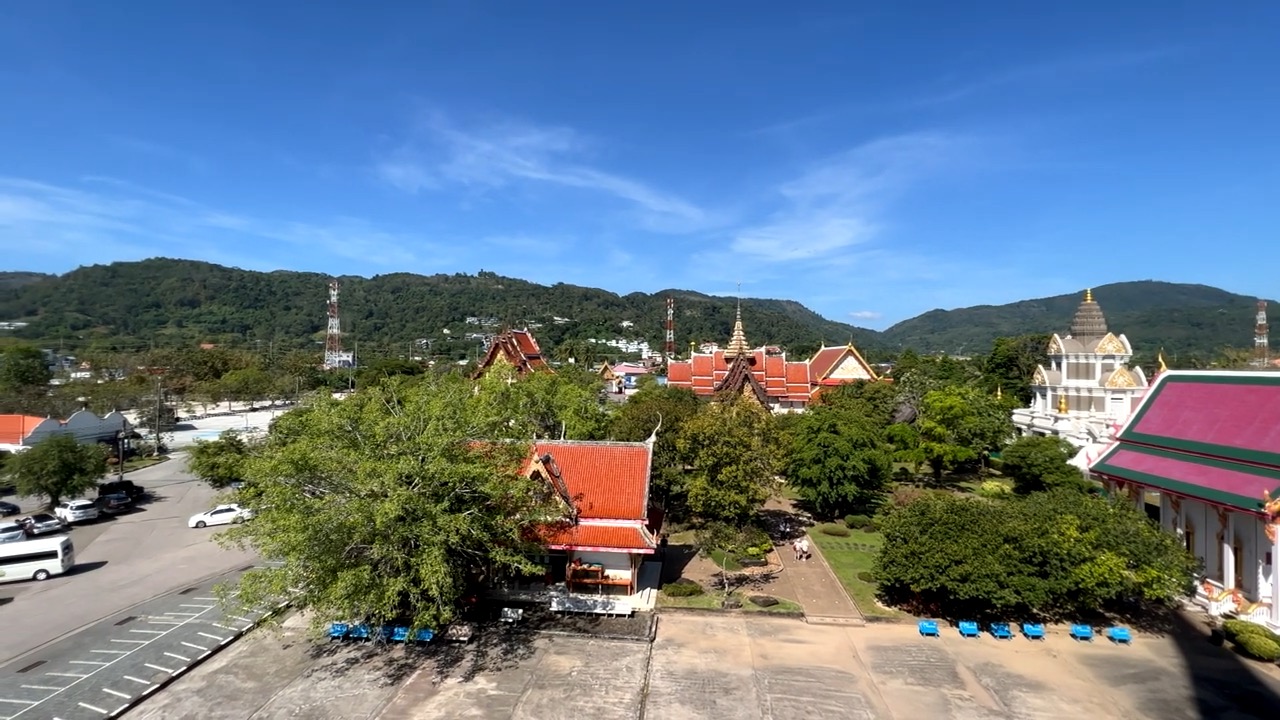 From the terrace, the whole compound and its temples
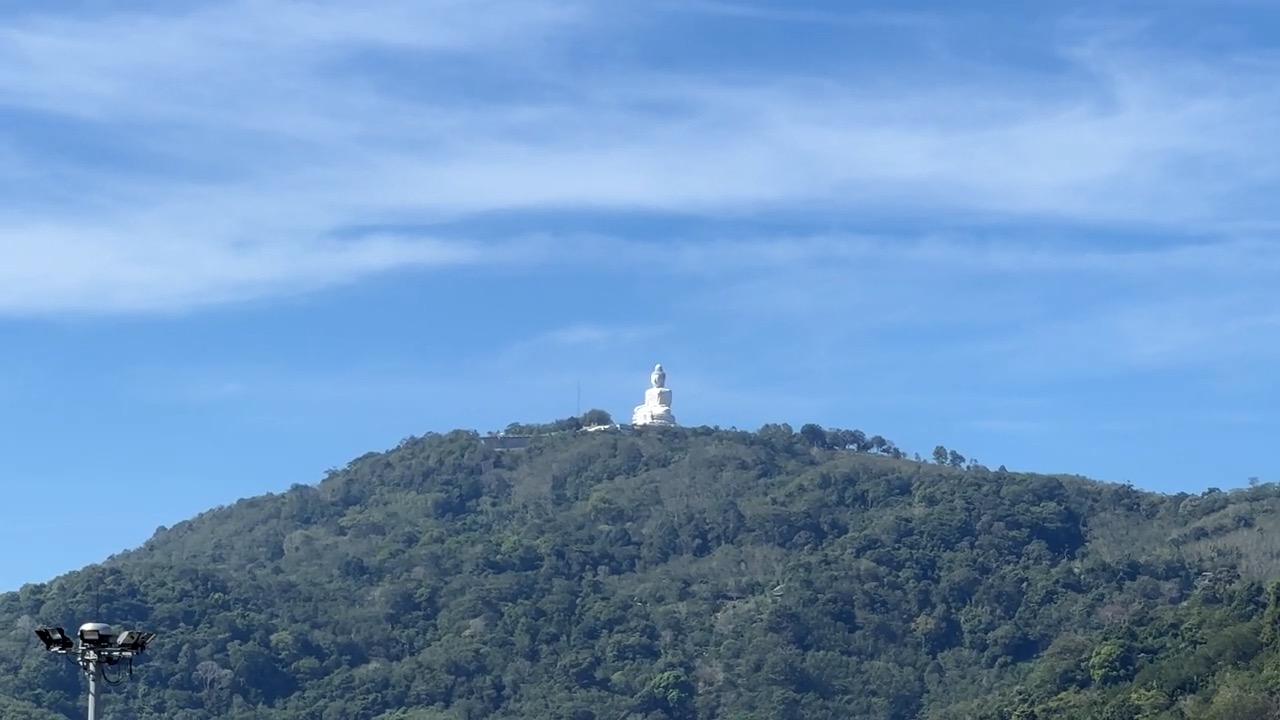 In the distance, the Great White Buddha on Nakkerd Hill
One last staircase leads to another temple. At its centre, a relic under glass, surrounded by four standing golden buddhas: a relic of the Buddha, brought from Sri Lanka.
Koh Phi Phi
We set off early one morning for the island of Koh Phi Phi aboard a speedboat, some twenty people on board, all fitted with life jackets.
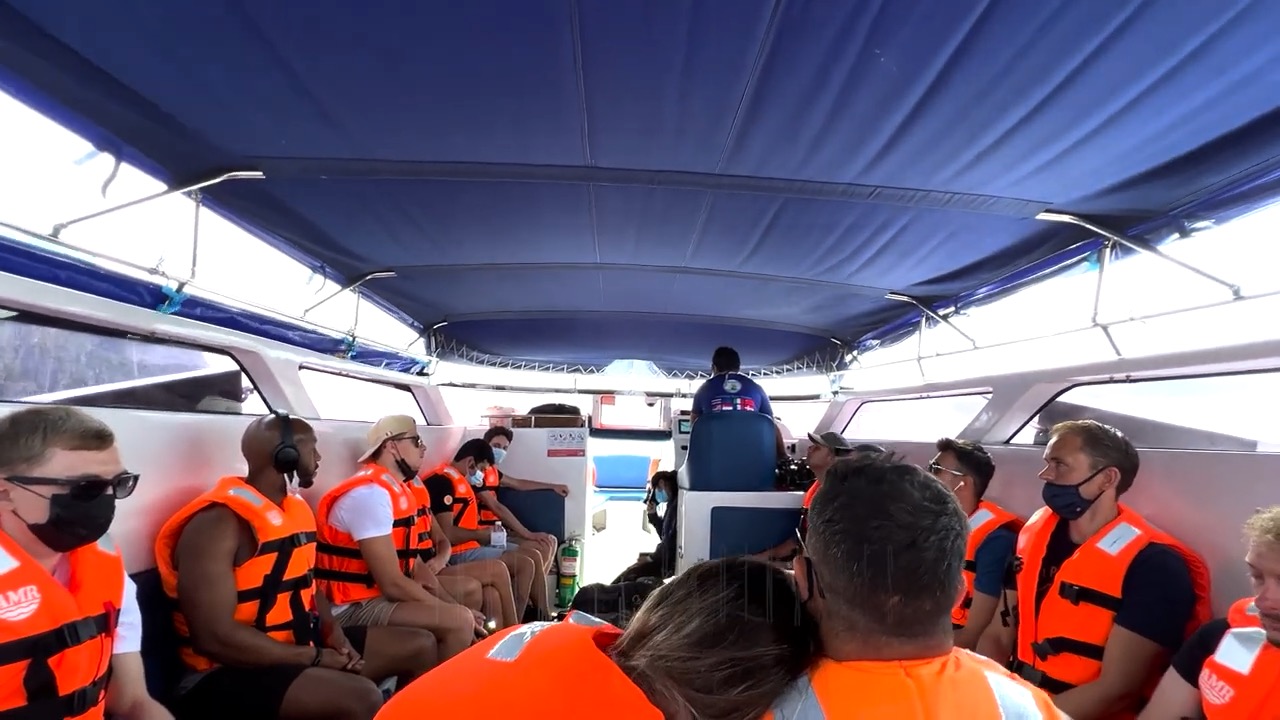
The crossing, life jackets for everyone
The crossing feels quick. We arrive at the Chao Koh Phi Phi Resort, a hundred metres or so from the pier: a fine swimming pool, and the Christmas decorations already up. The hotel opens onto a narrow street in the middle of the village, facing the wooden buildings and the beach.
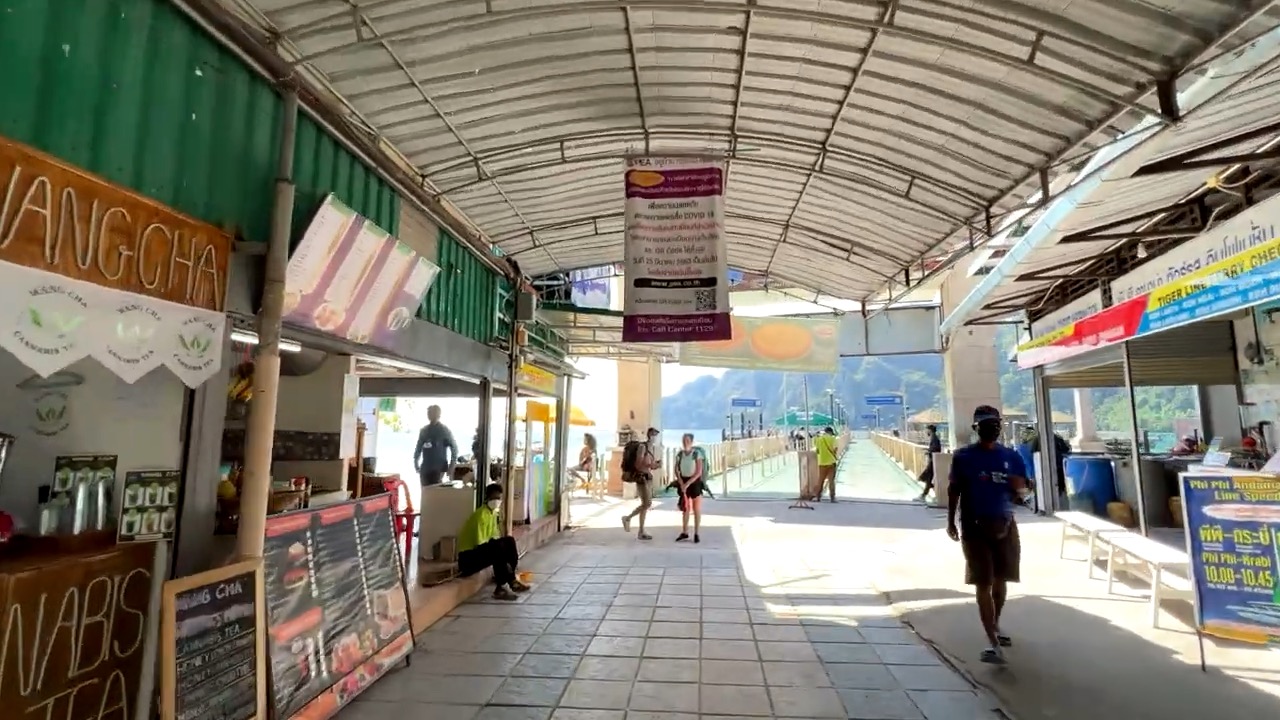
The arrival pier
The lane opens onto the beach: a boardwalk edged with a few rocks, the long-tail boats resting in Tonsai Bay, the flat sea with its deep blue reflections, the great cliffs in the distance.
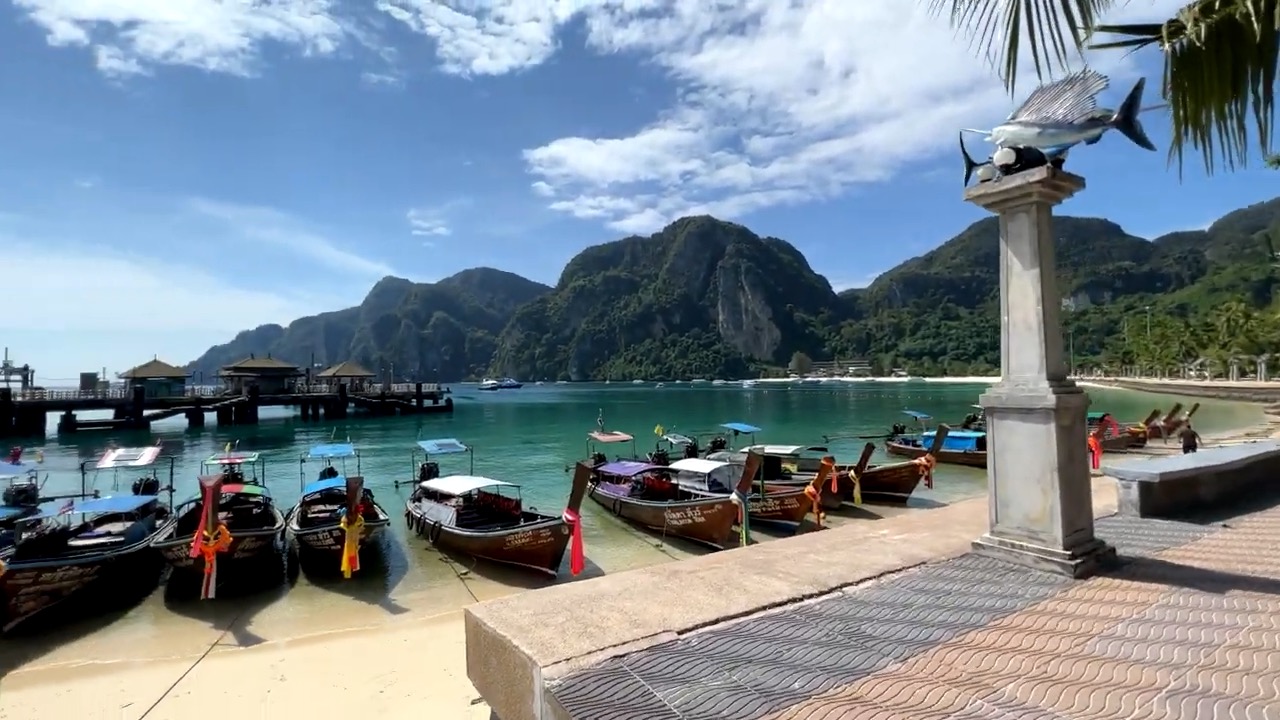
Tonsai Bay. Along the shore, swordfish serve as street lamps.
The village seems built on the beach: small lanes, wooden houses. The main lane runs along the shore, one shop after another. Signs ask people to wear a mask, and N95s are on sale in the shops. Few people about; strolling is a real pleasure, and we have time.
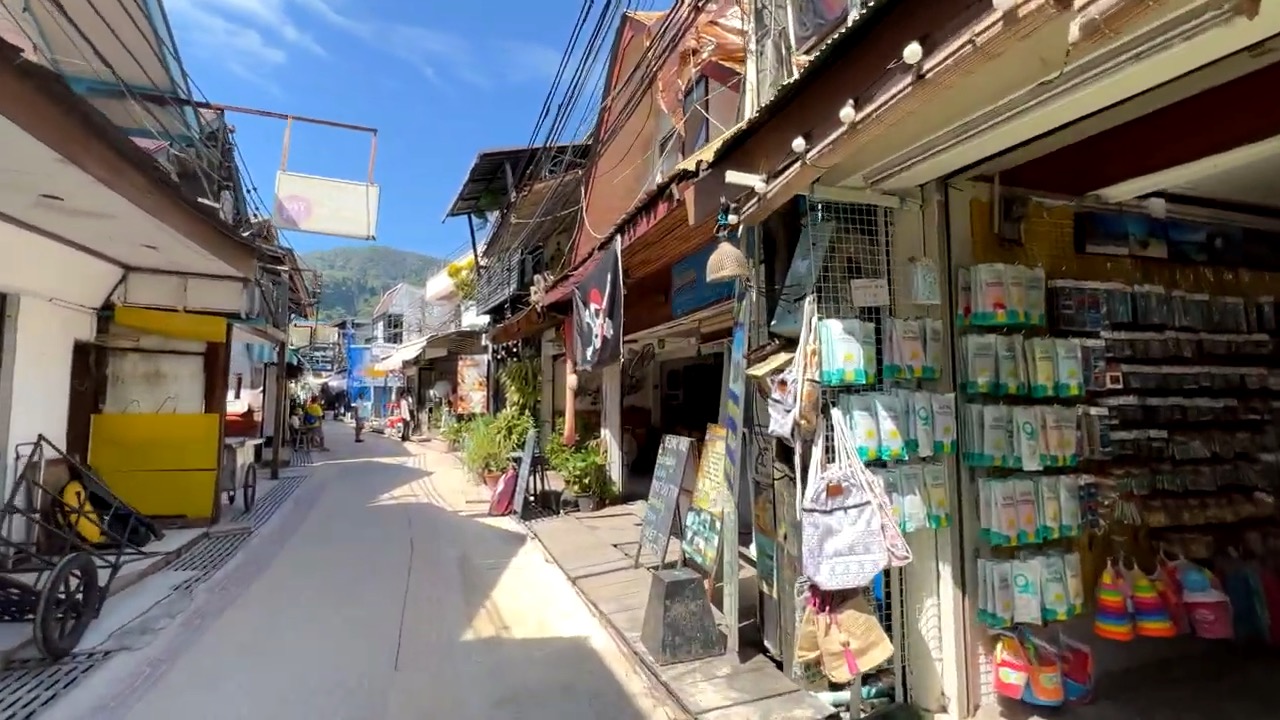
N95 masks on sale in the shops
Music along the lanes. As I walk, I meet a Thai man called “Manou”, flyers in hand, offering boat tours in the late afternoon. I book for four o’clock. The day promises to be a fine one.
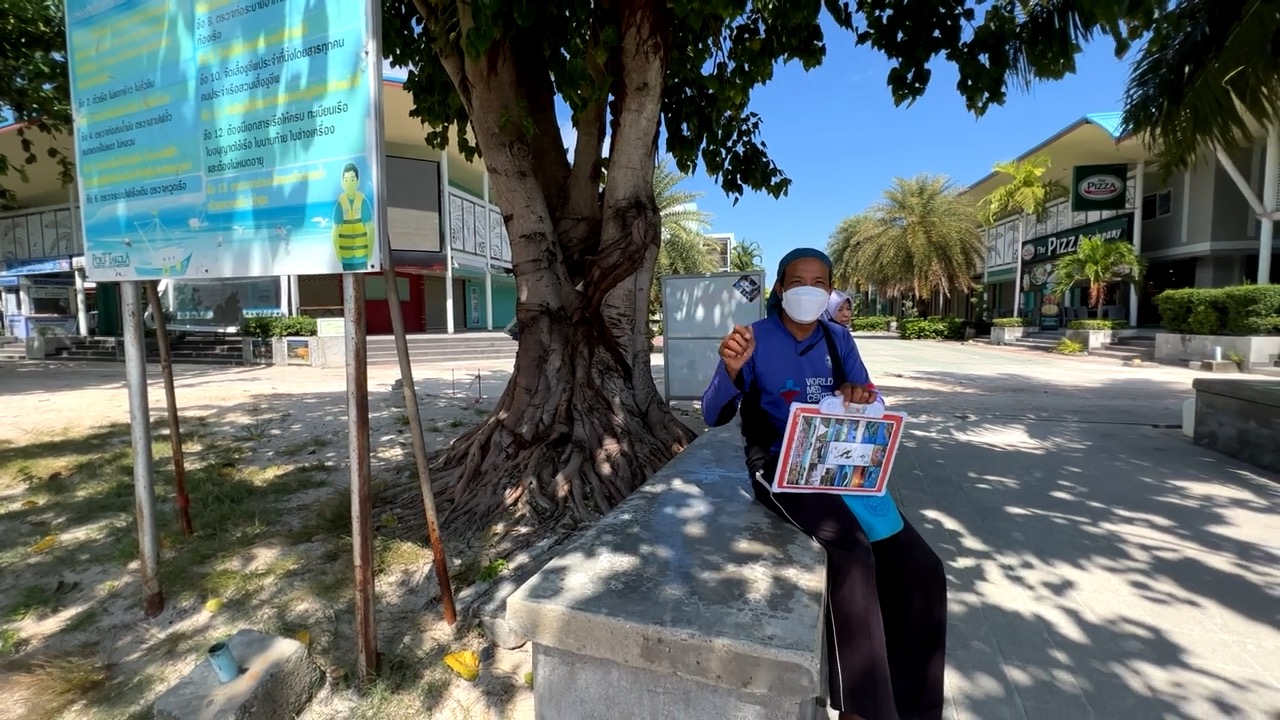
Manou and his flyers
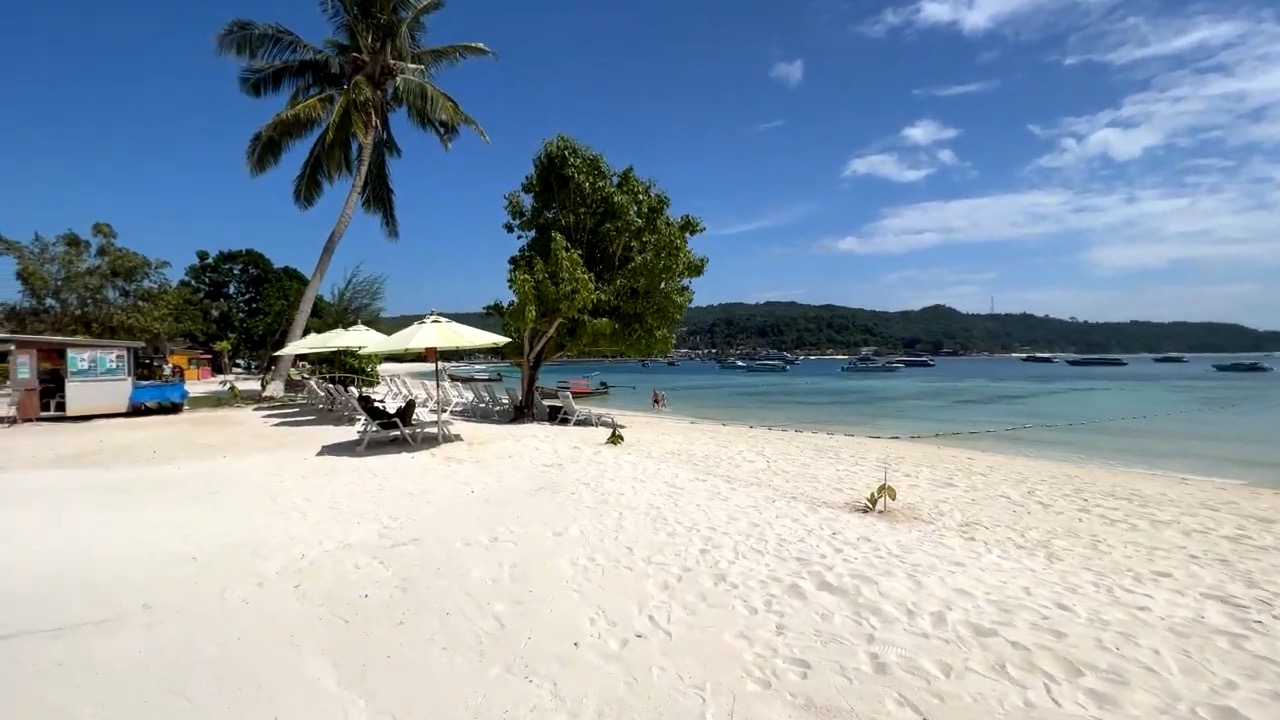
I walk on along the blinding white sand and the empty sun loungers. I cross over to Loh Dalum Beach and its turquoise water. I send up my drone. From above, the village sits on a strip of sand between two bays.
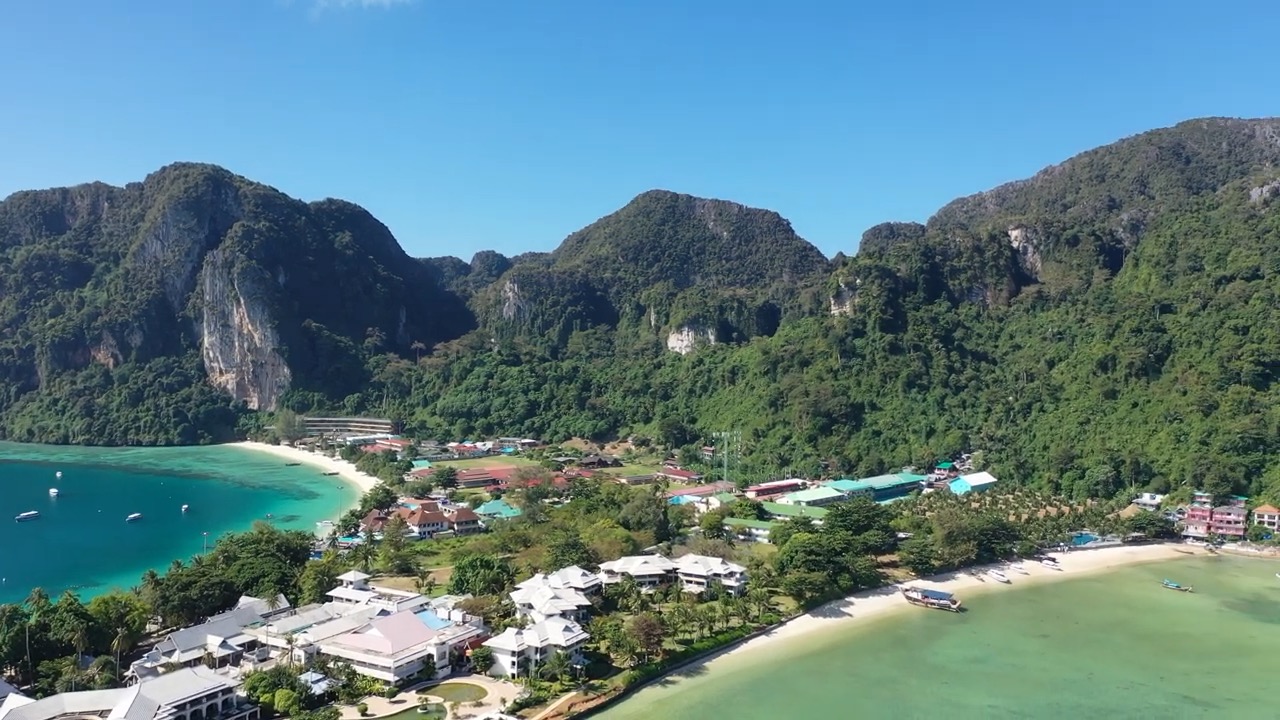
In the end I decide to climb up to the viewpoints, on the hills. Walking in the forest is still pleasant despite the heat. There is a small café at each of the two summits. I really need it.
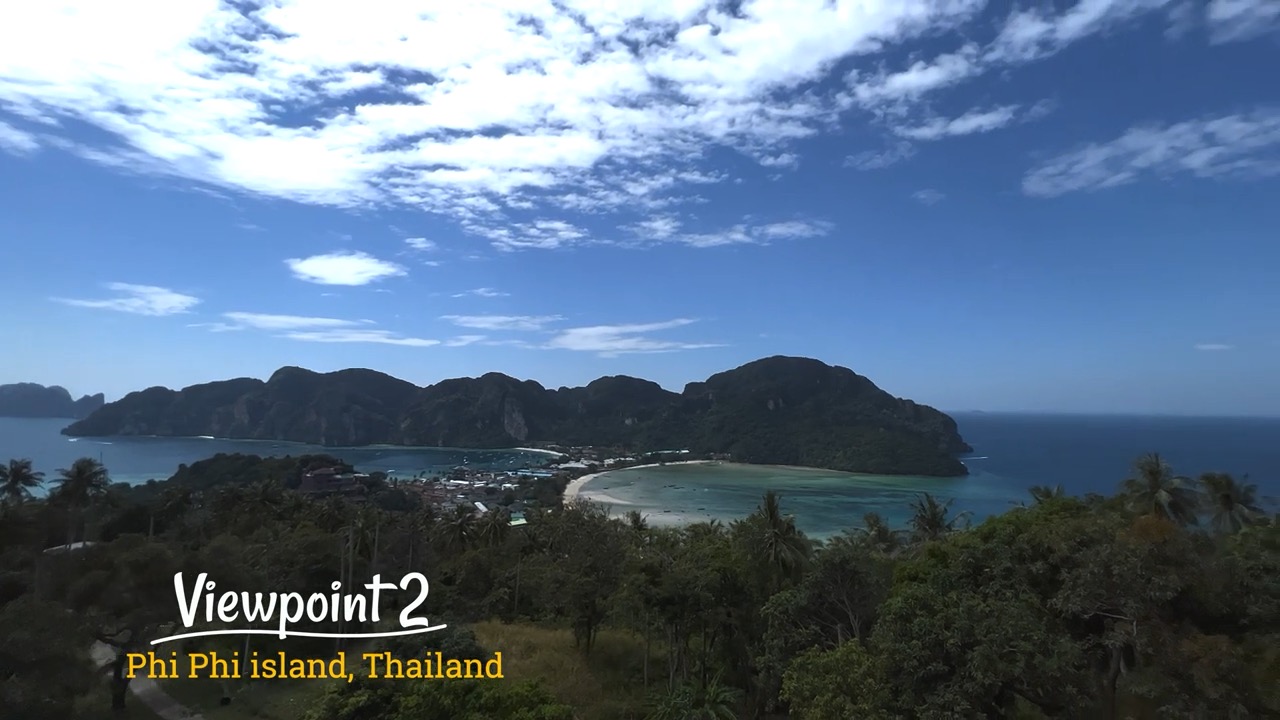
From the viewpoint, the isthmus between the two bays
I come back down to the village by the paths. Near the fountain, a cat is miaowing. Nobody in the lanes, a few lowered shutters, further on an old bicycle fading in the sun. I walk past sheet-metal fences overrun with colourful graffiti. A child is playing, carefree; his mother follows, carrying the day’s shopping. Sawadi kap!
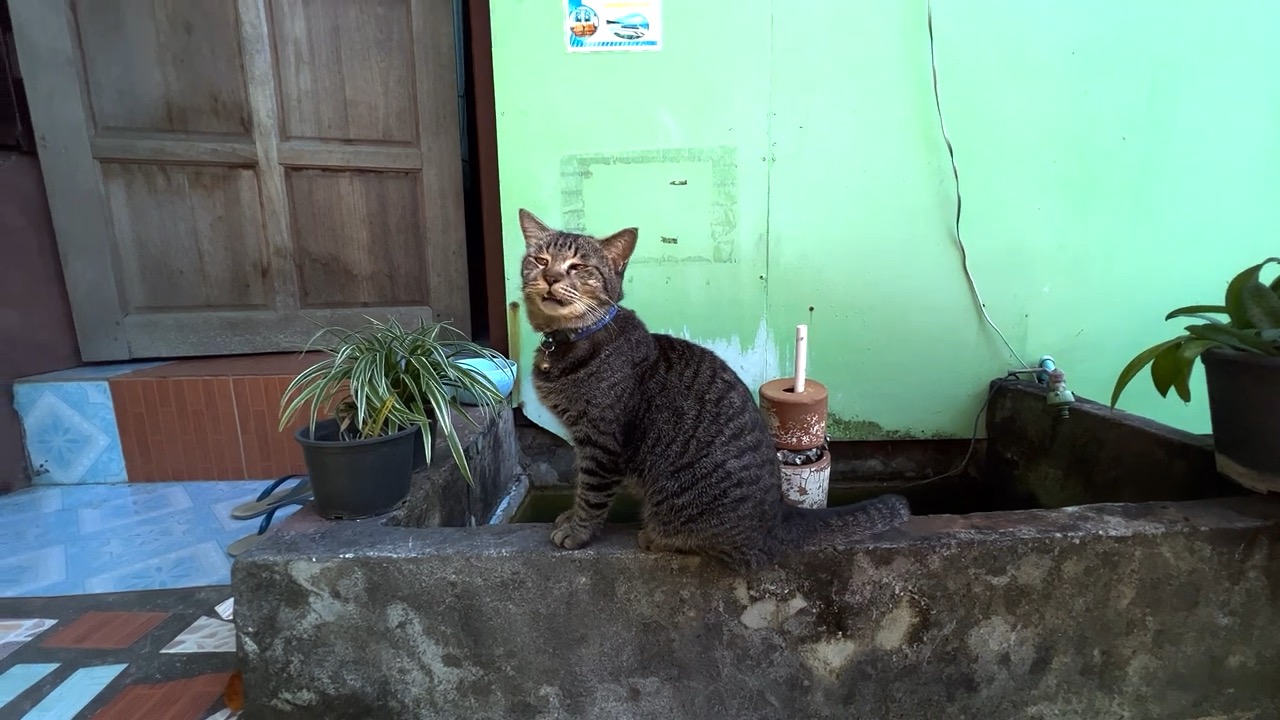 The cat by the fountain
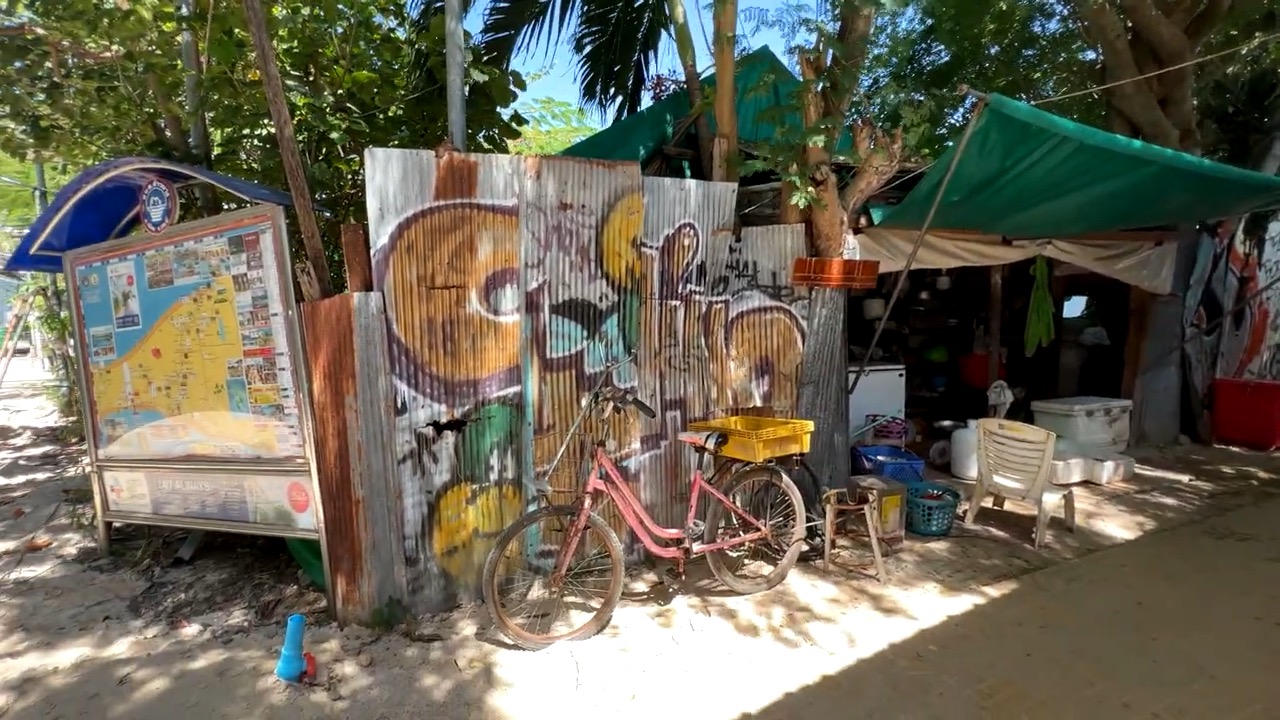 An old bicycle fading in the sun
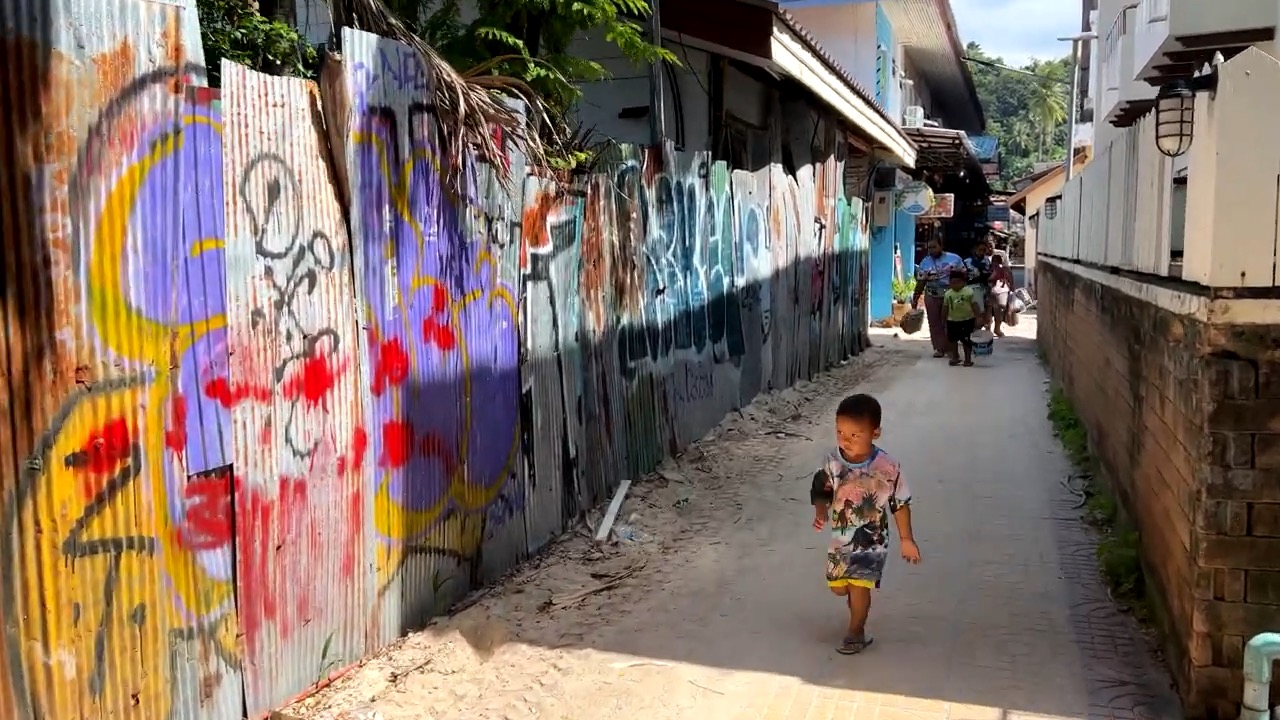 A child playing in front of the graffiti-covered metal sheets
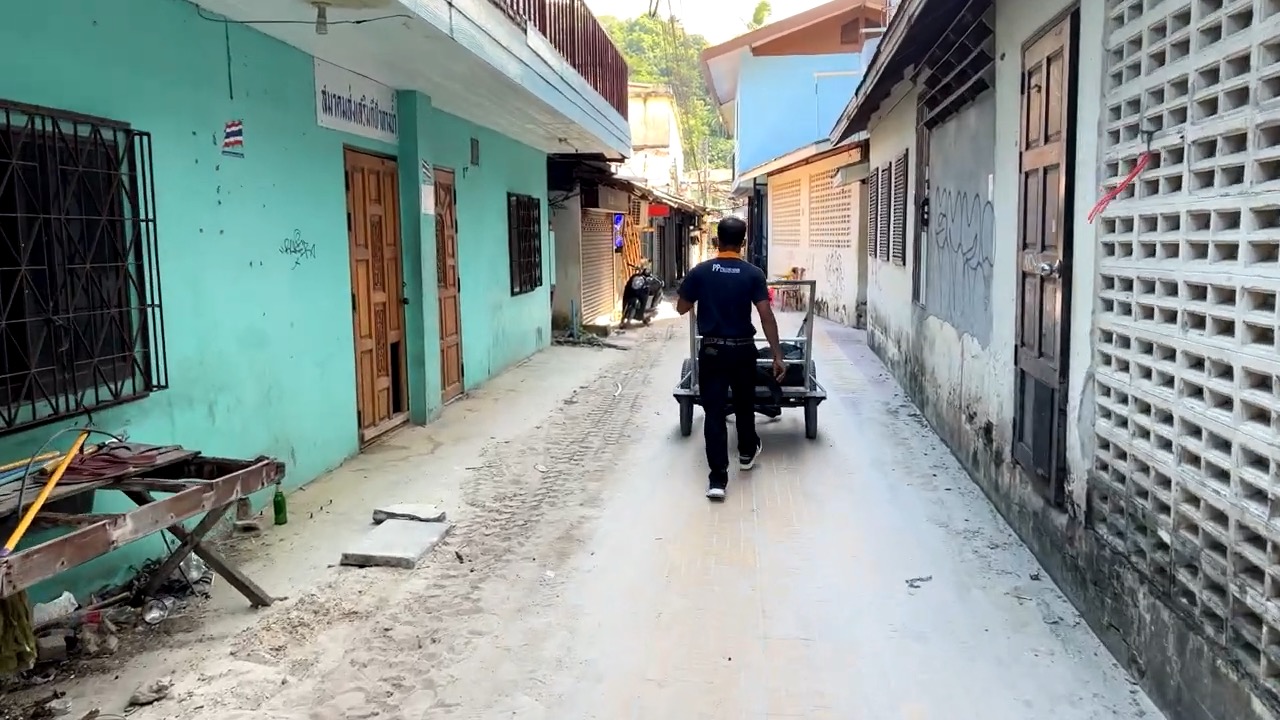 The man with the cart, in the narrow lane
Still a great many shops with their shutters down. I hear a “beep beep” behind me: a man imitating a bicycle bell with his mouth to get past me with his cart — the lane is very narrow. I cut through a mini-market before rejoining the main lane and the hotel. I pass a barber’s shop; I ought to come by, my beard is growing. Four years on, it is still growing.
Around the island at sundown
At four o’clock we set off on a long-tail boat for a trip around the island. The boat can slip into the little coves, tiny beaches wedged between the rocks, spotless beaches where brightly coloured fish flash at the surface. Great ochre cliffs, with stalactites hanging above the water. Loh Lana Bay and its fishermen’s houses, away from the tourist beaches.
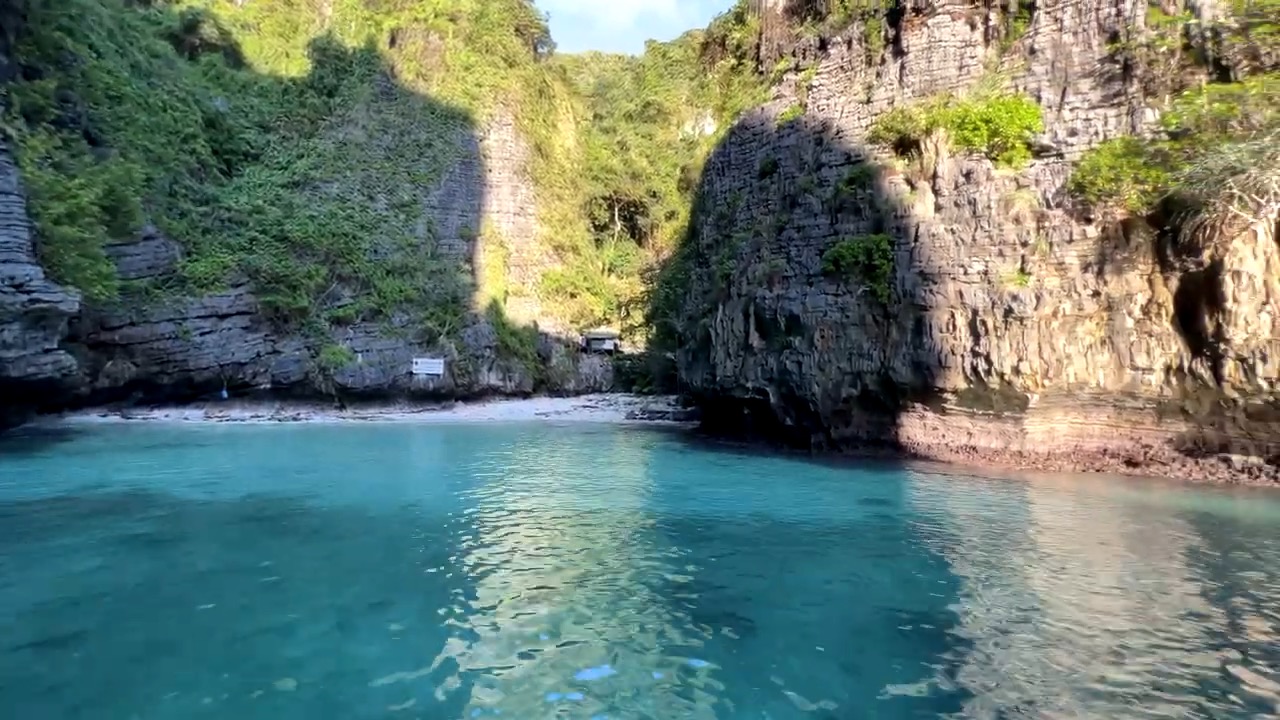
A tiny beach, wedged between the rocks
Islets of stone rise above the sea. We run along the stone walls and the red cliffs in the setting sun. We let time drift: a sunset over the Andaman Sea.
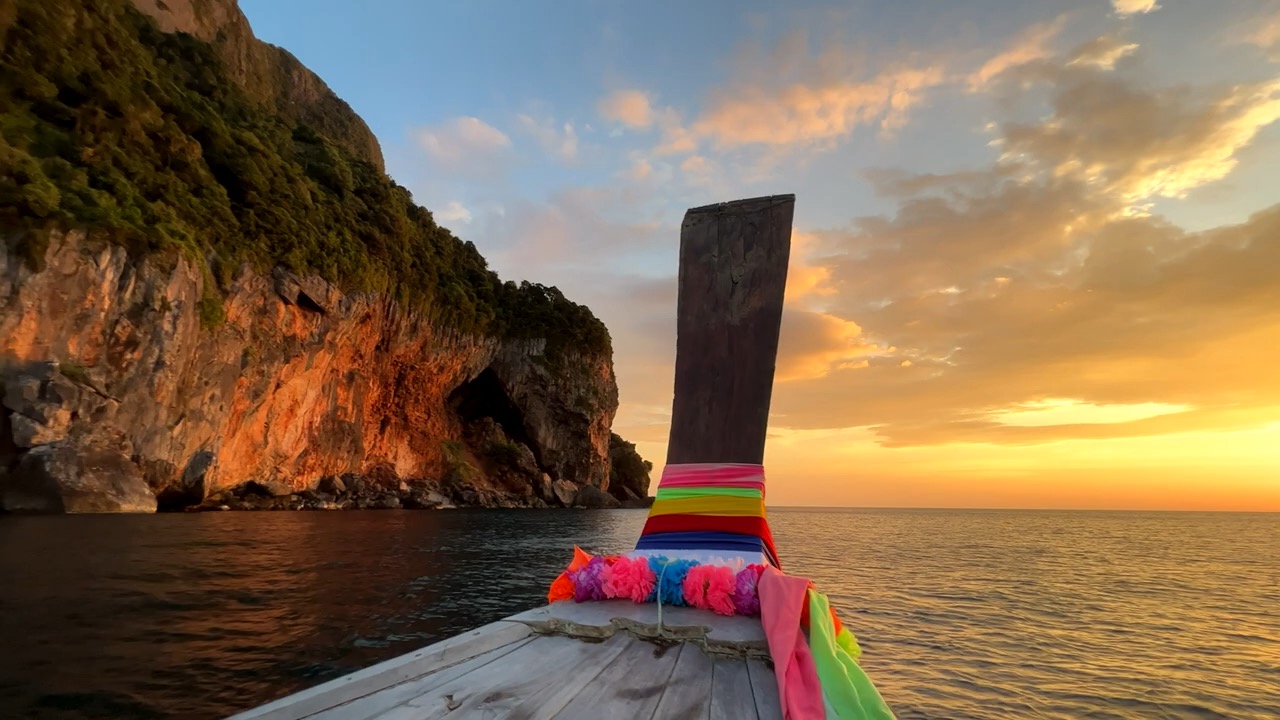
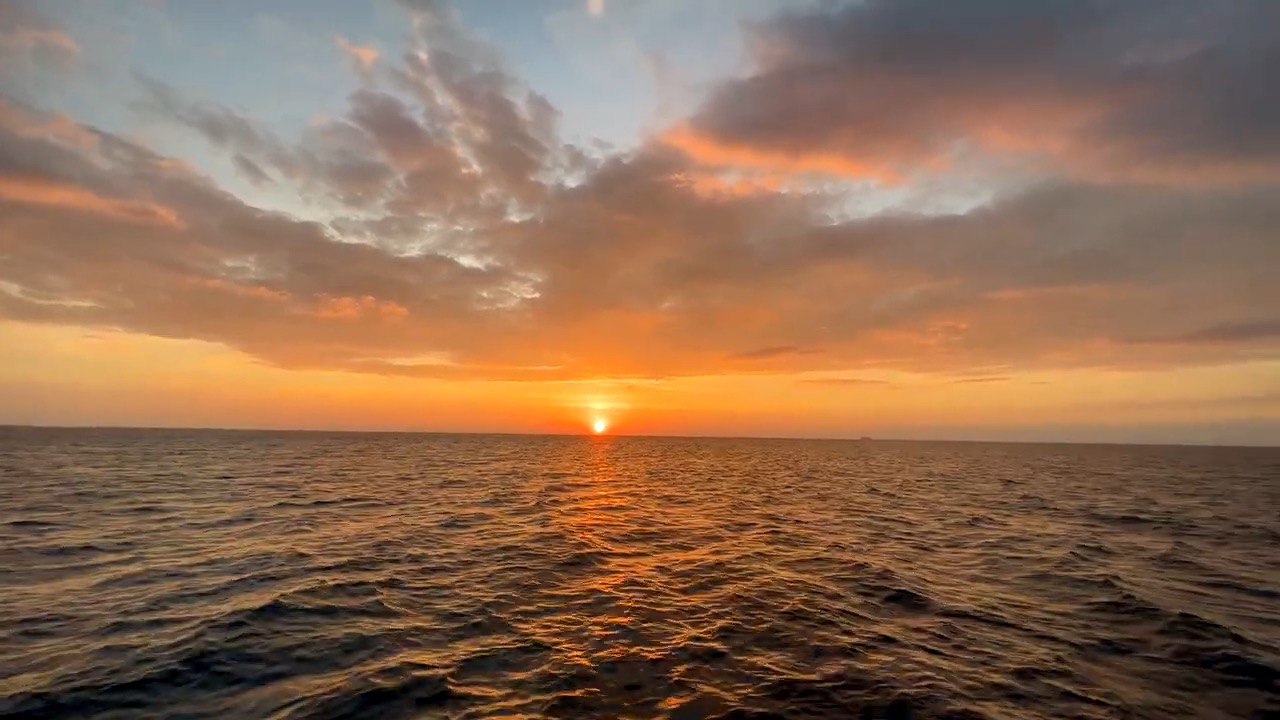
Night falls, and we come back into the harbour after dark. We linger along the quay, admiring the tiny fish in the clear water, Thai music keeping us company. What a lovely evening.
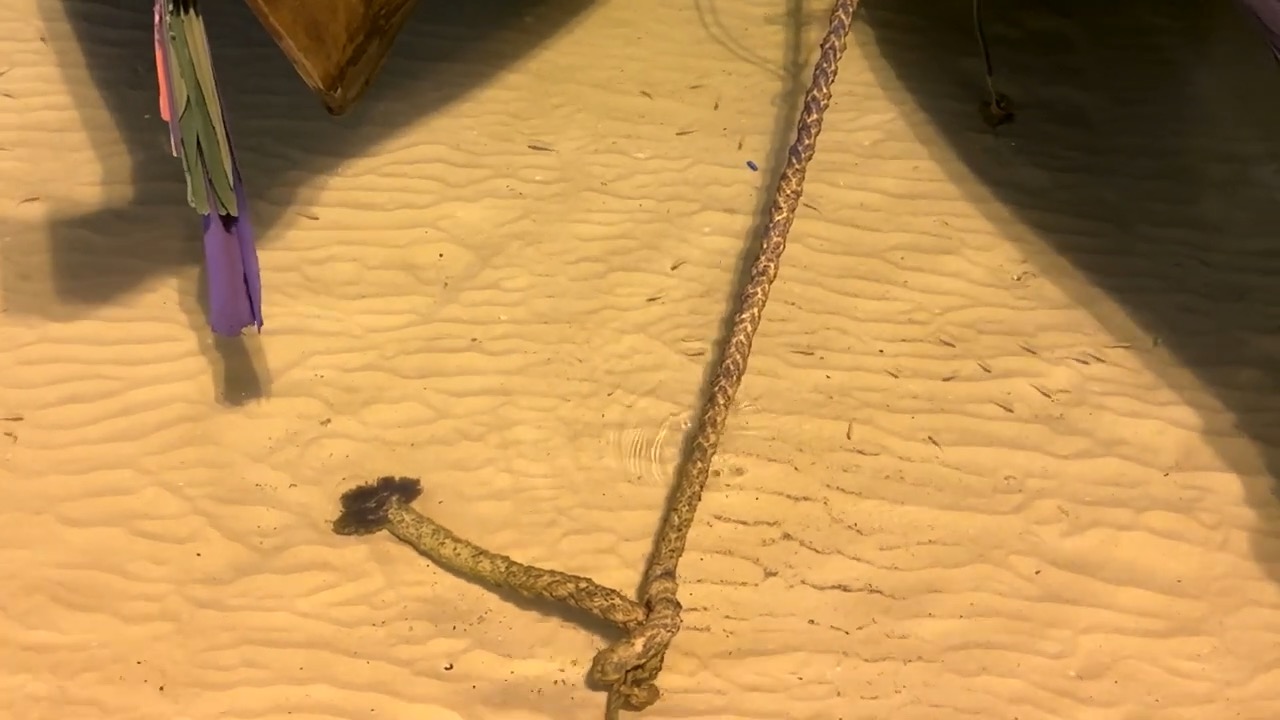
The tiny fish in the clear water by the quay
Next episode: Khao Lak, the Similan Islands and Phang Nga Bay.